
Global Aircraft Switches Market — Forecast to 2032
Research scope: By Product Type (Toggle Switches, Rocker Switches, Rotary Switches, Push-Button Switches, Proximity Switches, Others), By Platform (Commercial Aviation, Military Aviation, General Aviation, Helicopters, Unmanned Aerial Vehicles), By Application (Cockpit Control Panels, Cabin Management Systems, Lighting Control, Power Distribution, Avionics Systems), By Fit (Line Fit, Retrofit), By End User (OEM, Maintenance Repair and Overhaul)
Domain: Aerospace & Defense
Report Code: MIADG 10091
Aircraft Switches Market Analysis and Insights:
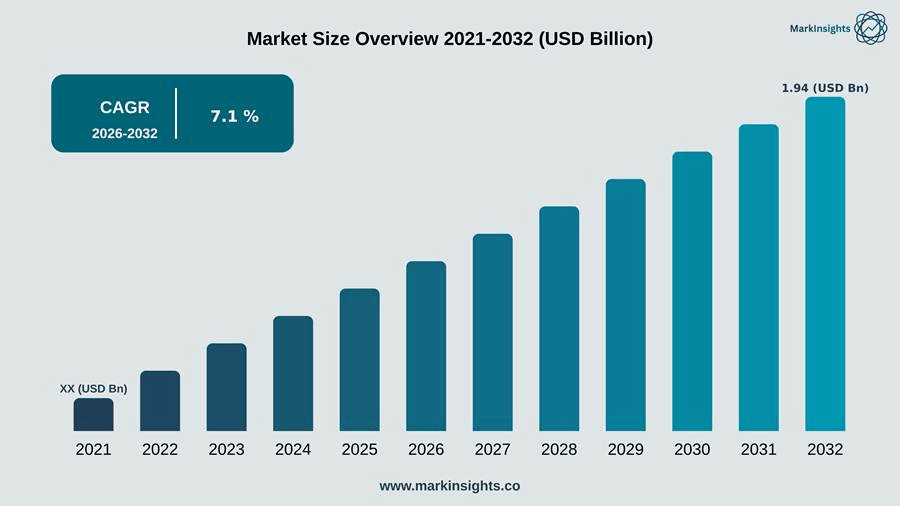
The global Aircraft Switches market was valued at approximately USD 1.28 billion in 2026 and is projected to reach around USD 1.94 billion by 2032, registering a CAGR of approximately 7.1% during the 2026-2032 forecast period.
Growth is anchored by rising commercial aircraft production rates at Boeing and Airbus sustaining line-fit switch demand, expanding military modernization programs requiring ruggedized cockpit and avionics switching hardware, and accelerating retrofit activity as aging fleets upgrade to digital cockpit control architectures. Tier-1 airframers have embedded long-term switch and control component sourcing agreements with Honeywell, Safran, and TE Connectivity, anchoring a stable OEM demand floor that supports supplier capacity investment planning.
The competitive landscape is consolidating around a handful of specialized avionics component manufacturers that collectively dominate the line-fit segment. Honeywell expanded its aerospace switching component production capacity in early 2024 to support rising narrow-body aircraft build rates, Safran acquired Orolia's aerospace timing and navigation switch integration assets in March 2025 to strengthen its avionics control portfolio, TE Connectivity launched a new series of ruggedized rotary switches for military cockpit applications in September 2025, and Eaton opened a new aerospace switch testing and qualification facility in June 2024. North America led 2026 revenue, while Asia Pacific is the fastest-growing region led by China, India, and Japan.
Aircraft Switches Market Definition:
Aircraft switches are electromechanical and solid-state control components installed across cockpit, cabin, and avionics systems that enable pilots, crew, and automated flight control systems to activate, deactivate, or modulate electrical circuits governing propulsion, lighting, communication, navigation, and power distribution functions. These components include toggle switches used for manual on-off circuit control in cockpit overhead and center console panels, rocker switches deployed for illuminated multi-function control applications, rotary switches used for graduated selection functions such as frequency tuning and mode selection, push-button switches integrated into flight control panels and warning annunciator systems, and proximity switches used for position sensing in landing gear, doors, and flight control surface monitoring applications. Aircraft switches must meet stringent qualification standards for vibration resistance, temperature extremes, electromagnetic compatibility, and long service-life reliability given the safety-critical nature of their function across commercial, military, general aviation, helicopter, and unmanned aerial vehicle platforms. These components are supplied to airframe original equipment manufacturers through line-fit integration during new aircraft assembly and to maintenance, repair, and overhaul providers for retrofit and replacement applications throughout an aircraft's operational service life.
Aircraft Switches Market Research Methodology:
The demand-side assessment was built bottom-up from primary interviews with business buyers active in the aircraft switches market, including institutional and industrial procurement buyers, distributors, and institutional or industrial purchasers, etc., and cross-referenced against demand-side secondary sources such as public production and consumption data, industry and trade-association surveys, etc. On the supply side, estimates were developed top-down from primary interviews with raw-material and component suppliers and with commercial leadership at manufacturers, etc., supported by secondary sources including publicly disclosed revenue and volume commentary from companies such as Honeywell, Safran, and TE Connectivity (10-K filings, investor presentations, and primary research transcripts), the regulatory frameworks of [RELEVANT REGULATOR — none detected in spec], and relevant import-export trade records, etc. Leading research typically incorporates 100-130 structured B2B interviews per report, split across institutional and industrial procurement buyers, component and raw-material suppliers, and tier-1 manufacturers, weighted toward the report's central growth regions. For this report, main inputs were cross-referenced against [RELEVANT REGULATOR] filings and publicly disclosed manufacturer segment data relevant to the Aircraft Switches category.
Aircraft Switches Market Size, Scope & Segmentation:
| Report Attribute | Details |
| Market size in 2026 | USD 1.28 billion |
| Market Size by 2032 | USD 1.94 billion |
| Global CAGR (2026-2032) | 7.1% |
| Historical Data | 2021-2024 |
| Forecast Period | 2026-2032 |
| Segments Covered | By Product Type • Toggle Switches • Rocker Switches • Rotary Switches • Push-Button Switches • Proximity Switches • Others By Platform • Commercial Aviation • Military Aviation • General Aviation • Helicopters • Unmanned Aerial Vehicles By Application • Cockpit Control Panels • Cabin Management Systems • Lighting Control • Power Distribution • Avionics Systems By Fit • Line Fit • Retrofit By End User • OEM • Maintenance Repair and Overhaul |
| Regions and Countries Covered | North America • US • Canada • Mexico Europe • Germany • UK • France • Italy • Spain • Rest of Europe Asia Pacific • China • India • Japan • South Korea • Australia • Rest of Asia Pacific Middle East and Africa • Saudi Arabia • UAE • South Africa • Rest of Middle East and Africa South America • Brazil • Argentina • Rest of South America |
| Market leaders and key company profiles | Honeywell Safran TE Connectivity Eaton Crane Aerospace Meggitt Esterline Curtiss-Wright Amphenol Carling Technologies Otto Engineering Korry Electronics Mouser Electronics Staco Systems Astronics Corporation |
Aircraft Switches Key Market Segmentation:
Insights On Key Product Type
The product type segment encompasses toggle switches (the largest sub-category, widely deployed across cockpit overhead panels and center consoles by Honeywell, Safran, and Eaton for manual circuit control functions requiring tactile confirmation), rocker switches (a significant sub-category used for illuminated multi-function lighting and system control panels supplied by TE Connectivity and Mouser-affiliated aerospace suppliers), rotary switches (an important sub-category for graduated selection functions such as radio frequency tuning and navigation mode selection supplied by Eaton and Esterline), push-button switches (a growing sub-category integrated into digital flight control panels and warning annunciator systems by Honeywell and Safran), proximity switches (an emerging high-reliability sub-category for landing gear and flight control surface position sensing from Meggitt and Crane Aerospace), and others (including membrane and capacitive touch switch technologies for modern glass cockpit interfaces).
Toggle switches dominate the product type sub-segment because their proven mechanical reliability, tactile feedback, and decades-long qualification history under DO-160 environmental standards make them the default choice for safety-critical manual circuit control functions across both legacy and new-build commercial and military cockpit designs.
Insights On Key Platform
The platform segment covers commercial aviation (the dominant sub-category, encompassing narrow-body and wide-body aircraft programs from Boeing and Airbus that require line-fit switch integration across cockpit, cabin, and avionics systems at high production volumes), military aviation (a substantial sub-category including fighter jets, transport aircraft, and military helicopters requiring ruggedized switches meeting MIL-SPEC environmental and electromagnetic interference standards from Honeywell and TE Connectivity), general aviation (a steady sub-category encompassing business jets and small aircraft served by Eaton and Esterline with cost-optimized switch solutions), helicopters (a specialized sub-category requiring high-vibration-tolerant switching components from Meggitt and Safran for both commercial and military rotorcraft applications), and unmanned aerial vehicles (an emerging high-growth sub-category requiring miniaturized, lightweight switching components for control and payload management systems).
Commercial aviation leads the platform sub-segment because sustained narrow-body and wide-body production rate increases at Boeing and Airbus create the highest-volume, most predictable demand stream for line-fit switch integration, supported by multi-year component supply agreements that anchor supplier capacity investment decisions.
Insights On Key Application
The application segment includes cockpit control panels (the largest sub-category, encompassing flight deck switch integration for engine start, navigation, and communication system control supplied by Honeywell and Safran), cabin management systems (a growing sub-category covering passenger cabin lighting, entertainment, and environmental control switching supplied by TE Connectivity), lighting control (a steady sub-category encompassing exterior and interior aircraft lighting circuit switches from Eaton and Esterline), power distribution (an important sub-category covering electrical bus switching and circuit protection components from Crane Aerospace and Meggitt), and avionics systems (a growing sub-category encompassing switches integrated into flight management, radar, and communication avionics units).
Cockpit control panels lead the application sub-segment because flight-critical crew interface functions require the highest density of qualified switching components per aircraft, sustaining continuous demand from both new aircraft production and cockpit modernization retrofit programs across commercial and military fleets.
Insights On Key Fit
The fit segment comprises line fit (the dominant sub-category, encompassing switches integrated during original aircraft assembly under long-term OEM supply agreements between Honeywell, Safran, and airframers Boeing and Airbus) and retrofit (a growing sub-category encompassing replacement and upgrade switch installations performed during scheduled maintenance, cockpit modernization programs, and aging fleet life-extension initiatives serviced by TE Connectivity and independent MRO providers).
Line fit leads the fit sub-segment because new aircraft production volumes at Boeing and Airbus, supported by record commercial aircraft order backlogs, generate the largest and most contractually predictable switch demand stream, giving OEM-aligned suppliers like Honeywell and Safran superior revenue visibility for capacity planning.
Insights On Key End User
The end user segment covers OEM (the dominant sub-category, encompassing airframe manufacturers Boeing, Airbus, and Embraer that integrate switches during new aircraft assembly under multi-year framework agreements with Honeywell and Safran) and maintenance repair and overhaul (a substantial sub-category encompassing commercial airline MRO divisions, independent MRO providers, and military depot maintenance facilities that procure replacement and upgrade switches from TE Connectivity and Eaton throughout an aircraft's operational service life).
OEM leads the end user sub-segment because new aircraft production programs at Boeing and Airbus require the highest per-unit switch content integrated under long-term qualified supplier agreements, providing component manufacturers with predictable multi-year revenue streams tied to airframer production rate schedules.
Insights on Regional Analysis
The global Aircraft Switches market spans North America, Europe, Asia Pacific, Middle East and Africa, and South America. North America leads global Aircraft Switches revenue, anchored by the United States where Boeing's commercial aircraft production programs, major military aviation platforms including the F-35 and F-15EX, and a dense network of Federal Aviation Administration (FAA)-certified component suppliers sustain the largest concentration of line-fit and retrofit switch demand globally. Honeywell, TE Connectivity, Eaton, and Crane Aerospace operate major manufacturing and qualification facilities across the United States, supplying both commercial airframers and the US Department of Defense under long-term procurement contracts. FAA airworthiness certification requirements under Federal Aviation Regulations (FAR) Part 25 and Part 33, combined with sustained defense modernization budgets, continue to anchor supplier investment in domestic manufacturing capacity and qualification testing infrastructure across the region.
Asia Pacific is the fastest-growing region for Aircraft Switches, led by China, India, and Japan. China's expanding domestic aircraft manufacturing program through the Commercial Aircraft Corporation of China (COMAC) C919 and growing military aviation modernization under the Civil Aviation Administration of China (CAAC) regulatory framework are driving increased domestic sourcing and localization requirements for cockpit and avionics switching components. India's Ministry of Civil Aviation UDAN regional connectivity scheme and Hindustan Aeronautics Limited's expanding indigenous military aircraft production programs are creating new demand for both line-fit and retrofit switch supply from domestic and international suppliers. Japan's Mitsubishi Heavy Industries and Kawasaki Heavy Industries maintain significant aerostructure and systems integration relationships with Honeywell and Safran, supporting sustained regional demand for qualified avionics switching components across both commercial and defense aviation programs.
Aircraft Switches Market Company Profiles:
The Aircraft Switches competitive landscape encompasses three primary archetypes: diversified aerospace systems majors (Honeywell, Safran, TE Connectivity, Eaton) that supply integrated cockpit, avionics, and power distribution switching components under long-term OEM framework agreements spanning commercial and military platforms; specialized avionics and sensing component manufacturers (Crane Aerospace, Meggitt, Esterline, Curtiss-Wright) that focus on high-reliability proximity, rotary, and position-sensing switches for flight-critical safety applications; and connector and electromechanical component specialists (Amphenol, Carling Technologies, Mouser-affiliated suppliers, Otto Engineering) that serve niche military, general aviation, and retrofit market segments with specification-driven product lines.
The 15 anchor companies profiled in this report are Honeywell, Safran, TE Connectivity, Eaton, Crane Aerospace, Meggitt, Esterline, Curtiss-Wright, Amphenol, Carling Technologies, Otto Engineering, Korry Electronics, Mouser Electronics, Staco Systems, and Astronics Corporation. Honeywell supplies cockpit control panel switching systems integrated into both Boeing and Airbus commercial aircraft programs alongside military platform applications. Safran manufactures avionics and navigation control switches deployed across European and international commercial and military aircraft programs. TE Connectivity produces ruggedized rocker and rotary switches qualified under MIL-SPEC and DO-160 environmental standards for both line-fit and retrofit applications. Eaton supplies power distribution and lighting control switches for commercial and business aviation platforms from its aerospace testing and qualification facilities. Korry Electronics and Staco Systems hold specialist positions supplying illuminated push-button switch panels for military cockpit upgrade and legacy fleet retrofit programs.
Aircraft Switches Market Latest Trends and Innovation:
• In September 2025, TE Connectivity launched a new series of ruggedized rotary switches engineered for military cockpit applications, featuring enhanced vibration tolerance and electromagnetic interference shielding designed to meet MIL-SPEC qualification requirements for fighter jet and transport aircraft cockpit modernization programs across allied defense forces.
• In June 2025, Astronics Corporation announced the expansion of its avionics switching and lighting control product line for commercial aircraft cabin management systems, targeting narrow-body retrofit programs at major North American and European carriers seeking upgraded passenger cabin control interfaces.
• In March 2025, Safran acquired Orolia's aerospace timing and navigation switch integration assets, strengthening its avionics control portfolio and expanding its position in precision timing-dependent switching systems for military and commercial navigation applications across European and North American markets.
• In June 2024, Eaton opened a new aerospace switch testing and qualification facility in the United States, expanding its capacity to perform environmental, vibration, and electromagnetic compatibility testing for cockpit and power distribution switching components serving both commercial and military aircraft OEM customers.
Aircraft Switches Market Significant Growth Factors:
The global Aircraft Switches market is expanding on the back of four reinforcing drivers. Sustained commercial aircraft production rate increases at Boeing and Airbus, driven by record order backlogs across narrow-body and wide-body programs, are creating a durable line-fit demand base that requires Honeywell, Safran, and TE Connectivity to expand qualified manufacturing capacity. Accelerating military aviation modernization programs across the United States, Europe, and Asia Pacific, including next-generation fighter and transport aircraft procurement, are driving demand for ruggedized switches meeting stringent MIL-SPEC electromagnetic interference and environmental qualification standards. Aging commercial and military fleet retrofit activity, particularly cockpit modernization programs replacing legacy analog switch panels with digitally integrated control interfaces, is generating incremental aftermarket demand for TE Connectivity and Eaton. Growing unmanned aerial vehicle production for both commercial and defense applications is creating new demand for miniaturized, lightweight switching components optimized for reduced power consumption and compact avionics bay integration across an expanding range of platform sizes.
Aircraft Switches Market Drivers:
Demand is driven by commercial aircraft production growth, military modernization budgets, cockpit digitization trends, and expanding maintenance retrofit activity. Rising global air passenger traffic is sustaining Boeing and Airbus production rate targets that translate directly into higher line-fit switch procurement volumes under long-term supply agreements with Honeywell and Safran. Increased defense spending across NATO member states and Asia Pacific nations is funding fighter jet, transport aircraft, and military helicopter modernization programs that require ruggedized switching components meeting elevated reliability and electromagnetic compatibility specifications. The transition from analog to digital glass cockpit architectures across both new-build and retrofit aircraft is expanding demand for advanced push-button and touch-integrated switch technologies from TE Connectivity and Astronics Corporation. Growing global commercial and military aircraft fleet size, combined with mandatory scheduled maintenance intervals requiring switch inspection and replacement, is sustaining a stable aftermarket demand stream for MRO providers and component suppliers including Eaton and Crane Aerospace.
Aircraft Switches Market Restraining Factors:
Several factors temper growth across the Aircraft Switches value chain. Stringent qualification and certification requirements under FAA, European Union Aviation Safety Agency (EASA), and MIL-SPEC standards create lengthy development and approval cycles that delay new product introduction and limit the ability of smaller suppliers to enter the market rapidly. Commercial aircraft production rate volatility, driven by supply chain disruptions and periodic Boeing and Airbus delivery delays, creates demand forecasting uncertainty for switch manufacturers that complicates capacity investment planning. High component qualification and testing costs associated with vibration, temperature extreme, and electromagnetic interference certification increase barriers to entry and limit pricing flexibility for suppliers competing on cost in commoditized switch categories. Increasing adoption of touchscreen and capacitive control interfaces in next-generation glass cockpit designs is gradually reducing per-aircraft mechanical switch content in certain applications, requiring traditional switch manufacturers including Eaton and Esterline to diversify into adjacent touch-based control technologies to sustain long-term revenue growth.
Aircraft Switches Market Opportunities:
Opportunities cluster in four pockets across the Aircraft Switches landscape. Cockpit modernization retrofit programs across aging commercial and military fleets represent a substantial addressable opportunity for TE Connectivity and Astronics Corporation to supply digitally integrated switch panels replacing legacy analog control interfaces. Expanding unmanned aerial vehicle production for both commercial logistics and defense surveillance applications creates a growing addressable market for miniaturized, lightweight switching components optimized for compact avionics bay integration. Emerging market commercial aviation growth across Asia Pacific, the Middle East, and Latin America is driving new aircraft fleet expansion that requires line-fit switch supply agreements with regional and international suppliers including Honeywell and Safran. Advanced sensing and proximity switch technology development for electric and hybrid-electric aircraft propulsion systems offers Crane Aerospace and Meggitt an opportunity to establish early positioning in an emerging next-generation aircraft powertrain segment expected to require new switching and monitoring architectures.
Aircraft Switches Market Technology Trends:
Technology direction is set by three converging shifts in Aircraft Switches design and manufacturing. Miniaturization and weight reduction efforts, driven by Honeywell and TE Connectivity, are producing smaller-footprint switch designs that reduce aircraft weight and enable higher-density cockpit panel integration without compromising mechanical reliability or environmental qualification performance. Integration of solid-state and hybrid electromechanical switching technologies is enabling Eaton and Esterline to develop components with extended operational life cycles and reduced susceptibility to mechanical wear compared to conventional electromechanical designs. Enhanced electromagnetic interference shielding and cybersecurity-hardened switch architectures are being developed by Crane Aerospace and Meggitt to address growing connectivity between cockpit control systems and digital avionics networks, ensuring switching components do not introduce vulnerabilities into increasingly networked aircraft control architectures. These parallel technology trajectories are collectively supporting the industry's transition toward lighter, more reliable, and more digitally integrated switching solutions across both commercial and military aircraft platforms.
Aircraft Switches Market Future Trends:
By 2032, the market will be reshaped by three structural shifts including the accelerated adoption of touchscreen-integrated hybrid switch panels, the emergence of switching architectures purpose-built for electric and hybrid-electric aircraft propulsion systems, and the expansion of predictive maintenance capabilities embedded directly into switch components. Hybrid switch panels combining traditional tactile switches with touchscreen displays are expected to become standard across new commercial and business aviation cockpit designs from Honeywell and Safran, balancing crew preference for tactile confirmation with the flexibility of reconfigurable digital interfaces. Emerging electric and hybrid-electric aircraft propulsion programs will require entirely new switching and circuit protection architectures capable of handling higher voltage direct current power distribution, creating a technology development opportunity for Eaton and Crane Aerospace. Embedded sensor technology within switch housings, enabling real-time usage cycle monitoring and predictive failure alerts, is expected to gain adoption among MRO providers seeking to reduce unscheduled maintenance events and improve fleet dispatch reliability.
Aircraft Switches Market Supply Chain Analysis:
The Aircraft Switches supply chain runs from raw material and electronic component suppliers through precision manufacturing, environmental qualification testing, and final assembly to distribution channels serving OEM airframers and MRO providers. Upstream raw material supply includes specialty metals, contact materials, and polymer housing components sourced by Honeywell, Safran, and TE Connectivity from qualified suppliers meeting aerospace material traceability requirements. Manufacturing facilities operated by Eaton, Crane Aerospace, and Meggitt perform precision machining, assembly, and environmental qualification testing including vibration, temperature cycling, and electromagnetic compatibility testing under AS9100 aerospace quality management system certification before switches are released for integration into aircraft systems.
Distribution to OEM airframers occurs through direct supply agreements with Boeing, Airbus, and military prime contractors under long-term framework contracts specifying delivery schedules aligned with aircraft production rates, while MRO distribution flows through authorized parts distributors and airline procurement networks serving scheduled maintenance and retrofit programs. Key bottlenecks include lengthy qualification and certification lead times for new switch designs, specialty material and semiconductor component shortages that have periodically constrained production capacity, and capacity constraints among AS9100-certified precision manufacturers during periods of simultaneous commercial production rate increases and military modernization program acceleration.
Aircraft Switches Market Regulatory Analysis:
The global Aircraft Switches market operates within a stringent aviation safety and airworthiness regulatory framework governing component design, manufacturing, and certification standards across major markets. Principal regulatory anchors include the US Federal Aviation Administration (FAA) Federal Aviation Regulations (FAR) Part 25 and Part 33 airworthiness standards, the European Union Aviation Safety Agency (EASA) Certification Specifications for Large Aeroplanes (CS-25), and military specification standards including MIL-DTL-3950 and MIL-PRF-8805 governing switch design, environmental resistance, and reliability testing for defense applications. Environmental and electromagnetic compatibility qualification testing is conducted under RTCA DO-160 standards covering vibration, temperature, humidity, and electromagnetic interference resistance requirements applicable to both commercial and military aircraft component certification. Manufacturing quality management is governed by AS9100 aerospace quality standards, requiring comprehensive traceability, process control, and supplier qualification documentation. Conformity assessment routes include FAA Technical Standard Order (TSO) authorization, EASA European Technical Standard Order (ETSO) approval, and military qualification testing laboratories accredited under defense procurement agency oversight frameworks.
Aircraft Switches Market Share Analysis:
The top five vendors together account for an estimated 50-60% of global Aircraft Switches revenue in the line-fit commercial segment, with the remainder distributed across specialized MRO suppliers, regional defense contractors, and niche electromechanical component manufacturers across Europe and Asia Pacific. Concentration is highest in the military cockpit switching segment where Honeywell, TE Connectivity, Safran, and Crane Aerospace collectively dominate through long-standing defense procurement relationships, while the market is most fragmented in the general aviation retrofit segment served by regional and specification-focused suppliers.
Aircraft Switches Market Competitive Landscape:
The Aircraft Switches competitive landscape is led by Honeywell, Safran, TE Connectivity, and Eaton, with significant presence from Crane Aerospace, Meggitt, Esterline, Curtiss-Wright, Amphenol, and Astronics Corporation. The Safran acquisition of Orolia's aerospace timing and navigation switch assets in March 2025, the TE Connectivity ruggedized rotary switch launch in September 2025, the Eaton aerospace switch testing facility opening in June 2024, and the Astronics Corporation avionics switching product line expansion in June 2025 are the principal developments shaping the competitive map.
Key Player Strategies
Leaders are prioritizing long-term OEM framework agreement renewal, environmental qualification testing capacity expansion, product miniaturization for next-generation cockpit designs, and selective acquisition of specialized sensing and timing technology assets. Honeywell and Safran compete on integrated avionics system supply breadth, while Crane Aerospace and Meggitt focus on high-reliability sensing and proximity switch specialization. This parameter analyses the strategic posture of each leading player across product breadth, qualification capability, and OEM relationship depth dimensions.
Buyer-Tier Concentration
Share concentration differs sharply by customer tier rather than by product category alone. Tier-1 airframers including Boeing and Airbus overwhelmingly consolidate line-fit switch procurement with Honeywell, Safran, and TE Connectivity because only these suppliers carry the AS9100 qualification depth and multi-decade certification track record required for new aircraft production programs. Smaller general aviation manufacturers and independent MRO providers, by contrast, are serviced through distributors such as Wesco Aircraft and Kellstrom Aerospace, which blend output from tier-1 suppliers with regional and specification-focused manufacturers, diluting the top-five vendor concentration figure at final sale even though it holds firmly at the OEM procurement level.
Company Capability Assessment
Capability leadership is differentiated by product segment and platform: Honeywell leads in integrated cockpit control panel switch systems supplied across both Boeing and Airbus commercial programs; Safran leads in avionics and navigation control switch integration for European and international military and commercial platforms; TE Connectivity leads in ruggedized rotary and rocker switch technology qualified for both line-fit and MIL-SPEC military applications; Eaton leads in power distribution and lighting control switch supply for commercial and business aviation; Crane Aerospace leads in proximity and position-sensing switch technology for flight-critical landing gear and control surface applications. This parameter covers each leader's depth across product breadth, qualification capability, and platform coverage dimensions.
Market Concentration
The top five vendors account for an estimated 50-60% of global Aircraft Switches revenue in the line-fit commercial segment, reflecting high market concentration driven by stringent qualification barriers and long-standing OEM supplier relationships. This parameter measures the degree of vendor concentration relative to total market revenue.
Frequently Asked Questions
How big is the Aircraft Switches Market and what will it be worth by 2032?
The Aircraft Switches Market was valued at approximately USD 1.28 billion in 2026 and is projected to reach around USD 1.94 billion by 2032, registering a CAGR of approximately 7.1%.
What is the CAGR of the Aircraft Switches Market from 2026 to 2032?
The Aircraft Switches Market is projected to register a CAGR of approximately 7.1% during the forecast period from 2026 to 2032.
What are the key drivers and restraints shaping the Aircraft Switches Market?
Key Drivers:
• Rising global air passenger traffic is sustaining Boeing and Airbus production rate targets that translate directly into higher line-fit switch procurement volumes under long-term supply agreements with Honeywell and Safran.
• Increased defense spending across NATO member states and Asia Pacific nations is funding fighter jet, transport aircraft, and military helicopter modernization programs that require ruggedized switching components meeting elevated reliability and electromagnetic compatibility specifications.
Key Restraints:
• Stringent qualification and certification requirements under FAA, European Union Aviation Safety Agency (EASA), and MIL-SPEC standards create lengthy development and approval cycles that delay new product introduction and limit the ability of smaller suppliers to enter the market rapidly.
• Commercial aircraft production rate volatility, driven by supply chain disruptions and periodic Boeing and Airbus delivery delays, creates demand forecasting uncertainty for switch manufacturers that complicates capacity investment planning.
What are the major segments and which region leads the Aircraft Switches Market?
Toggle switches (Product Type), Commercial aviation (Platform), Cockpit control panels (Application), Line fit (Fit), OEM (End User) lead their respective segments. North America leads global revenue, anchored by the United States. Asia Pacific is the fastest-growing region, led by China, India, and Japan. Full segment-level analysis, including growth drivers, restraints, and country-level detail for every region covered in this study, is provided in the corresponding chapters of the full report.
Who are the leading companies in the Aircraft Switches Market?
The top five players in the Aircraft Switches Market — Honeywell, Safran, TE Connectivity, Eaton, and Crane Aerospace — collectively hold an estimated 50-60% of global revenue. Key companies covered in this report include Honeywell, Safran, TE Connectivity, Eaton, Crane Aerospace, Meggitt, Esterline, Curtiss-Wright, Amphenol, Carling Technologies, Otto Engineering, Korry Electronics, Mouser Electronics, Staco Systems, and Astronics Corporation.
Related Reports
Global Aerospace Fastener Market — Forecast to 2032
By Product Type (Bolts, Nuts, Screws, Rivets, Others), By Material (Titanium, Steel, Nickel Alloys, Aluminum, Composite), By Aircraft Type (Commercial Aviation, Military Aviation, General Aviation, Helicopters), By Application (Airframe, Engine, Interior, Landing Gear), By End User (OEM, Maintenance Repair and Overhaul)
From $ 2,500
View Report →Global Advanced Surface Movement Guidance Control System Market — Forecast to 2032
By System Type (Surveillance Systems, Routing Systems, Guidance Systems, Control Systems), By Component (Radar Sensors, Software, Control Towers Equipment, Multilateration Systems), By Airport Category (Category A Airports, Category B Airports, Category C Airports), By Application (Commercial Airports, Military Airbases, Cargo and Freight Airports), By End User (Airport Authorities, Air Navigation Service Providers, Defense Agencies)
From $ 2,500
View Report →Global 5G Market Aviation Market — Forecast to 2032
By Component (Hardware, Software, Services), By Connectivity Type (In-Flight Connectivity, Air-to-Ground Connectivity, Satellite-Based Connectivity), By Application (Passenger Connectivity, Aircraft Operations and Maintenance, Air Traffic Management, Cargo and Logistics Tracking), By Platform (Commercial Aviation, Military Aviation, Business and General Aviation, Unmanned Aerial Vehicles)
From $ 2,500
View Report →