
Global 5G Market Aviation Market — Forecast to 2032
Research scope: By Component (Hardware, Software, Services), By Connectivity Type (In-Flight Connectivity, Air-to-Ground Connectivity, Satellite-Based Connectivity), By Application (Passenger Connectivity, Aircraft Operations and Maintenance, Air Traffic Management, Cargo and Logistics Tracking), By Platform (Commercial Aviation, Military Aviation, Business and General Aviation, Unmanned Aerial Vehicles)
Domain: Aerospace & Defense
Report Code: MIADG 10006
5G Market Aviation Market Analysis and Insights:
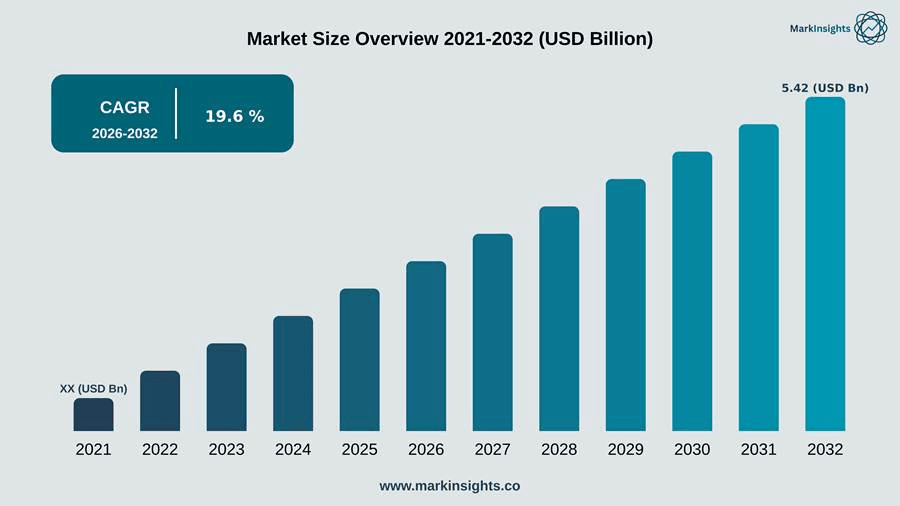
The global 5G Market Aviation was valued at approximately USD 1.85 billion in 2026 and is projected to reach around USD 5.42 billion by 2032, registering a CAGR of approximately 19.6% during the 2026-2032 forecast period.
Growth is anchored by accelerating airline and airport investment in low-latency passenger connectivity and real-time aircraft health monitoring systems, supported by the rollout of 5G-enabled air-to-ground networks by Airtel Business and SmartSky Networks across major aviation corridors. Growing military demand for resilient, high-throughput tactical data links and the maturation of private 5G networks for airport ground operations are reinforcing capital allocation toward 5G-integrated avionics and ground infrastructure among airframers and airport authorities.
The competitive landscape is consolidating around avionics majors, satellite connectivity providers, and telecom infrastructure vendors pursuing integrated aviation 5G solutions. Honeywell Aerospace partnered with Ligado Networks in March 2025 to develop 5G-enabled aviation spectrum applications, Anuvu completed its acquisition of SmartSky Networks' air-to-ground network assets in September 2025, Thales expanded its 5G private network offering for airport ground operations in June 2024, and Panasonic Avionics launched a next-generation 5G-ready in-flight connectivity terminal in January 2025. North America led 2026 revenue, while Asia Pacific is the fastest-growing region led by China, India, and Singapore.
5G Market Aviation Market Definition:
The 5G Market Aviation encompasses the design, manufacture, and deployment of fifth-generation wireless communication technologies and associated infrastructure across commercial, military, business, and unmanned aviation platforms to enable high-bandwidth, low-latency data transmission for passenger connectivity, aircraft operations, and air traffic management applications. Core components include hardware such as onboard antennas, radomes, modems, and ground-based base station equipment engineered to meet aviation certification and electromagnetic compatibility requirements, software platforms that manage network orchestration, spectrum allocation, and data prioritization across in-flight and ground segments, and services encompassing network integration, connectivity subscription management, and technical support for airlines and airport operators. Connectivity architectures span in-flight connectivity systems that deliver passenger Wi-Fi and streaming through satellite or air-to-ground links, air-to-ground networks that use terrestrial cell towers to provide continuous coverage along flight paths, and satellite-based connectivity that extends coverage over oceanic and remote regions. These systems support applications including passenger broadband access, real-time engine and structural health monitoring, predictive maintenance data offload, air traffic management communication, and cargo tracking, serving commercial airlines, military air forces, business jet operators, and unmanned aerial vehicle programs across global aviation markets.
5G Market Aviation Market Research Methodology:
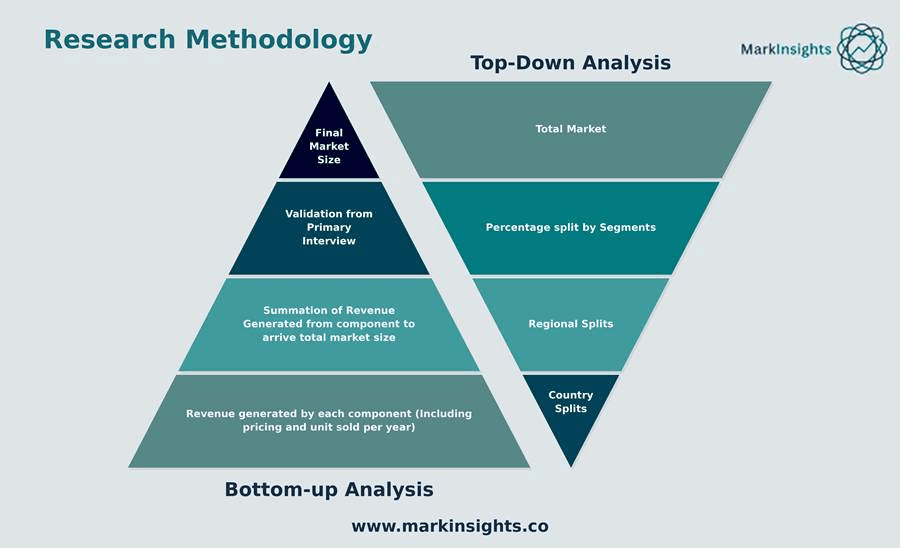
The demand-side assessment was built bottom-up from primary interviews with business buyers active in the 5g market aviation market, including institutional and industrial procurement buyers, distributors, and institutional or industrial purchasers, etc., and cross-referenced against demand-side secondary sources such as public production and consumption data, industry and trade-association surveys, etc. On the supply side, estimates were developed top-down from primary interviews with raw-material and component suppliers and with commercial leadership at manufacturers, etc., supported by secondary sources including publicly disclosed revenue and volume commentary from companies such as Honeywell Aerospace, Collins Aerospace, and Thales (10-K filings, investor presentations, and primary research transcripts), the regulatory frameworks of [RELEVANT REGULATOR — none detected in spec], and relevant import-export trade records, etc. Leading research typically incorporates 100-130 structured B2B interviews per report, split across institutional and industrial procurement buyers, component and raw-material suppliers, and tier-1 manufacturers, weighted toward the report's core growth regions. For this report, main inputs were cross-referenced against [RELEVANT REGULATOR] filings and publicly disclosed manufacturer segment data relevant to the 5G Market Aviation category.
5G Market Aviation Market Size, Scope & Segmentation:
| Report Attribute | Details |
| Market size in 2026 | USD 1.85 billion |
| Market Size by 2032 | USD 5.42 billion |
| Global CAGR (2026-2032) | 19.6% |
| Historical Data | 2021-2024 |
| Forecast Period | 2026-2032 |
| Segments Covered | By Component • Hardware • Software • Services By Connectivity Type • In-Flight Connectivity • Air-to-Ground Connectivity • Satellite-Based Connectivity By Application • Passenger Connectivity • Aircraft Operations and Maintenance • Air Traffic Management • Cargo and Logistics Tracking By Platform • Commercial Aviation • Military Aviation • Business and General Aviation • Unmanned Aerial Vehicles |
| Regions and Countries Covered | North America • US • Canada • Mexico Europe • Germany • UK • France • Italy • Spain • Rest of Europe Asia Pacific • China • India • Japan • South Korea • Australia • Rest of Asia Pacific Middle East and Africa • Saudi Arabia • UAE • South Africa • Rest of Middle East and Africa South America • Brazil • Argentina • Rest of South America |
| Market leaders and key company profiles | Honeywell Aerospace Collins Aerospace Thales Panasonic Avionics Viasat Anuvu SmartSky Networks Airtel Business L3Harris Technologies Indra Leonardo DRS Ligado Networks Gogo Inc. Nokia Ericsson |
5G Market Aviation Key Market Segmentation:
Insights On Key Component
The component segment encompasses hardware (the dominant sub-category, including onboard antennas, radomes, modems, and ground base station equipment supplied by Honeywell Aerospace, Thales, and Panasonic Avionics that must meet DO-160 environmental qualification and aviation electromagnetic compatibility standards), software (a growing sub-category including network orchestration, bandwidth management, and data prioritization platforms from Collins Aerospace and Viasat that optimize connectivity performance across variable flight conditions), and services (encompassing network integration, connectivity subscription management, and technical support offered by Anuvu and SmartSky Networks to airlines and airport operators on multi-year service contracts).
Hardware dominates the component sub-segment because certified onboard antenna, modem, and radome systems represent the highest per-aircraft capital expenditure and require specialized aviation-grade manufacturing capabilities, sustaining premium pricing for Honeywell Aerospace and Thales relative to software and service offerings.
Insights On Key Connectivity Type
The connectivity type segment covers in-flight connectivity (the largest sub-category, encompassing passenger Wi-Fi, streaming, and cabin crew communication systems from Panasonic Avionics and Viasat that airlines deploy to enhance passenger experience and generate ancillary revenue), air-to-ground connectivity (a rapidly growing sub-category using terrestrial cell towers along flight corridors, led by SmartSky Networks and Airtel Business, that delivers lower latency than satellite links over continental routes), and satellite-based connectivity (encompassing geostationary and low earth orbit satellite links from Viasat and Anuvu that provide continuous coverage over oceanic, polar, and remote regions where terrestrial towers are unavailable).
In-flight connectivity leads the connectivity type sub-segment because passenger demand for continuous broadband access during flights has become a competitive differentiator for airlines, driving sustained capital investment by Panasonic Avionics and Viasat in higher-throughput onboard terminal upgrades across wide-body and narrow-body fleets.
Insights On Key Application
The application segment includes passenger connectivity (the dominant sub-category, encompassing broadband internet, streaming, and mobile device connectivity services deployed by Panasonic Avionics and Anuvu across commercial airline fleets to meet rising passenger expectations), aircraft operations and maintenance (a growing sub-category where real-time engine health monitoring, predictive maintenance data offload, and flight data streaming from Honeywell Aerospace and Collins Aerospace reduce unscheduled maintenance events and turnaround time), air traffic management (encompassing 5G-enabled ground-to-air communication links supporting next-generation air traffic control systems from Thales and Indra), and cargo and logistics tracking (including real-time shipment location and condition monitoring for air freight operators).
Passenger connectivity leads the application sub-segment because airlines increasingly treat in-flight broadband as a core service differentiator and ancillary revenue stream, sustaining continuous fleet-wide retrofit and new-aircraft-line-fit investment by Panasonic Avionics and Viasat across commercial carriers globally.
Insights On Key Platform
The platform segment covers commercial aviation (the largest sub-category, encompassing narrow-body and wide-body passenger and cargo aircraft operated by major airlines that adopt 5G connectivity systems from Panasonic Avionics and Collins Aerospace for passenger experience and operational efficiency gains), military aviation (a strategically significant sub-category where fighter aircraft, transport aircraft, and airborne command platforms integrate 5G-enabled tactical data links from Honeywell Aerospace and L3Harris Technologies for resilient battlefield communication), business and general aviation (encompassing business jets and general aviation aircraft that adopt lighter-weight 5G terminal systems from Viasat for executive connectivity needs), and unmanned aerial vehicles (a fast-growing sub-category where 5G connectivity enables beyond-visual-line-of-sight command and control and real-time sensor data streaming for commercial and defense drone operations).
Commercial aviation leads the platform sub-segment because the global airline fleet's scale and the competitive necessity of passenger connectivity create the largest addressable installed base for 5G retrofit and line-fit programs, sustaining continuous investment by Panasonic Avionics and Anuvu across fleet renewal cycles.
Insights on Regional Analysis
The global 5G Market Aviation spans North America, Europe, Asia Pacific, Middle East and Africa, and South America. North America leads global 5G Market Aviation revenue, anchored by the United States where the Federal Aviation Administration (FAA) has advanced spectrum coordination frameworks with the Federal Communications Commission (FCC) to enable aviation-safe 5G deployment near airport approach zones, and where major airlines including Delta Air Lines and United Airlines have committed to fleet-wide connectivity upgrades. Honeywell Aerospace, Collins Aerospace, Viasat, and SmartSky Networks operate significant manufacturing, network infrastructure, and integration capabilities across the United States, supplying both domestic carriers and export customers. The region's mature air-to-ground network coverage, driven by SmartSky Networks and Anuvu tower deployment across the continental United States, provides a structural advantage supporting continuous passenger connectivity along dense domestic flight corridors, while Federal Aviation Administration certification pathways for 5G avionics hardware sustain steady program approvals for new connectivity terminal designs entering commercial service.
Asia Pacific is the fastest-growing region for 5G Market Aviation, led by China, India, and Singapore. China's Civil Aviation Administration of China (CAAC) is coordinating spectrum allocation and airport infrastructure investment to support 5G-enabled air traffic management modernization, while domestic carriers are expanding in-flight connectivity fleet retrofits to match international carrier service standards. India's Ministry of Civil Aviation and the Directorate General of Civil Aviation (DGCA) are supporting airport digital infrastructure upgrades under national aviation modernization initiatives, creating growing demand for 5G-enabled ground operations and passenger connectivity systems among expanding low-cost and full-service carriers. Singapore's Civil Aviation Authority of Singapore (CAAS) has positioned Changi Airport as a regional testbed for 5G-enabled airport ground operations and air traffic management trials, with Thales and Indra participating in pilot deployments that are expected to inform broader regional adoption across Southeast Asian aviation hubs over the forecast period.
5G Market Aviation Market Company Profiles:
The 5G Market Aviation competitive landscape encompasses three primary archetypes: avionics and connectivity integrators (Honeywell Aerospace, Collins Aerospace, Thales, Panasonic Avionics) that supply certified onboard hardware and integrated connectivity systems to airframers and airlines under long-term line-fit and retrofit agreements; network and satellite connectivity specialists (Viasat, Anuvu, SmartSky Networks, Airtel Business) that operate air-to-ground towers, satellite links, and connectivity service subscriptions for airlines and business aviation operators; and defense and air traffic management technology providers (L3Harris Technologies, Indra, Leonardo DRS, Ligado Networks) that develop tactical data link and ground-to-air communication systems for military and civil air traffic control modernization programs.
The 15 anchor companies profiled in this report are Honeywell Aerospace, Collins Aerospace, Thales, Panasonic Avionics, Viasat, Anuvu, SmartSky Networks, Airtel Business, L3Harris Technologies, Indra, Leonardo DRS, Ligado Networks, Gogo Inc., Nokia, and Ericsson. Honeywell Aerospace supplies certified onboard connectivity hardware and avionics integration services across commercial and military aircraft platforms globally. Collins Aerospace develops satellite and air-to-ground connectivity terminals supporting passenger broadband and aircraft operations data offload for major commercial airlines. Thales provides ground-to-air communication infrastructure and private 5G network systems for airport operations and air traffic management modernization programs. Viasat operates a global satellite connectivity network delivering in-flight broadband services to commercial and business aviation fleets. Gogo Inc. specializes in business aviation connectivity systems, while Nokia and Ericsson supply telecom infrastructure equipment adapted for aviation ground network deployments. Airtel Business and Leonardo DRS hold regional and specialist positions supporting terrestrial network coverage and defense communication systems respectively.
5G Market Aviation Market Latest Trends and Innovation:
• In September 2025, Anuvu completed its acquisition of SmartSky Networks' air-to-ground network assets, expanding Anuvu's North American connectivity coverage footprint and integrating SmartSky's cellular tower infrastructure into Anuvu's broader satellite and terrestrial connectivity portfolio for commercial and business aviation customers.
• In March 2025, Honeywell Aerospace announced a strategic partnership with Ligado Networks to jointly develop 5G-enabled aviation spectrum applications leveraging Ligado's licensed L-band spectrum, aiming to deliver enhanced onboard connectivity and air traffic communication capabilities for commercial aircraft operators across North America.
• In January 2025, Panasonic Avionics launched its next-generation 5G-ready in-flight connectivity terminal designed to integrate with both satellite and air-to-ground network architectures, enabling airlines to upgrade passenger broadband speeds without requiring a full onboard hardware replacement across existing fleet installations.
• In June 2024, Thales expanded its private 5G network offering for airport ground operations, deploying dedicated network infrastructure at multiple European airports to support baggage handling automation, ground vehicle coordination, and real-time asset tracking under airport operator service agreements.
5G Market Aviation Market Significant Growth Factors:
The global 5G Market Aviation is expanding on the back of four reinforcing drivers. Rising airline investment in passenger connectivity as a competitive differentiator is sustaining continuous fleet retrofit and line-fit demand for Panasonic Avionics and Viasat connectivity terminals across commercial carriers seeking to match evolving passenger expectations for onboard broadband access. Growing adoption of real-time aircraft health monitoring and predictive maintenance data offload is driving airframers and MRO providers to integrate 5G-enabled telemetry systems from Honeywell Aerospace and Collins Aerospace that reduce unscheduled maintenance events and improve fleet utilization rates. Expansion of air-to-ground network coverage by SmartSky Networks and Anuvu across major flight corridors is lowering connectivity latency and cost relative to satellite-only architectures, making 5G-enabled in-flight broadband commercially viable for narrow-body domestic fleets that previously lacked cost-effective connectivity options. Military modernization programs are increasingly specifying resilient 5G-enabled tactical data links from L3Harris Technologies and Leonardo DRS to support distributed command and control architectures across contested electromagnetic environments.
5G Market Aviation Market Drivers:
Demand is driven by passenger experience expectations, aircraft operational efficiency requirements, air traffic management modernization, and defense communication resilience needs. Airlines are prioritizing in-flight connectivity upgrades as ancillary revenue generators and loyalty differentiators, prompting Panasonic Avionics and Anuvu to accelerate terminal deployment schedules across both wide-body international and narrow-body domestic fleet segments. Airframers and operators are integrating 5G-enabled real-time telemetry systems from Honeywell Aerospace and Collins Aerospace to support predictive maintenance programs that reduce aircraft-on-ground time and associated revenue loss. Civil aviation authorities including the FAA and CAAC are advancing air traffic management modernization initiatives that specify 5G-capable ground-to-air communication infrastructure from Thales and Indra to support next-generation surveillance and separation management systems. Defense agencies are specifying 5G-enabled tactical data links for airborne platforms to support distributed sensor networks and resilient command architectures, driving sustained procurement of L3Harris Technologies and Leonardo DRS communication systems across allied military modernization programs.
5G Market Aviation Market Restraining Factors:
Several factors temper growth across the 5G Market Aviation value chain. Spectrum interference concerns between 5G C-band frequencies and aircraft radio altimeters have prompted extended regulatory review and mitigation requirements from the FAA and international counterparts, delaying network rollout timelines near airport approach zones and increasing compliance costs for connectivity providers. High certification costs and lengthy DO-160 environmental qualification timelines for new onboard hardware create significant barriers to market entry, limiting the pace at which Honeywell Aerospace and Collins Aerospace can introduce next-generation terminal designs into commercial service. Inconsistent air-to-ground network coverage across international and oceanic routes constrains the addressable market for terrestrial-only connectivity architectures, requiring airlines to maintain costly dual satellite and cellular infrastructure investments. Budget constraints among smaller regional carriers and legacy fleet retrofit complexity are slowing adoption rates outside major full-service airlines, while cybersecurity concerns around increased data connectivity on safety-critical aircraft systems require additional validation and testing investment by SmartSky Networks and Viasat before deployment approval.
5G Market Aviation Market Opportunities:
Opportunities cluster in four pockets across the 5G Market Aviation landscape. Private 5G network deployment for airport ground operations represents a significant emerging opportunity for Thales and Indra to support baggage handling automation, ground vehicle coordination, and asset tracking applications beyond traditional passenger connectivity use cases. Expansion of 5G-enabled unmanned aerial vehicle command and control systems for commercial drone delivery and defense reconnaissance missions offers Honeywell Aerospace and L3Harris Technologies access to a fast-growing adjacent platform category with distinct connectivity requirements. Integration of 5G network slicing technology to simultaneously support passenger connectivity, operational telemetry, and safety-critical communication on a single onboard network architecture presents a technical differentiation opportunity for Collins Aerospace and Viasat to reduce hardware redundancy costs for airline customers. Growing demand for connectivity retrofit programs among regional and low-cost carriers in emerging markets, particularly across Southeast Asia and Latin America, offers Anuvu and Airtel Business an underserved customer segment as connectivity becomes a competitive necessity rather than a premium differentiator.
5G Market Aviation Market Technology Trends:
Technology direction is set by three converging shifts in 5G Market Aviation systems. Network slicing technology, being integrated by Collins Aerospace and Viasat into next-generation onboard connectivity architectures, is enabling simultaneous prioritized data channels for passenger broadband, operational telemetry, and safety-critical communication on shared network infrastructure, reducing the need for redundant hardware systems. Hybrid satellite and air-to-ground network orchestration software, deployed by Anuvu and SmartSky Networks, is enabling seamless handoff between connectivity architectures during flight, optimizing latency and bandwidth allocation based on real-time route and coverage conditions. Edge computing integration at the aircraft level, advanced by Honeywell Aerospace and L3Harris Technologies, is enabling onboard processing of sensor and telemetry data before transmission, reducing bandwidth requirements and helping faster anomaly detection for predictive maintenance and tactical data link applications across both commercial and military aviation platforms.
5G Market Aviation Market Future Trends:
By 2032, the market will be reshaped by the maturation of low earth orbit satellite constellation integration, the standardization of 5G network slicing across commercial fleets, and the emergence of fully autonomous unmanned aerial vehicle traffic management systems dependent on 5G connectivity infrastructure. Low earth orbit satellite integration, led by Viasat and Anuvu in partnership with emerging constellation operators, is expected to substantially reduce connectivity latency for oceanic and remote route segments, closing the performance gap between satellite and terrestrial air-to-ground architectures. Network slicing standardization across commercial fleets will enable Collins Aerospace and Panasonic Avionics to offer differentiated service tiers combining passenger connectivity and operational data streaming on unified hardware platforms, reducing per-aircraft equipment costs. Fully autonomous unmanned aerial vehicle traffic management systems, dependent on resilient 5G command and control links from Honeywell Aerospace and L3Harris Technologies, are expected to become commercially viable for urban air mobility and logistics applications, expanding the addressable platform base for aviation 5G infrastructure beyond traditional manned aircraft.
5G Market Aviation Market Supply Chain Analysis:
The 5G Market Aviation supply chain runs from semiconductor and radio-frequency component suppliers through avionics hardware integrators and network infrastructure providers to airline and airport operator end deployment. Upstream component supply is anchored by radio-frequency chipset and antenna manufacturers supplying Honeywell Aerospace, Collins Aerospace, and Thales, who integrate these components into certified aviation-grade connectivity terminals and ground base station equipment meeting DO-160 environmental qualification and electromagnetic compatibility standards. Network infrastructure providers including SmartSky Networks, Anuvu, and Airtel Business construct and operate air-to-ground cellular towers and satellite ground stations that provide the connectivity backbone linking aircraft to terrestrial and orbital networks, while software providers develop network orchestration and bandwidth management platforms that optimize data prioritization across variable flight conditions.
Distribution to end customers flows through direct airline procurement contracts for line-fit installation on new aircraft and retrofit programs for existing fleets, coordinated with airframers including Boeing and Airbus during production, and through airport authority contracts for ground infrastructure deployment. Key bottlenecks include lengthy aviation hardware certification cycles that delay new terminal introduction, spectrum coordination requirements between aviation regulators and telecom authorities that constrain network deployment timelines near airports, and limited air-to-ground tower coverage across oceanic and remote flight corridors that requires continued reliance on higher-cost satellite connectivity architectures.
5G Market Aviation Market Regulatory Analysis:
The global 5G Market Aviation operates within a multi-layered regulatory framework governing spectrum allocation, aviation hardware certification, and safety compliance across major markets. The US Federal Aviation Administration (FAA) coordinates with the Federal Communications Commission (FCC) on C-band spectrum interference mitigation requirements near airport approach zones, while European Union Aviation Safety Agency (EASA) administers certification standards for onboard connectivity hardware under EU aviation safety regulations. Civil Aviation Administration of China (CAAC) and India's Directorate General of Civil Aviation (DGCA) oversee spectrum coordination and airport infrastructure approval for 5G deployment across their respective national aviation systems. Applicable technical standards include RTCA DO-160 environmental qualification testing for airborne equipment, DO-178C software certification for safety-critical systems, and International Telecommunication Union (ITU) spectrum allocation frameworks governing cross-border frequency coordination. Conformity assessment routes include FAA Technical Standard Order (TSO) authorization, EASA European Technical Standard Order (ETSO) certification, and national telecom regulator type approval for ground-based network infrastructure equipment prior to commercial deployment.
5G Market Aviation Market Share Analysis:
The top five vendors together account for an estimated 50-60% of global 5G Market Aviation revenue in the in-flight connectivity hardware segment, with the remainder distributed across regional network operators, specialist software providers, and defense communication integrators across North America, Europe, and Asia Pacific. Concentration is highest in the commercial passenger connectivity segment where Honeywell Aerospace, Collins Aerospace, Panasonic Avionics, Viasat, and Thales collectively dominate, while the market is most fragmented in the air-to-ground network operations segment served by regional connectivity providers.
5G Market Aviation Market Competitive Landscape:
The 5G Market Aviation competitive landscape is led by Honeywell Aerospace, Collins Aerospace, Thales, Panasonic Avionics, and Viasat, with significant presence from Anuvu, SmartSky Networks, Airtel Business, L3Harris Technologies, Indra, Leonardo DRS, Ligado Networks, Gogo Inc., Nokia, and Ericsson. The Anuvu acquisition of SmartSky Networks assets in September 2025, the Honeywell Aerospace and Ligado Networks partnership in March 2025, the Panasonic Avionics terminal launch in January 2025, and the Thales private network expansion in June 2024 are the principal developments shaping the competitive map.
Key Player Strategies
Leaders are prioritizing spectrum partnership development, certified hardware innovation, air-to-ground network coverage expansion, and integrated satellite-terrestrial connectivity offerings. Honeywell Aerospace and Thales compete on avionics integration scale and airport infrastructure relationships, while Anuvu and SmartSky Networks focus on network coverage density and connectivity service subscription growth. This parameter analyses the strategic posture of each leading player across hardware certification, network infrastructure, and service delivery dimensions.
Buyer-Tier Concentration
Share concentration differs by customer tier across the aviation 5G value chain. Tier-1 full-service carriers such as Delta Air Lines and Singapore Airlines consolidate procurement with Honeywell Aerospace, Collins Aerospace, and Panasonic Avionics because only these integrators carry the certified hardware portfolios and global support networks required for fleet-wide, multi-region deployment programs. Regional and low-cost carriers, by contrast, are serviced through connectivity service aggregators such as Anuvu and Gogo Inc., which bundle satellite and air-to-ground access from multiple network providers into simplified subscription packages, diluting the top-five vendor concentration figure at the point of airline contract signing even though it holds firmly at the hardware manufacturing tier.
Company Capability Assessment
Capability leadership is differentiated by segment and geography: Honeywell Aerospace leads in certified onboard connectivity hardware integration across commercial and military platforms; Collins Aerospace leads in satellite and air-to-ground terminal technology for wide-body fleet applications; Thales leads in ground-to-air communication infrastructure and private 5G network deployment for airport operations; Viasat leads in global satellite connectivity network scale serving both commercial and business aviation; Panasonic Avionics leads in passenger-facing in-flight entertainment and connectivity terminal integration. This parameter covers each leader's depth across hardware certification, network infrastructure, and platform integration dimensions.
Market Concentration
The top five vendors account for an estimated 50-60% of global 5G Market Aviation revenue in the in-flight connectivity hardware segment, reflecting high concentration driven by capital-intensive certification requirements and long-term airline supplier relationships. This parameter assesses the degree of vendor concentration relative to total market revenue across connectivity segments.
Frequently Asked Questions
How big is the 5G Market Aviation Market and what will it be worth by 2032?
The 5G Market Aviation Market was valued at approximately USD 1.85 billion in 2026 and is projected to reach around USD 5.42 billion by 2032, registering a CAGR of approximately 19.6%.
What is the CAGR of the 5G Market Aviation Market from 2026 to 2032?
The 5G Market Aviation Market is projected to register a CAGR of approximately 19.6% during the forecast period from 2026 to 2032.
What are the key drivers and restraints shaping the 5G Market Aviation Market?
Key Drivers:
• Airlines are prioritizing in-flight connectivity upgrades as ancillary revenue generators and loyalty differentiators, prompting Panasonic Avionics and Anuvu to accelerate terminal deployment schedules across both wide-body international and narrow-body domestic fleet segments.
• Airframers and operators are integrating 5G-enabled real-time telemetry systems from Honeywell Aerospace and Collins Aerospace to support predictive maintenance programs that reduce aircraft-on-ground time and associated revenue loss.
Key Restraints:
• Spectrum interference concerns between 5G C-band frequencies and aircraft radio altimeters have prompted extended regulatory review and mitigation requirements from the FAA and international counterparts, delaying network rollout timelines near airport approach zones and increasing compliance costs for connectivity providers.
• High certification costs and lengthy DO-160 environmental qualification timelines for new onboard hardware create significant barriers to market entry, limiting the pace at which Honeywell Aerospace and Collins Aerospace can introduce next-generation terminal designs into commercial service.
What are the major segments and which region leads the 5G Market Aviation Market?
Hardware (Component), In-flight connectivity (Connectivity Type), Passenger connectivity (Application), Commercial aviation (Platform) lead their respective segments. North America leads global revenue, anchored by the United States. Asia Pacific is the fastest-growing region, led by China, India, and Singapore. Full segment-level analysis, including growth drivers, restraints, and country-level detail for every region covered in this study, is provided in the corresponding chapters of the full report.
Who are the leading companies in the 5G Market Aviation Market?
The top five players in the 5G Market Aviation Market — Honeywell Aerospace, Collins Aerospace, Thales, Panasonic Avionics, and Viasat — collectively hold an estimated 50-60% of global revenue. Key companies covered in this report include Honeywell Aerospace, Collins Aerospace, Thales, Panasonic Avionics, Viasat, Anuvu, SmartSky Networks, Airtel Business, L3Harris Technologies, Indra, Leonardo DRS, Ligado Networks, Gogo Inc., Nokia, and Ericsson.
Related Reports
Global Advanced Surface Movement Guidance Control System Market — Forecast to 2032
By System Type (Surveillance Systems, Routing Systems, Guidance Systems, Control Systems), By Component (Radar Sensors, Software, Control Towers Equipment, Multilateration Systems), By Airport Category (Category A Airports, Category B Airports, Category C Airports), By Application (Commercial Airports, Military Airbases, Cargo and Freight Airports), By End User (Airport Authorities, Air Navigation Service Providers, Defense Agencies)
From $ 2,500
View Report →Global Aircraft Ground Handling System Market — Forecast to 2032
By Equipment Type (Ground Power Units, Ground Support Vehicles, Baggage and Cargo Handling Systems, De-Icing Equipment, Passenger Boarding Bridges and Stairs), By Service Type (Ramp Handling, Cargo and Baggage Handling, De-Icing Services, Passenger Handling, Aircraft Marshalling), By Application (Commercial Aviation, Military Aviation, Cargo and Freight), By Power Source (Electric, Diesel/Fuel-Powered, Hybrid), By End User (Airports, Airlines, Third-Party Ground Handling Service Providers)
From $ 2,500
View Report →