
Global Aircraft Ground Handling System Market — Forecast to 2032
Research scope: By Equipment Type (Ground Power Units, Ground Support Vehicles, Baggage and Cargo Handling Systems, De-Icing Equipment, Passenger Boarding Bridges and Stairs), By Service Type (Ramp Handling, Cargo and Baggage Handling, De-Icing Services, Passenger Handling, Aircraft Marshalling), By Application (Commercial Aviation, Military Aviation, Cargo and Freight), By Power Source (Electric, Diesel/Fuel-Powered, Hybrid), By End User (Airports, Airlines, Third-Party Ground Handling Service Providers)
Domain: Aerospace & Defense
Report Code: MIADG 10068
Aircraft Ground Handling System Market Analysis and Insights:
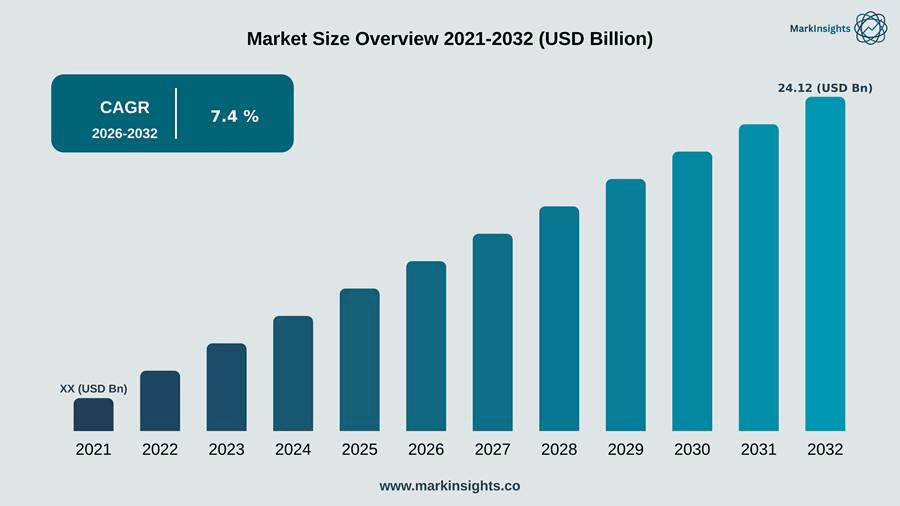
The global Aircraft Ground Handling System market was valued at approximately USD 15.68 billion in 2026 and is projected to reach around USD 24.12 billion by 2032, registering a CAGR of approximately 7.4% during the 2026-2032 forecast period.
Growth is anchored by sustained global air passenger traffic recovery and expansion driving airport infrastructure investment, rising airline and airport operator adoption of electric ground support equipment to meet emissions reduction targets, and increasing outsourcing of ground handling operations to specialized third-party service providers seeking operational efficiency. Major airport operators and airlines including Lufthansa Group and Swissport have committed to fleet electrification programs finalized across 2024 and 2025, anchoring sustained procurement demand for electric ground power units and tow tractors from equipment manufacturers.
The competitive landscape is consolidating around a small group of global equipment manufacturers and ground handling service providers that collectively dominate the industrial segment. TLD Group expanded its electric ground support equipment production capacity in early 2025 to meet rising European airport demand, Textron GSE introduced a new electric pushback tractor platform in September 2024, Swissport renewed and expanded multi-airport ground handling contracts across Europe and Asia Pacific through 2025, and John Bean Technologies Corporation (JBT) completed its acquisition of Oshkosh Corporation's AeroTech segment in March 2025 to broaden its airport equipment portfolio. Europe led 2026 revenue, while Asia Pacific is the fastest-growing region led by China, India, and Southeast Asia.
Aircraft Ground Handling System Market Definition:
Aircraft ground handling systems comprise the specialized equipment, vehicles, and infrastructure deployed at airports to service commercial, cargo, and military aircraft during the turnaround period between arrival and departure. Core equipment categories include ground power units that supply auxiliary electrical power to parked aircraft, ground support vehicles such as tow tractors, belt loaders, and pushback tugs that maneuver aircraft and load cargo, baggage and cargo handling systems including conveyor belt loaders and container loaders used for freight transfer, de-icing equipment that applies fluid treatments to aircraft surfaces under cold-weather operating conditions, and passenger boarding bridges and mobile stairs that facilitate passenger embarkation and disembarkation. These systems are deployed by airport operators, airlines operating their own ground handling divisions, and third-party ground handling service providers across ramp handling, cargo and baggage handling, aircraft marshalling, and de-icing service functions. The market spans commercial aviation, military aviation, and cargo and freight applications, encompassing electric, diesel and fuel-powered, and hybrid power source configurations that collectively determine turnaround efficiency, operating cost, and environmental performance at airport ramp and apron facilities worldwide.
Aircraft Ground Handling System Market Research Methodology:
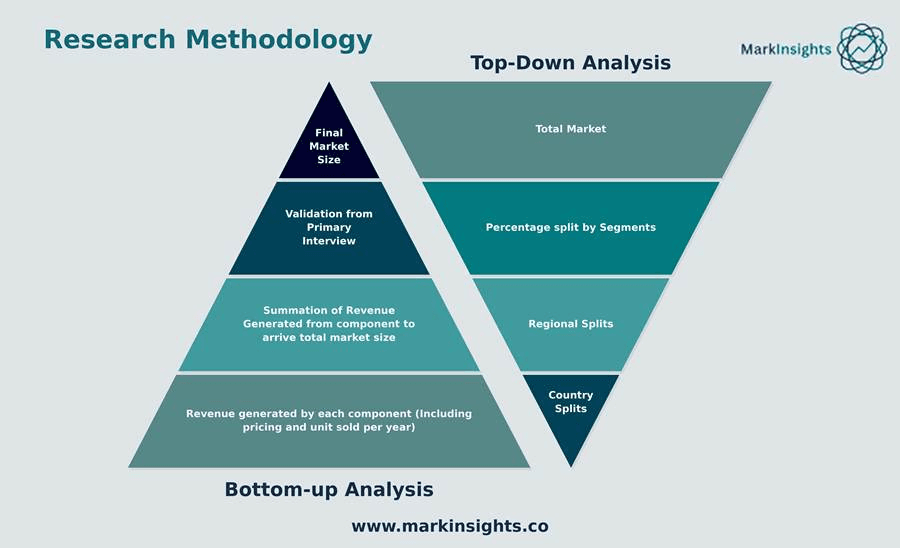
The demand-side assessment was built bottom-up from primary interviews with business buyers active in the aircraft ground handling system market, including institutional and industrial procurement buyers, distributors, and institutional or industrial purchasers, etc., and cross-referenced against demand-side secondary sources such as public production and consumption data, industry and trade-association surveys, etc. On the supply side, estimates were developed top-down from primary interviews with raw-material and component suppliers and with commercial leadership at manufacturers, etc., supported by secondary sources including publicly disclosed revenue and volume commentary from companies such as JBT AeroTech, Textron GSE, and TLD Group (10-K filings, investor presentations, and primary research transcripts), the regulatory frameworks of EPA, and relevant import-export trade records, etc. Leading research typically incorporates 100-130 structured B2B interviews per report, split across institutional and industrial procurement buyers, component and raw-material suppliers, and tier-1 manufacturers, weighted toward the report's central growth regions. For this report, core inputs were cross-referenced against EPA filings and publicly disclosed manufacturer segment data relevant to the Aircraft Ground Handling System category.
Aircraft Ground Handling System Market Size, Scope & Segmentation:
| Report Attribute | Details |
| Market size in 2026 | USD 15.68 billion |
| Market Size by 2032 | USD 24.12 billion |
| Global CAGR (2026-2032) | 7.4% |
| Historical Data | 2021-2024 |
| Forecast Period | 2026-2032 |
| Segments Covered | By Equipment Type • Ground Power Units • Ground Support Vehicles • Baggage and Cargo Handling Systems • De-Icing Equipment • Passenger Boarding Bridges and Stairs By Service Type • Ramp Handling • Cargo and Baggage Handling • De-Icing Services • Passenger Handling • Aircraft Marshalling By Application • Commercial Aviation • Military Aviation • Cargo and Freight By Power Source • Electric • Diesel/Fuel-Powered • Hybrid By End User • Airports • Airlines • Third-Party Ground Handling Service Providers |
| Regions and Countries Covered | North America • US • Canada • Mexico Europe • Germany • UK • France • Italy • Spain • Rest of Europe Asia Pacific • China • India • Japan • South Korea • Australia • Rest of Asia Pacific Middle East and Africa • Saudi Arabia • UAE • South Africa • Rest of Middle East and Africa South America • Brazil • Argentina • Rest of South America |
| Market leaders and key company profiles | JBT AeroTech Textron GSE TLD Group ITW GSE Vestergaard Company Swissport dnata Menzies Aviation WFS Mallaghan Global Ground Support ThyssenKrupp Airport Solutions Guinault Cavotec Oshkosh AeroTech |
Aircraft Ground Handling System Key Market Segmentation:
Insights On Key Equipment Type
The equipment type segment encompasses ground power units (a dominant sub-category supplying auxiliary electrical and pneumatic power to parked aircraft, produced by ITW GSE, Guinault, and JBT AeroTech), ground support vehicles (the largest sub-category including tow tractors, pushback tugs, and belt loaders from Textron GSE, TLD Group, and Mallaghan supplying ramp handling fleets globally), baggage and cargo handling systems (including conveyor belt loaders and container loaders from JBT AeroTech and Vestergaard Company serving high-throughput cargo terminals), de-icing equipment (a growing sub-category including truck-mounted and fixed de-icing systems from Vestergaard Company and Global Ground Support serving cold-climate airport operations), and passenger boarding bridges and stairs (including fixed and mobile bridges from ThyssenKrupp Airport Solutions and JBT AeroTech).
Ground support vehicles dominate the equipment type sub-segment because every aircraft turnaround cycle requires tow tractors, belt loaders, and pushback equipment regardless of airport size, creating a structurally large replacement and expansion demand base reinforced by fleet electrification investment from Textron GSE and TLD Group across major airport hubs.
Insights On Key Service Type
The service type segment covers ramp handling (the largest sub-category encompassing aircraft marshalling, towing, and turnaround coordination services provided by Swissport, dnata, and Menzies Aviation under airline ground handling contracts), cargo and baggage handling (a major sub-category including freight loading, sorting, and baggage transfer services performed by third-party providers at high-traffic international hubs), de-icing services (a seasonal but essential sub-category delivered by Swissport and specialized regional operators at cold-climate airports), passenger handling (including check-in, boarding assistance, and gate coordination services), and aircraft marshalling (specialized taxi and parking guidance services performed by trained ramp personnel).
Ramp handling leads the service type sub-segment because it encompasses the full scope of physical aircraft turnaround coordination that airlines must contract for at every station, sustaining continuous multi-year service agreements between Swissport, dnata, and Menzies Aviation and airline customers across global hub and regional airport networks.
Insights On Key Application
The application segment includes commercial aviation (the dominant sub-category encompassing passenger airline turnaround operations at international and domestic airports, served by Swissport, dnata, and Menzies Aviation under long-term ground handling agreements), military aviation (a specialized sub-category requiring ruggedized ground power units and towing equipment from Global Ground Support and TLD Group for defense aircraft servicing at military airbases), and cargo and freight (a growing sub-category encompassing dedicated cargo carrier and integrator ground operations at freight hub airports served by specialized container and pallet loading equipment).
Commercial aviation leads the application sub-segment because global passenger air traffic volume and international airport network density create the largest and most continuous demand base for ground handling equipment and services, sustaining capital investment by airport operators and third-party ground handlers across both mature and emerging aviation markets.
Insights On Key Power Source
The power source segment encompasses electric (the fastest-growing sub-category driven by airport and airline emissions reduction commitments, with Textron GSE and TLD Group expanding electric tow tractor and ground power unit product lines), diesel and fuel-powered (the currently dominant sub-category representing the installed base of ground support vehicles and power units at most global airports due to lower upfront acquisition cost and established maintenance infrastructure), and hybrid (an emerging sub-category combining electric and combustion power sources to balance operating range and emissions performance for high-utilization ramp equipment).
Diesel and fuel-powered equipment leads the power source sub-segment today because the existing global fleet base and airport charging infrastructure limitations continue to favor combustion-powered ground support vehicles, although electric segment growth is accelerating rapidly as European and North American airports mandate emissions reduction targets for ramp operations.
Insights On Key End User
The end user segment covers airports (encompassing airport authorities that own and operate shared ground handling infrastructure including passenger boarding bridges and baggage systems), airlines (including carriers that operate self-handling ground support fleets at hub airports for operational control and cost management, such as Lufthansa Group and Delta Air Lines), and third-party ground handling service providers (encompassing dedicated ground handling companies including Swissport, dnata, and Menzies Aviation that contract with multiple airlines across shared airport infrastructure).
Third-party ground handling service providers lead the end user sub-segment because outsourcing ground operations allows airlines to reduce fixed capital and labor costs while providers achieve equipment utilization efficiencies across multiple airline customers, sustaining continuous fleet investment by Swissport, dnata, and Menzies Aviation across their multi-airport service networks.
Insights on Regional Analysis
The global Aircraft Ground Handling System market spans North America, Europe, Asia Pacific, Middle East and Africa, and South America. Europe leads global Aircraft Ground Handling System revenue, anchored by Germany, France, the United Kingdom, and the Netherlands where dense international hub airports including Frankfurt, Paris Charles de Gaulle, London Heathrow, and Amsterdam Schiphol sustain continuous ground support equipment procurement and fleet renewal cycles. European Union Aviation Safety Agency (EASA) operational and safety oversight, alongside European Green Deal emissions reduction provisions targeting airport ramp operations, is driving accelerated electric ground support equipment adoption by airport operators and ground handlers including Swissport and Fraport. TLD Group, ITW GSE, and Vestergaard Company operate major manufacturing and service facilities across France, Denmark, and Germany, supplying both domestic European airports and global export markets. Sustained transatlantic and intra-European passenger traffic recovery is reinforcing airport capital investment in turnaround infrastructure and equipment fleet expansion across the region's major hub airports.
Asia Pacific is the fastest-growing region for Aircraft Ground Handling System equipment and services, led by China, India, and Southeast Asian markets including Indonesia and Vietnam. China's rapid airport construction program under its civil aviation five-year planning framework, administered by the Civil Aviation Administration of China (CAAC), is driving substantial new ground handling equipment procurement at both new-build and expanding hub airports across Beijing, Shanghai, and Guangzhou. India's Ministry of Civil Aviation UDAN regional connectivity scheme is expanding the number of operational airports requiring baseline ground support equipment, creating a large addressable market for tow tractors, ground power units, and baggage handling systems from JBT AeroTech and Mallaghan. Rising low-cost carrier proliferation and growing air cargo volumes across Southeast Asia are further sustaining third-party ground handler expansion by dnata and Swissport, which continue to secure new station contracts across the region's fastest-growing airport markets.
Aircraft Ground Handling System Market Company Profiles:
The Aircraft Ground Handling System competitive landscape encompasses three primary archetypes: global equipment manufacturers (JBT AeroTech, Textron GSE, TLD Group, ITW GSE, Vestergaard Company) that design and produce ground power units, tow tractors, de-icing systems, and baggage handling equipment supplied to airports and ground handlers worldwide; global third-party ground handling service operators (Swissport, dnata, Menzies Aviation, WFS) that operate multi-airport service networks under contract with airline customers across ramp, cargo, and passenger handling functions; and specialized regional equipment and infrastructure providers (Mallaghan, Global Ground Support, ThyssenKrupp Airport Solutions, Guinault, Cavotec) that serve niche equipment categories and regional airport markets with focused product portfolios.
The 15 anchor companies profiled in this report are JBT AeroTech, Textron GSE, TLD Group, ITW GSE, Vestergaard Company, Swissport, dnata, Menzies Aviation, WFS, Mallaghan, Global Ground Support, ThyssenKrupp Airport Solutions, Guinault, Cavotec, and Oshkosh AeroTech. JBT AeroTech supplies a broad range of ground power units, boarding bridges, and de-icing equipment to major international airports globally. Textron GSE manufactures electric and diesel tow tractors, belt loaders, and pushback tugs for airline and ground handler fleets across North America and Europe. Swissport operates ground handling services at more than 270 airports worldwide, serving as one of the largest third-party providers by station count. TLD Group specializes in electric ground support vehicle production from its French manufacturing base, supplying airports across Europe, Asia, and the Americas. Mallaghan, Guinault and Cavotec hold specialist positions built on regional equipment supply and niche power and de-icing technology rather than global fleet-scale contracts.
Aircraft Ground Handling System Market Latest Trends and Innovation:
• In March 2025, John Bean Technologies Corporation (JBT AeroTech) completed its acquisition of Oshkosh Corporation's AeroTech segment for approximately USD 800 million, combining fire and rescue, de-icing, and airport ground support product lines to create a broader integrated aviation ground equipment portfolio serving global airport and defense customers.
• In February 2025, TLD Group announced an expansion of its electric ground support equipment manufacturing capacity at its Nantes, France facility, responding to rising demand from European airport operators pursuing fleet electrification targets under national and EU-level airport emissions reduction commitments.
• In September 2024, Textron GSE introduced a new electric pushback tractor platform designed for narrow-body and wide-body aircraft turnaround operations, targeting airline and ground handler fleet electrification programs across North American and European hub airports seeking to reduce ramp emissions and diesel fuel operating costs.
• In June 2024, Swissport signed a multi-year ground handling service agreement extension with a major Gulf carrier covering ramp, cargo, and passenger handling operations across several European and Asian hub airports, reinforcing Swissport's station network scale amid continued post-pandemic airline outsourcing demand.
Aircraft Ground Handling System Market Significant Growth Factors:
The global Aircraft Ground Handling System market is expanding on the back of four reinforcing drivers. Sustained global air passenger traffic growth and airline capacity expansion, particularly across Asia Pacific and the Middle East, is driving airport authorities and third-party ground handlers to invest in new and replacement ground support equipment fleets to meet rising aircraft turnaround volumes. Growing regulatory and corporate pressure to reduce airport ramp emissions is accelerating fleet electrification investment by airlines and ground handlers, requiring equipment manufacturers including Textron GSE and TLD Group to expand electric tow tractor, belt loader, and ground power unit production capacity. Continued airline outsourcing of ground handling operations to specialized third-party providers is consolidating equipment procurement decisions among fewer, larger service operators including Swissport and dnata, enabling scale-driven fleet standardization and utilization efficiency. New airport construction and terminal expansion programs across China, India, and the Middle East are creating substantial greenfield demand for baggage handling systems, passenger boarding bridges, and ramp equipment as these markets build out aviation infrastructure to accommodate rising passenger and cargo volumes.
Aircraft Ground Handling System Market Drivers:
Demand is driven by airline fleet expansion, airport infrastructure investment, ground handling outsourcing trends, and emissions reduction regulation. Rising global commercial aircraft delivery volumes from Boeing and Airbus are directly increasing the installed base of aircraft requiring turnaround services, sustaining procurement of tow tractors, ground power units, and baggage loaders by airports and ground handlers globally. Large-scale airport construction and terminal expansion programs across China, India, Saudi Arabia, and the United Arab Emirates are creating substantial new equipment demand as these markets build greenfield ramp and apron infrastructure to support growing passenger and cargo traffic. Continued airline preference for outsourcing ground operations to specialized third-party providers including Swissport, dnata, and Menzies Aviation is consolidating equipment purchasing decisions and enabling economies of scale in fleet standardization across multiple airline customer relationships. Tightening emissions and noise regulations at major European and North American airports are compelling accelerated replacement of diesel-powered ground support equipment with electric alternatives from Textron GSE and TLD Group, creating sustained equipment upgrade cycles.
Aircraft Ground Handling System Market Restraining Factors:
Several factors temper growth across the Aircraft Ground Handling System value chain. High capital cost of electric ground support equipment relative to conventional diesel-powered alternatives, combined with limited airport charging infrastructure at many smaller and regional airports, is slowing the pace of fleet electrification adoption despite regulatory pressure and airline sustainability commitments. Labor shortages affecting ground handling personnel at major airports following the pandemic-era workforce reduction have created operational bottlenecks that constrain the effective utilization of existing ground support equipment fleets and limit the near-term benefit of new equipment investment. Cyclical airline profitability pressures, driven by fuel cost volatility and competitive fare environments, are causing some carriers and third-party ground handlers to defer non-essential equipment fleet replacement and expansion capital expenditure. Fragmented regional equipment maintenance and spare parts supply networks in emerging airport markets across Africa and parts of South America create operational reliability challenges that increase total cost of ownership for ground support equipment operators in these geographies.
Aircraft Ground Handling System Market Opportunities:
Opportunities cluster in four pockets across the Aircraft Ground Handling System landscape. Continued electrification of ground support vehicle fleets represents a substantial multi-year replacement opportunity for Textron GSE, TLD Group, and ITW GSE as airports across Europe and North America establish emissions reduction mandates for ramp operations. Rapid new airport construction across China, India, and the Middle East offers equipment manufacturers and third-party ground handlers a large greenfield installation opportunity to establish long-term service and equipment supply relationships with newly developed airport authorities. Growing air cargo and e-commerce logistics volumes are creating incremental demand for specialized cargo and container handling equipment from JBT AeroTech and Mallaghan at dedicated freight hub airports. Digitalization of ground handling operations through fleet telematics, predictive maintenance software, and automated ramp scheduling systems presents an opportunity for equipment manufacturers to differentiate through value-added digital service offerings that improve fleet utilization and reduce unplanned downtime for airline and airport customers.
Aircraft Ground Handling System Market Technology Trends:
Technology direction is set by three converging shifts in Aircraft Ground Handling System equipment and operations. Electric powertrain adoption across tow tractors, pushback tugs, and ground power units, led by Textron GSE and TLD Group, is reducing ramp-level emissions and operating noise while requiring parallel investment in airport charging infrastructure and battery management technology to support continuous multi-shift equipment utilization. Fleet telematics and predictive maintenance platforms integrated into ground support vehicles by JBT AeroTech and Vestergaard Company are enabling airports and ground handlers to monitor equipment health, optimize maintenance scheduling, and reduce unplanned downtime that disrupts aircraft turnaround timing. Automation of routine ramp functions including automated guided baggage tractors and remote-controlled pushback systems is beginning to emerge at select major hub airports, with equipment manufacturers piloting autonomous ramp vehicle technology to address ground handling labor shortages and improve turnaround consistency at high-traffic terminals.
Aircraft Ground Handling System Market Future Trends:
By 2032, the market will be reshaped by widespread electric ground support fleet penetration, the integration of autonomous and semi-autonomous ramp vehicle technology, and expanded digital turnaround coordination platforms linking airlines, airports, and ground handlers in real time. Electric tow tractors, belt loaders, and ground power units are expected to become the standard procurement choice at major airports across Europe and North America as charging infrastructure buildout matures and total cost of ownership advantages over diesel equipment become more pronounced. Autonomous and semi-autonomous ground support vehicles, currently in pilot deployment by select equipment manufacturers, are expected to see broader commercial rollout at high-traffic hub airports seeking to address persistent ground handling labor shortages while improving turnaround safety and consistency. Real-time digital turnaround coordination platforms integrating airline scheduling, ground handler dispatch, and equipment telematics data will enable tighter aircraft turnaround time management, reducing delays and improving airport slot utilization efficiency across busy hub airport networks.
Aircraft Ground Handling System Market Supply Chain Analysis:
The Aircraft Ground Handling System supply chain runs from component and raw material suppliers including battery cell manufacturers, hydraulic system producers, and steel and aluminum chassis fabricators through equipment manufacturers to airport operators, airlines, and third-party ground handling service providers. Equipment manufacturers including JBT AeroTech, Textron GSE, and TLD Group source engines, batteries, hydraulic systems, and electronic control components from specialized industrial suppliers before assembling finished ground support vehicles, ground power units, and baggage handling systems at dedicated manufacturing facilities in North America, Europe, and Asia. Finished equipment is sold directly to airport authorities, airlines operating self-handling fleets, and third-party ground handlers including Swissport and dnata through direct sales contracts, equipment leasing arrangements, and long-term maintenance service agreements.
Distribution of ground support equipment to end customers relies on regional sales and service networks maintained by manufacturers, supplemented by third-party equipment leasing companies that provide flexible fleet financing for smaller airports and regional ground handlers. Key bottlenecks include battery and semiconductor component supply constraints affecting electric equipment production timelines, extended equipment delivery lead times during periods of high airport construction activity, and regional spare parts and maintenance service network gaps in emerging airport markets that increase equipment downtime risk for ground handling operators.
Aircraft Ground Handling System Market Regulatory Analysis:
The global Aircraft Ground Handling System market operates within a framework of aviation safety, ground operations, and environmental regulation administered by national and regional civil aviation authorities. Principal regulatory anchors include the US Federal Aviation Administration (FAA) ground operations and airport certification standards under 14 CFR Part 139, the European Union Aviation Safety Agency (EASA) ground handling and ramp safety oversight requirements, the International Air Transport Association (IATA) Ground Operations Manual (IGOM) standardizing ramp handling procedures across member airlines and ground handlers, and the International Civil Aviation Organization (ICAO) Annex 14 aerodrome design and operations standards. Environmental compliance requirements including European Green Deal airport emissions reduction targets and US Environmental Protection Agency (EPA) non-road diesel engine emissions standards are increasingly shaping ground support equipment procurement specifications. Conformity assessment routes include IATA Safety Audit for Ground Operations (ISAGO) certification for ground handling providers and national aviation authority equipment type approval processes required before deployment at certified airport ramp environments.
Aircraft Ground Handling System Market Share Analysis:
The top five vendors together account for an estimated 45-55% of global Aircraft Ground Handling System equipment revenue, with the remainder distributed across regional equipment manufacturers, specialized de-icing and power unit suppliers, and niche ground handling service operators across Asia Pacific and the Middle East. Concentration is highest in the ground support vehicle segment where JBT AeroTech, Textron GSE, TLD Group, and ITW GSE collectively dominate global tow tractor and belt loader supply, while the market is most fragmented in the passenger boarding bridge and regional service equipment segment served by smaller specialized manufacturers.
Aircraft Ground Handling System Market Competitive Landscape:
The Aircraft Ground Handling System competitive landscape is led by JBT AeroTech, Textron GSE, TLD Group, ITW GSE, and Vestergaard Company, with significant presence from Swissport, dnata, Menzies Aviation, WFS, and Mallaghan. The JBT AeroTech acquisition of Oshkosh AeroTech in March 2025, the Textron GSE electric pushback tractor launch in September 2024, the TLD Group Nantes capacity expansion in February 2025, and Swissport's Gulf carrier contract extension in June 2024 are the principal developments shaping the competitive map.
Key Player Strategies
Leaders are prioritizing electric equipment portfolio expansion, strategic acquisitions to broaden product breadth, long-term multi-airport service contract renewal, and geographic expansion into high-growth Asia Pacific and Middle East airport markets. JBT AeroTech and Textron GSE compete on equipment manufacturing scale and electrification technology leadership, while Swissport and dnata focus on multi-station service network breadth and airline relationship depth. This parameter analyses the strategic posture of each leading player across product innovation, contract renewal, and geographic expansion dimensions.
Buyer-Tier Concentration
Share concentration differs notably by customer tier across the ground handling value chain. Tier-1 major international hub airports and global airline alliance members consolidate equipment procurement and service contracts with JBT AeroTech, Textron GSE, and large-scale providers such as Swissport and dnata, which alone maintain the multi-airport fleet standardization capability and certification breadth these customers require. Smaller regional airports and low-cost carriers, by contrast, are served through regional equipment distributors and leasing companies that blend equipment from Mallaghan, Global Ground Support, and other specialist manufacturers, diluting the top-vendor concentration figure at the point of final equipment deployment even though it holds firmly at the manufacturing tier.
Company Capability Assessment
Capability leadership is differentiated by equipment segment and geography: JBT AeroTech leads in integrated ground power, de-icing, and boarding bridge portfolio breadth following its Oshkosh AeroTech acquisition; Textron GSE leads in electric ground support vehicle innovation for North American and European fleets; TLD Group leads in European electric tow tractor manufacturing scale; Swissport leads in global ground handling station network breadth across more than 270 airports; dnata leads in Middle East and Asia Pacific ground handling service coverage. This parameter covers each leader's depth across equipment breadth, electrification technology, and service network scale dimensions.
Market Concentration
The top five vendors account for an estimated 45-55% of global Aircraft Ground Handling System equipment revenue, reflecting moderate-to-high market concentration driven by capital-intensive manufacturing and long-standing airline and airport supply relationships. This parameter assesses the degree of vendor concentration relative to total market revenue across equipment and service categories.
Frequently Asked Questions
How big is the Aircraft Ground Handling System Market and what will it be worth by 2032?
The Aircraft Ground Handling System Market was valued at approximately USD 15.68 billion in 2026 and is projected to reach around USD 24.12 billion by 2032, registering a CAGR of approximately 7.4%.
What is the CAGR of the Aircraft Ground Handling System Market from 2026 to 2032?
The Aircraft Ground Handling System Market is projected to register a CAGR of approximately 7.4% during the forecast period from 2026 to 2032.
What are the key drivers and restraints shaping the Aircraft Ground Handling System Market?
Key Drivers:
• Rising global commercial aircraft delivery volumes from Boeing and Airbus are directly increasing the installed base of aircraft requiring turnaround services, sustaining procurement of tow tractors, ground power units, and baggage loaders by airports and ground handlers globally.
• Large-scale airport construction and terminal expansion programs across China, India, Saudi Arabia, and the United Arab Emirates are creating substantial new equipment demand as these markets build greenfield ramp and apron infrastructure to support growing passenger and cargo traffic.
Key Restraints:
• High capital cost of electric ground support equipment relative to conventional diesel-powered alternatives, combined with limited airport charging infrastructure at many smaller and regional airports, is slowing the pace of fleet electrification adoption despite regulatory pressure and airline sustainability commitments.
• Labor shortages affecting ground handling personnel at major airports following the pandemic-era workforce reduction have created operational bottlenecks that constrain the effective utilization of existing ground support equipment fleets and limit the near-term benefit of new equipment investment.
What are the major segments and which region leads the Aircraft Ground Handling System Market?
Ground support vehicles (Equipment Type), Ramp handling (Service Type), Commercial aviation (Application), Diesel and fuel-powered equipment (Power Source), Third-party ground handling service providers (End User) lead their respective segments. Europe leads global revenue, anchored by Germany, France, the United Kingdom, and the Netherlands. Asia Pacific is the fastest-growing region, led by China, India, and Southeast Asian markets including Indonesia and Vietnam. Full segment-level analysis, including growth drivers, restraints, and country-level detail for every region covered in this study, is provided in the corresponding chapters of the full report.
Who are the leading companies in the Aircraft Ground Handling System Market?
The top five players in the Aircraft Ground Handling System Market — JBT AeroTech, Textron GSE, TLD Group, ITW GSE, and Vestergaard Company — collectively hold an estimated 45-55% of global revenue. Key companies covered in this report include JBT AeroTech, Textron GSE, TLD Group, ITW GSE, Vestergaard Company, Swissport, dnata, Menzies Aviation, WFS, Mallaghan, Global Ground Support, ThyssenKrupp Airport Solutions, Guinault, Cavotec, and Oshkosh AeroTech.
Related Reports
Global Advanced Surface Movement Guidance Control System Market — Forecast to 2032
By System Type (Surveillance Systems, Routing Systems, Guidance Systems, Control Systems), By Component (Radar Sensors, Software, Control Towers Equipment, Multilateration Systems), By Airport Category (Category A Airports, Category B Airports, Category C Airports), By Application (Commercial Airports, Military Airbases, Cargo and Freight Airports), By End User (Airport Authorities, Air Navigation Service Providers, Defense Agencies)
From $ 2,500
View Report →Global 5G Market Aviation Market — Forecast to 2032
By Component (Hardware, Software, Services), By Connectivity Type (In-Flight Connectivity, Air-to-Ground Connectivity, Satellite-Based Connectivity), By Application (Passenger Connectivity, Aircraft Operations and Maintenance, Air Traffic Management, Cargo and Logistics Tracking), By Platform (Commercial Aviation, Military Aviation, Business and General Aviation, Unmanned Aerial Vehicles)
From $ 2,500
View Report →