
Global Aerospace Fastener Market — Forecast to 2032
Research scope: By Product Type (Bolts, Nuts, Screws, Rivets, Others), By Material (Titanium, Steel, Nickel Alloys, Aluminum, Composite), By Aircraft Type (Commercial Aviation, Military Aviation, General Aviation, Helicopters), By Application (Airframe, Engine, Interior, Landing Gear), By End User (OEM, Maintenance Repair and Overhaul)
Domain: Aerospace & Defense
Report Code: MIADG 10014
Aerospace Fastener Market Analysis and Insights:
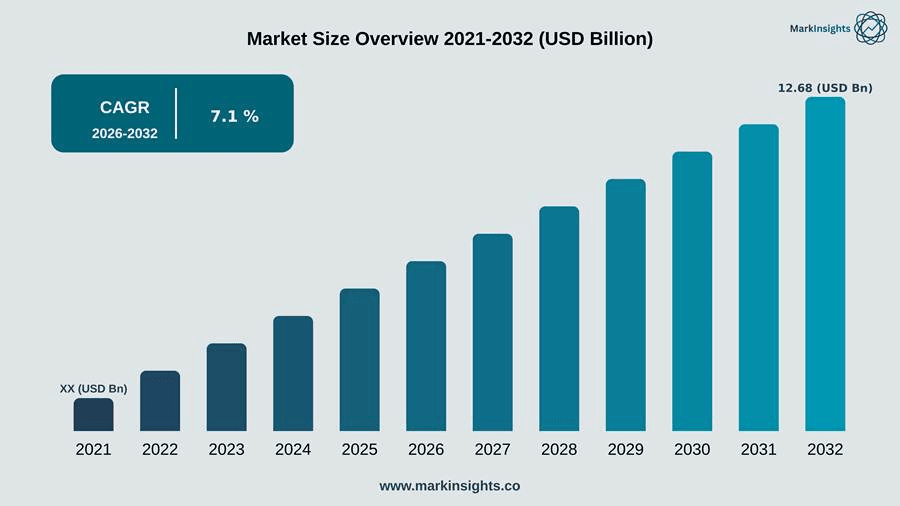
The global Aerospace Fastener market was valued at approximately USD 8.42 billion in 2026 and is projected to reach around USD 12.68 billion by 2032, registering a CAGR of approximately 7.1% during the 2026-2032 forecast period.
Growth is anchored by sustained narrow-body and wide-body aircraft production ramp-ups at Boeing and Airbus that require millions of certified fasteners per shipset, alongside rising global commercial aircraft fleet expansion in Asia Pacific driving demand for maintenance, repair and overhaul (MRO) replacement fasteners. Increasing adoption of titanium and lightweight composite-compatible fastener systems to meet fuel-efficiency and weight-reduction mandates is further reinforcing demand for high-specification, traceable fastener components across both OEM and aftermarket supply chains.
The competitive landscape is consolidating around a small group of certified aerospace fastener specialists that collectively dominate OEM supply programs. Arconic Corporation completed its separation and refocused fastening systems operations under Howmet Aerospace, LISI Aerospace expanded its Casablanca manufacturing footprint in 2024 to support Airbus production ramp-up, Precision Castparts Corp continued integrating fastener capacity following its acquisition activity, and Bollhoff Group broadened its aerospace-grade fastening portfolio through 2025 product line extensions. North America led 2026 revenue on the strength of Boeing production programs, while Asia Pacific is the fastest-growing region led by China, India, and Japan.
Aerospace Fastener Market Definition:
Aerospace fasteners comprise precision-engineered mechanical hardware components including bolts, nuts, screws, rivets, pins, and specialty locking devices manufactured to stringent aerospace material, dimensional, and traceability specifications for use in airframe, engine, interior, and landing gear assembly applications. These components are produced from high-performance materials including titanium alloys, corrosion-resistant steel, nickel-based superalloys, and aluminum alloys, selected for their strength-to-weight ratio, fatigue resistance, temperature tolerance, and compatibility with composite and metallic structural substrates. Manufacturing processes involve cold forming, heat treatment, precision machining, and specialized coating applications such as cadmium-free corrosion protection systems, all performed under aerospace quality management standards that mandate full material and process traceability from raw stock through finished part certification. Aerospace fasteners are deployed across commercial aircraft, military aircraft, helicopters, and general aviation platforms, serving both original equipment manufacturer production programs, where fasteners are installed during initial aircraft assembly, and maintenance, repair and overhaul operations, where replacement fasteners are supplied to sustain airworthiness throughout an aircraft's operational service life across global commercial and defense fleets.
Aerospace Fastener Market Research Methodology:
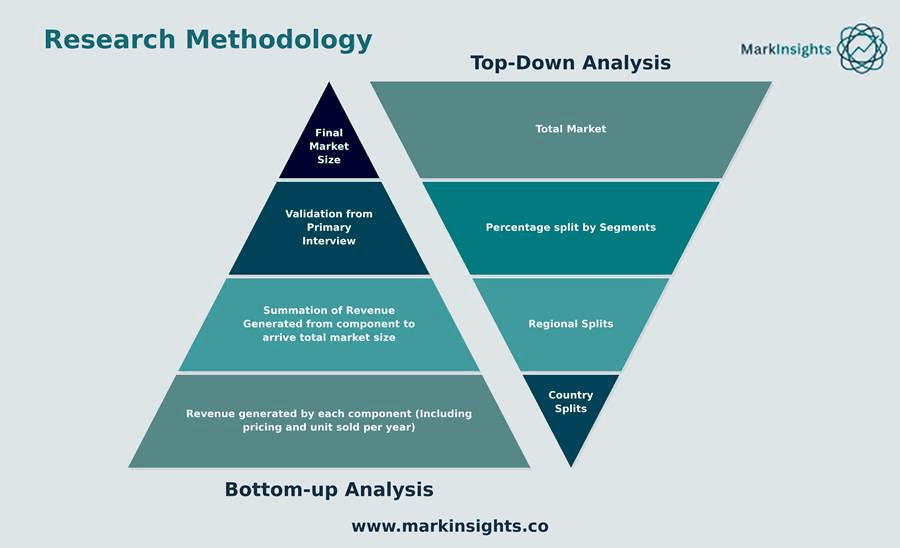
The demand-side assessment was built bottom-up from primary interviews with business buyers active in the aerospace fastener market, including institutional and industrial procurement buyers, distributors, and institutional or industrial purchasers, etc., and cross-referenced against demand-side secondary sources such as public production and consumption data, industry and trade-association surveys, etc. On the supply side, estimates were developed top-down from primary interviews with raw-material and component suppliers and with commercial leadership at manufacturers, etc., supported by secondary sources including publicly disclosed revenue and volume commentary from companies such as Howmet Aerospace, LISI Aerospace, and Precision Castparts Corp (10-K filings, investor presentations, and primary research transcripts), the regulatory frameworks of [RELEVANT REGULATOR — none detected in spec], and relevant import-export trade records, etc. Core research typically incorporates 100-130 structured B2B interviews per report, split across institutional and industrial procurement buyers, component and raw-material suppliers, and tier-1 manufacturers, weighted toward the report's main growth regions. For this report, central inputs were cross-referenced against [RELEVANT REGULATOR] filings and publicly disclosed manufacturer segment data relevant to the Aerospace Fastener category.
Aerospace Fastener Market Size, Scope & Segmentation:
| Report Attribute | Details |
| Market size in 2026 | USD 8.42 billion |
| Market Size by 2032 | USD 12.68 billion |
| Global CAGR (2026-2032) | 7.1% |
| Historical Data | 2021-2024 |
| Forecast Period | 2026-2032 |
| Segments Covered | By Product Type • Bolts • Nuts • Screws • Rivets • Others By Material • Titanium • Steel • Nickel Alloys • Aluminum • Composite By Aircraft Type • Commercial Aviation • Military Aviation • General Aviation • Helicopters By Application • Airframe • Engine • Interior • Landing Gear By End User • OEM • Maintenance Repair and Overhaul |
| Regions and Countries Covered | North America • US • Canada • Mexico Europe • Germany • UK • France • Italy • Spain • Rest of Europe Asia Pacific • China • India • Japan • South Korea • Australia • Rest of Asia Pacific Middle East and Africa • Saudi Arabia • UAE • South Africa • Rest of Middle East and Africa South America • Brazil • Argentina • Rest of South America |
| Market leaders and key company profiles | Howmet Aerospace LISI Aerospace Precision Castparts Corp Arconic Corporation SPS Technologies Bollhoff Group Monogram Aerospace Fasteners Alcoa Fastening Systems Optimas Solutions Wesco Aircraft Hardware VSMPO-AVISMA Stanley Engineered Fastening TFI Aerospace National Aerospace Fasteners Corporation Fastenal Aerospace |
Aerospace Fastener Key Market Segmentation:
Insights On Key Product Type
The product type segment encompasses bolts (the dominant sub-category, including hi-lok, hi-lite, and blind bolts from Alcoa Fastening Systems and LISI Aerospace used extensively in airframe structural joints requiring high shear and tensile load capacity), nuts (a large sub-category including self-locking and floating anchor nuts from Bollhoff Group and Monogram Aerospace Fasteners paired with structural bolts across wing and fuselage assemblies), screws (a steady-demand sub-category including machine and self-tapping screws from Precision Castparts Corp used in interior, avionics, and secondary structure attachment), rivets (including solid and blind rivets from Alcoa and Arconic Corporation used in sheet metal skin and fuselage panel assembly), and others (including pins, collars, and specialty locking hardware from SPS Technologies and Optimas Solutions).
Bolts dominate the product type sub-segment because primary structural joints in airframe and wing assembly rely predominantly on high-strength bolted connections that must withstand cyclic fatigue loading over the aircraft's operational life, sustaining continuous high-volume procurement by Boeing and Airbus production programs supplied through LISI Aerospace and Howmet Aerospace certified manufacturing networks.
Insights On Key Material
The material segment covers titanium (the fastest-growing sub-category, valued for its superior strength-to-weight ratio and corrosion resistance in composite-intensive airframes from Boeing 787 and Airbus A350 programs, supplied by Howmet Aerospace and VSMPO-AVISMA), steel and corrosion-resistant steel alloys (the largest volume sub-category, used across landing gear, engine mounts, and high-load airframe applications by Precision Castparts Corp and LISI Aerospace), nickel-based alloys (including Inconel and Waspaloy fasteners from Howmet Aerospace deployed in high-temperature engine applications), aluminum (used in lower-load, weight-sensitive secondary structure and interior applications by Arconic Corporation), and composite-compatible specialty materials.
Titanium is the fastest-growing material sub-segment because next-generation commercial aircraft programs are increasing composite fuselage and wing content, requiring galvanic-corrosion-resistant titanium fasteners at higher shipset volumes, prompting Howmet Aerospace and VSMPO-AVISMA to expand titanium bar and fastener production capacity to meet Boeing and Airbus program requirements.
Insights On Key Aircraft Type
The aircraft type segment includes commercial aviation (the dominant sub-category, encompassing narrow-body and wide-body aircraft production and MRO fastener demand from Boeing and Airbus supply chains served by LISI Aerospace and Howmet Aerospace), military aviation (a stable-demand sub-category covering fighter, transport, and surveillance aircraft programs requiring MIL-SPEC certified fasteners from Precision Castparts Corp and SPS Technologies), general aviation (a smaller sub-category serving business jets and light aircraft manufacturers including Textron Aviation and Embraer through Bollhoff Group and Optimas Solutions), and helicopters (encompassing military and commercial rotorcraft fastener demand from Airbus Helicopters and Leonardo Helicopters programs).
Commercial aviation leads the aircraft type sub-segment because sustained narrow-body production rate increases at Boeing and Airbus, combined with a growing global commercial fleet requiring recurring MRO fastener replacement, create the largest and most predictable volume base for certified aerospace fastener manufacturers across both OEM and aftermarket channels.
Insights On Key Application
The application segment covers airframe (the largest sub-category, encompassing fuselage, wing, and empennage structural assembly fastening requiring the highest fastener count per aircraft shipset, served by LISI Aerospace and Howmet Aerospace), engine (a high-specification sub-category requiring nickel-alloy and titanium fasteners capable of withstanding extreme temperature and vibration cycles, supplied by Precision Castparts Corp to engine manufacturers including CFM International and Rolls-Royce), interior (encompassing cabin, seating, and galley fastening hardware from Bollhoff Group and Optimas Solutions), and landing gear (a high-load sub-category requiring corrosion-resistant steel and titanium fasteners from Howmet Aerospace and SPS Technologies capable of withstanding repeated impact and cyclic stress).
Airframe leads the application sub-segment because structural fuselage and wing assembly require by far the highest fastener count per aircraft, with a single narrow-body shipset consuming hundreds of thousands of individual fasteners sourced through certified supply agreements with LISI Aerospace and Howmet Aerospace.
Insights On Key End User
The end user segment covers original equipment manufacturer (OEM) programs (encompassing direct supply to Boeing, Airbus, and defense prime contractors under long-term certified supply agreements with LISI Aerospace, Howmet Aerospace, and Precision Castparts Corp for initial aircraft assembly fastener requirements) and maintenance, repair and overhaul (MRO) operations (encompassing replacement fastener supply to airlines, independent MRO providers, and military sustainment programs through distributors including Optimas Solutions and Wesco Aircraft Hardware supporting aircraft airworthiness throughout operational service life).
OEM programs lead the end user sub-segment because initial aircraft production consumes the largest single-order fastener volumes under multi-year certified supply agreements, with Boeing and Airbus production rate increases directly driving procurement commitments from LISI Aerospace and Howmet Aerospace that anchor long-term manufacturing capacity investment decisions.
Insights on Regional Analysis
The global Aerospace Fastener market spans North America, Europe, Asia Pacific, Middle East and Africa, and South America. North America leads global Aerospace Fastener revenue, anchored by the United States where Boeing's commercial aircraft production programs in Everett and Renton, alongside a dense network of certified fastener manufacturers including Howmet Aerospace, Precision Castparts Corp, and SPS Technologies, sustain the largest single-country demand base globally. The US Federal Aviation Administration (FAA) airworthiness certification requirements and National Aerospace Standards (NAS) specifications govern fastener design, material, and traceability standards across both OEM and MRO supply chains. Defense procurement programs administered through the US Department of Defense further reinforce demand for MIL-SPEC certified fasteners supplied by SPS Technologies and Precision Castparts Corp to fighter, transport, and rotorcraft platforms. Canada contributes additional regional demand through Bombardier business jet production and a supporting aerospace component manufacturing base concentrated in Quebec and Ontario.
Asia Pacific is the fastest-growing region for Aerospace Fastener demand, led by China, India, and Japan. China's Commercial Aircraft Corporation of China (COMAC) C919 narrow-body program and expanding domestic MRO infrastructure are driving substantial growth in both OEM and aftermarket fastener procurement, supported by the Civil Aviation Administration of China (CAAC) airworthiness framework. India's expanding commercial aviation fleet and government-supported aerospace manufacturing initiatives under the Ministry of Civil Aviation are attracting fastener manufacturing investment from LISI Aerospace and domestic suppliers seeking to serve growing regional MRO demand. Japan's established aerospace component manufacturing base, anchored by Mitsubishi Heavy Industries and long-standing supply relationships with Boeing, continues to generate steady titanium and nickel-alloy fastener demand for both commercial and defense aviation programs, with the Japan Civil Aviation Bureau (JCAB) maintaining airworthiness oversight aligned with international standards.
Aerospace Fastener Market Company Profiles:
The Aerospace Fastener competitive landscape encompasses three primary archetypes: integrated aerospace fastener majors (Howmet Aerospace, LISI Aerospace, Precision Castparts Corp, Arconic Corporation) that operate certified high-volume manufacturing networks serving Boeing, Airbus, and defense prime contractors under long-term supply agreements spanning titanium, steel, and nickel-alloy product lines; MIL-SPEC and defense-focused specialists (SPS Technologies, Monogram Aerospace Fasteners, Alcoa Fastening Systems) that serve military and specialty structural applications requiring rigorous qualification testing; and distribution and aftermarket specialists (Optimas Solutions, Wesco Aircraft Hardware, Bollhoff Group) that supply MRO providers, airlines, and smaller OEM programs with certified fastener kitting and inventory management services.
The 15 anchor companies profiled in this report are Howmet Aerospace, LISI Aerospace, Precision Castparts Corp, Arconic Corporation, SPS Technologies, Bollhoff Group, Monogram Aerospace Fasteners, Alcoa Fastening Systems, Optimas Solutions, Wesco Aircraft Hardware, VSMPO-AVISMA, Stanley Engineered Fastening, TFI Aerospace, National Aerospace Fasteners Corporation, and Fastenal Aerospace. Howmet Aerospace is a leading global supplier of titanium and nickel-alloy fasteners with certified manufacturing facilities serving Boeing and Airbus production programs across multiple countries. LISI Aerospace operates fastener manufacturing plants across France, the United States, and Morocco, supplying structural fasteners under long-term Airbus supply agreements. Precision Castparts Corp, a Berkshire Hathaway subsidiary, supplies fasteners and complex castings to both commercial and military aircraft programs. Stanley Engineered Fastening and TFI Aerospace maintain specialist regional positions serving niche structural and interior fastening applications.
Aerospace Fastener Market Latest Trends and Innovation:
• In October 2025, LISI Aerospace announced expanded production capacity at its Casablanca, Morocco manufacturing facility to support increased Airbus A320neo and A321neo shipset volumes, adding automated cold-forming lines intended to raise annual structural fastener output and reduce lead times for narrow-body production ramp-up commitments.
• In June 2025, Howmet Aerospace reported continued capacity investment in its titanium fastener operations to support Boeing 787 and Airbus A350 wide-body production rate increases, citing multi-year customer agreements that underpin expanded machining and heat-treatment capacity across its North American fastening systems facilities.
• In February 2025, Bollhoff Group introduced an expanded range of lightweight composite-compatible fastening systems for aerospace interior and secondary structure applications, targeting weight reduction requirements from commercial aircraft cabin retrofit and next-generation aircraft interior manufacturing programs across its European production network.
• In November 2024, Precision Castparts Corp completed integration of expanded fastener production lines following continued capital investment in its Oregon and Washington manufacturing sites, aiming to increase throughput for both commercial airframe bolts and MIL-SPEC fasteners supplied to US defense prime contractor programs.
Aerospace Fastener Market Significant Growth Factors:
The global Aerospace Fastener market is expanding on the back of four reinforcing drivers. Sustained narrow-body and wide-body aircraft production rate increases at Boeing and Airbus are generating consistent high-volume demand for certified structural fasteners, requiring Howmet Aerospace and LISI Aerospace to invest continuously in cold-forming, heat-treatment, and precision machining capacity. Expanding global commercial aircraft fleet size, particularly across Asia Pacific and the Middle East, is driving growing recurring maintenance, repair and overhaul fastener replacement demand that supports stable aftermarket revenue for distributors including Optimas Solutions. Increasing composite and lightweight alloy content in next-generation aircraft designs is expanding demand for titanium and specialty corrosion-resistant fasteners engineered for galvanic compatibility, benefiting Howmet Aerospace and VSMPO-AVISMA. Rising defense aviation procurement budgets across the United States, Europe, and Asia Pacific are sustaining demand for MIL-SPEC certified fasteners supplied by SPS Technologies and Precision Castparts Corp to fighter, transport, and rotorcraft platform manufacturers supporting fleet modernization programs.
Aerospace Fastener Market Drivers:
Demand is driven by aircraft production rate growth, fleet expansion, defense modernization, and MRO market development. Boeing and Airbus production rate targets for narrow-body programs directly translate into higher fastener order volumes under long-term certified supply agreements with LISI Aerospace and Howmet Aerospace, anchoring predictable multi-year manufacturing capacity investment decisions. Global commercial aircraft fleet growth, particularly across China, India, and Southeast Asia, is expanding the installed base requiring recurring MRO fastener replacement, creating a growing aftermarket revenue stream for Optimas Solutions and Wesco Aircraft Hardware. Defense fleet modernization programs across NATO member states and Asia Pacific defense forces are sustaining procurement of MIL-SPEC fasteners for fighter, transport, and rotorcraft platforms supplied by SPS Technologies and Precision Castparts Corp. Continued adoption of advanced composite airframe structures in next-generation commercial and business aircraft is expanding demand for specialty titanium and corrosion-resistant fastener systems engineered to prevent galvanic corrosion at composite-metal joints.
Aerospace Fastener Market Restraining Factors:
Several factors temper growth across the Aerospace Fastener value chain. Stringent aerospace certification and qualification requirements, including full material traceability and process validation under aerospace quality management standards, create lengthy and costly supplier qualification cycles that limit new entrant participation and slow capacity response during demand surges. Raw material price volatility for titanium and nickel-based superalloys, driven by supply concentration among a small number of global mills including VSMPO-AVISMA, exposes fastener manufacturers to input cost pressure that compresses margins during periods of metal price inflation. Persistent aerospace supply chain disruption, including periodic shortages of forged titanium bar stock and specialty coatings, has repeatedly constrained fastener delivery schedules and contributed to Boeing and Airbus production rate shortfalls in recent years. High customer concentration among a small number of aircraft OEMs and defense prime contractors gives Boeing and Airbus substantial pricing leverage over fastener suppliers, limiting the ability of manufacturers such as LISI Aerospace and Howmet Aerospace to pass through rising input costs.
Aerospace Fastener Market Opportunities:
Opportunities cluster in four pockets across the Aerospace Fastener landscape. Growing adoption of additive manufacturing for complex fastener geometries offers Howmet Aerospace and Precision Castparts Corp a pathway to reduce material waste and lead times for low-volume, high-complexity titanium and nickel-alloy components relative to conventional forging methods. Expanding regional MRO infrastructure investment across Asia Pacific and the Middle East is creating new distribution and aftermarket fastener supply opportunities for Optimas Solutions and Wesco Aircraft Hardware as regional carriers seek localized replacement parts sourcing. Increasing electric and hybrid-electric aircraft development programs are generating demand for specialized lightweight fastening systems engineered for battery enclosure and electric propulsion structural applications, an emerging niche for Bollhoff Group and Stanley Engineered Fastening. Defense fleet sustainment and life-extension programs across aging military aircraft platforms in North America and Europe represent a stable long-term replacement fastener demand pool for SPS Technologies and Monogram Aerospace Fasteners supplying MIL-SPEC certified hardware.
Aerospace Fastener Market Technology Trends:
Technology direction is set by three converging shifts in Aerospace Fastener manufacturing and product engineering. Advanced cold-forming and precision forging technology upgrades, deployed by LISI Aerospace and Howmet Aerospace across their most recent capacity investments, are enabling tighter dimensional tolerances and improved fatigue performance while reducing material waste relative to conventional machining processes. Additive manufacturing and near-net-shape forming techniques are being adopted by Precision Castparts Corp and Howmet Aerospace for complex titanium and nickel-alloy fastener geometries that would otherwise require extensive secondary machining, shortening qualification-to-production timelines for low-volume specialty parts. Cadmium-free and environmentally compliant surface coating technologies, implemented by SPS Technologies and Alcoa Fastening Systems, are replacing legacy corrosion-protection systems to meet tightening environmental and worker-safety regulatory requirements while maintaining equivalent corrosion resistance performance for airframe and landing gear fastener applications across both commercial and defense platforms.
Aerospace Fastener Market Future Trends:
By 2032, the market will be reshaped by broader adoption of digitally traceable fastener systems, the scaling of additive-manufactured specialty fasteners for low-volume applications, and growing demand for fastening systems engineered specifically for electric and hybrid-electric propulsion architectures. Digital traceability systems integrating unique part identification with blockchain or centralized database record-keeping will enable Howmet Aerospace and LISI Aerospace to provide OEM and MRO customers with instant material and process history verification, supporting tightening airworthiness documentation requirements. Additive manufacturing scaling for complex titanium and nickel-alloy fastener geometries will allow Precision Castparts Corp to serve low-volume, high-complexity applications more cost-effectively than conventional forging, particularly for defense sustainment and specialty structural repair parts. Electric and hybrid-electric aircraft propulsion programs will drive demand for lightweight, vibration-resistant fastening systems engineered for battery enclosures and electric motor mounting, an emerging application area for Bollhoff Group and Stanley Engineered Fastening as next-generation aircraft architectures move toward flight testing and certification.
Aerospace Fastener Market Supply Chain Analysis:
The Aerospace Fastener supply chain runs from raw material producers of titanium, nickel-alloy, and specialty steel through forging and cold-forming manufacturers to certified finishing, coating, and quality inspection operations before reaching OEM assembly lines and MRO distribution networks. Upstream raw material supply is concentrated among a small number of global titanium and nickel-alloy mills including VSMPO-AVISMA and Allegheny Technologies, which supply bar stock and forgings to fastener manufacturers including Howmet Aerospace, LISI Aerospace, and Precision Castparts Corp operating certified cold-forming, heat-treatment, and precision machining facilities across North America, Europe, and increasingly Asia Pacific. Finished fasteners undergo rigorous inspection, material certification, and traceability documentation under aerospace quality management frameworks before shipment to Boeing, Airbus, and defense prime contractor assembly lines under long-term supply agreements.
Distribution to OEM assembly lines occurs through direct just-in-time delivery programs coordinated with production schedules, while MRO and aftermarket distribution flows through specialized distributors including Optimas Solutions and Wesco Aircraft Hardware that maintain certified inventory for airline and independent repair station customers. Key bottlenecks include periodic titanium and specialty alloy raw material shortages that constrain forging capacity, lengthy new supplier qualification cycles that limit rapid capacity expansion during demand surges, and geographic concentration of certified forging and heat-treatment capability that creates single-source dependency risk for several critical fastener categories.
Aerospace Fastener Market Regulatory Analysis:
The global Aerospace Fastener market operates within a rigorous airworthiness and quality certification framework governing material specification, manufacturing process control, and full-lifecycle traceability. Principal regulatory anchors include the US Federal Aviation Administration (FAA) airworthiness certification requirements and National Aerospace Standards (NAS) specifications, the European Union Aviation Safety Agency (EASA) certification framework governing European-manufactured fastener qualification, and Aerospace Standard AS9100 quality management system certification required by nearly all OEM and Tier-1 supply agreements. Defense-specific procurement additionally requires compliance with US Department of Defense MIL-SPEC standards and Defense Federal Acquisition Regulation Supplement (DFARS) sourcing restrictions on specialty metals. China's Civil Aviation Administration of China (CAAC) and Japan's Civil Aviation Bureau (JCAB) maintain parallel airworthiness oversight frameworks for regionally manufactured or installed fasteners. Conformity assessment routes include Nadcap accreditation for special processes such as heat treatment and coating, alongside customer-specific first article inspection and source inspection requirements imposed by Boeing and Airbus supplier quality programs.
Aerospace Fastener Market Share Analysis:
The top five vendors together account for an estimated 55-65% of global Aerospace Fastener revenue in the commercial OEM structural segment, with the remainder distributed across defense-focused specialists, regional MRO distributors, and niche interior fastener suppliers across North America, Europe, and Asia Pacific. Concentration is highest in the titanium and nickel-alloy structural bolt segment where Howmet Aerospace, LISI Aerospace, Precision Castparts Corp, and Arconic Corporation collectively dominate, while the market is most fragmented in the MRO and aftermarket distribution segment served by regional and specialty kitting suppliers.
Aerospace Fastener Market Competitive Landscape:
The Aerospace Fastener competitive landscape is led by Howmet Aerospace, LISI Aerospace, Precision Castparts Corp, and Arconic Corporation, with significant presence from SPS Technologies, Bollhoff Group, Optimas Solutions, Wesco Aircraft Hardware, and VSMPO-AVISMA. The LISI Aerospace Casablanca capacity expansion in October 2025, the Howmet Aerospace titanium capacity investment reported in June 2025, the Bollhoff Group lightweight fastening systems launch in February 2025, and the Precision Castparts Corp production line integration completed in November 2024 are the principal developments shaping the competitive map.
Key Player Strategies
Leaders are prioritizing certified capacity expansion aligned with Boeing and Airbus production rate targets, vertical integration into raw material processing to secure titanium and nickel-alloy supply, and lightweight and composite-compatible product line development. Howmet Aerospace and LISI Aerospace compete on global certified manufacturing scale and long-term OEM supply agreements, while Bollhoff Group and Stanley Engineered Fastening focus on specialty lightweight and interior fastening innovation. This parameter analyses the strategic posture of each leading player across supply chain integration, capacity investment, and product innovation dimensions.
Buyer-Tier Concentration
Share concentration differs sharply by customer tier across the Aerospace Fastener market. Tier-1 buyers such as Boeing and Airbus consolidate the overwhelming majority of their structural fastener procurement with Howmet Aerospace, LISI Aerospace, and Precision Castparts Corp because only these certified manufacturers possess the qualification history and production scale to meet multi-year shipset commitments. Independent MRO providers and smaller regional airlines, by contrast, are serviced through distributors such as Optimas Solutions and Wesco Aircraft Hardware, which blend certified output from tier-1 manufacturers with smaller specialty suppliers, diluting the top-five vendor concentration figure at the point of final sale even though it holds firmly at the manufacturing level.
Company Capability Assessment
Capability leadership is differentiated by product segment and material specialization: Howmet Aerospace leads in titanium and nickel-alloy fastener manufacturing scale with certified facilities serving Boeing and Airbus wide-body programs; LISI Aerospace leads in structural bolt production for Airbus narrow-body programs with dedicated capacity across France, the United States, and Morocco; Precision Castparts Corp leads in MIL-SPEC fastener supply to defense prime contractors alongside commercial structural bolt manufacturing; Bollhoff Group leads in lightweight and interior fastening system innovation for European aerospace customers; SPS Technologies leads in specialty locking hardware for military and rotorcraft platforms. This parameter assesses each leader's depth across certified manufacturing scale, product breadth, and qualification history.
Market Concentration
The top five vendors account for an estimated 55-65% of global Aerospace Fastener revenue in the commercial OEM structural segment, reflecting high market concentration driven by stringent certification barriers and the purchasing power of major aircraft OEM customers. This parameter covers the degree of vendor concentration relative to total addressable market revenue.
Frequently Asked Questions
How big is the Aerospace Fastener Market and what will it be worth by 2032?
The Aerospace Fastener Market was valued at approximately USD 8.42 billion in 2026 and is projected to reach around USD 12.68 billion by 2032, registering a CAGR of approximately 7.1%.
What is the CAGR of the Aerospace Fastener Market from 2026 to 2032?
The Aerospace Fastener Market is projected to register a CAGR of approximately 7.1% during the forecast period from 2026 to 2032.
What are the key drivers and restraints shaping the Aerospace Fastener Market?
Key Drivers:
• Boeing and Airbus production rate targets for narrow-body programs directly translate into higher fastener order volumes under long-term certified supply agreements with LISI Aerospace and Howmet Aerospace, anchoring predictable multi-year manufacturing capacity investment decisions.
• Global commercial aircraft fleet growth, particularly across China, India, and Southeast Asia, is expanding the installed base requiring recurring MRO fastener replacement, creating a growing aftermarket revenue stream for Optimas Solutions and Wesco Aircraft Hardware.
Key Restraints:
• Stringent aerospace certification and qualification requirements, including full material traceability and process validation under aerospace quality management standards, create lengthy and costly supplier qualification cycles that limit new entrant participation and slow capacity response during demand surges.
• Raw material price volatility for titanium and nickel-based superalloys, driven by supply concentration among a small number of global mills including VSMPO-AVISMA, exposes fastener manufacturers to input cost pressure that compresses margins during periods of metal price inflation.
What are the major segments and which region leads the Aerospace Fastener Market?
Bolts (Product Type), Titanium (Material), Commercial aviation (Aircraft Type), Airframe (Application), OEM programs (End User) lead their respective segments. North America leads global revenue, anchored by the United States. Asia Pacific is the fastest-growing region, led by China, India, and Japan. Full segment-level analysis, including growth drivers, restraints, and country-level detail for every region covered in this study, is provided in the corresponding chapters of the full report.
Who are the leading companies in the Aerospace Fastener Market?
The top five players in the Aerospace Fastener Market — Howmet Aerospace, LISI Aerospace, Precision Castparts Corp, Arconic Corporation, and SPS Technologies — collectively hold an estimated 55-65% of global revenue. Key companies covered in this report include Howmet Aerospace, LISI Aerospace, Precision Castparts Corp, Arconic Corporation, SPS Technologies, Bollhoff Group, Monogram Aerospace Fasteners, Alcoa Fastening Systems, Optimas Solutions, Wesco Aircraft Hardware, VSMPO-AVISMA, Stanley Engineered Fastening, TFI Aerospace, National Aerospace Fasteners Corporation, and Fastenal Aerospace.
Related Reports
Global Advanced Surface Movement Guidance Control System Market — Forecast to 2032
By System Type (Surveillance Systems, Routing Systems, Guidance Systems, Control Systems), By Component (Radar Sensors, Software, Control Towers Equipment, Multilateration Systems), By Airport Category (Category A Airports, Category B Airports, Category C Airports), By Application (Commercial Airports, Military Airbases, Cargo and Freight Airports), By End User (Airport Authorities, Air Navigation Service Providers, Defense Agencies)
From $ 2,500
View Report →Global 5G Market Aviation Market — Forecast to 2032
By Component (Hardware, Software, Services), By Connectivity Type (In-Flight Connectivity, Air-to-Ground Connectivity, Satellite-Based Connectivity), By Application (Passenger Connectivity, Aircraft Operations and Maintenance, Air Traffic Management, Cargo and Logistics Tracking), By Platform (Commercial Aviation, Military Aviation, Business and General Aviation, Unmanned Aerial Vehicles)
From $ 2,500
View Report →