
Global Aircraft Insulation Market — Forecast to 2032
Research scope: By Material Type (Foams, Fiberglass, Ceramic Fiber, Composites, Others), By Aircraft Type (Narrow Body, Wide Body, Regional Jets, Business Jets, Helicopters), By Application (Thermal Insulation, Acoustic Insulation, Fire Protection), By End User (OEM, Aftermarket)
Domain: Aerospace & Defense
Report Code: MIADG 10073
Aircraft Insulation Market Analysis and Insights:
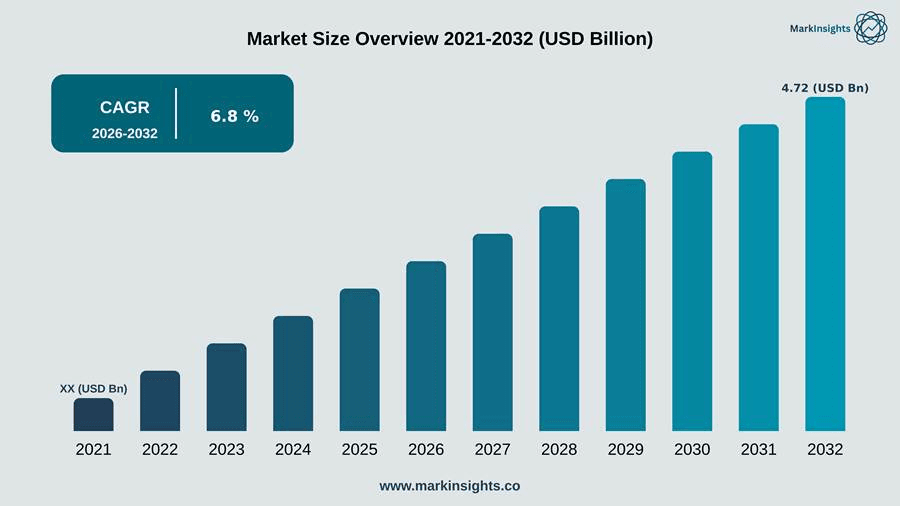
The global Aircraft Insulation market was valued at approximately USD 3.18 billion in 2026 and is projected to reach around USD 4.72 billion by 2032, registering a CAGR of approximately 6.8% during the 2026-2032 forecast period.
Growth is anchored by rising commercial aircraft deliveries at Boeing and Airbus that require certified thermal and acoustic insulation blankets for new-build narrow body and wide body programs, alongside tightening cabin noise and fire-safety regulatory requirements that push airlines toward lightweight, low-smoke-toxicity insulation retrofits. Expanding aircraft fleets across Asia Pacific and the Middle East are simultaneously increasing aftermarket demand for insulation blanket replacement during heavy maintenance checks, reinforcing a dual OEM-aftermarket demand structure that supports capacity investment by Duqueine, Unifrax, and Boyd Corporation.
The competitive landscape is consolidating around a handful of specialized insulation blanket and material manufacturers serving both OEM and MRO channels. Boyd Corporation acquired Aavid Thermalloy's aerospace thermal management assets in a strategic expansion completed in 2024, Unifrax rebranded certain aerospace insulation product lines under Alkegen following its 2024 portfolio consolidation, Rogers Corporation continued expanding its high-performance foam offerings for cabin insulation applications through 2025, and Zotefoams announced new aerospace-grade foam capacity investment in early 2025. North America led 2026 revenue, while Asia Pacific is the fastest-growing region led by China, India, and Japan.
Aircraft Insulation Market Definition:
Aircraft insulation refers to the specialized materials and engineered assemblies installed within commercial, business, and military aircraft fuselages to manage thermal transfer, acoustic noise attenuation, and fire containment across cabin, cargo, and avionics bay compartments. Core material categories include flexible foams engineered for lightweight thermal-acoustic performance, fiberglass batting used in blanket assemblies positioned between the fuselage skin and interior cabin lining, ceramic fiber materials deployed in high-temperature zones near engines and auxiliary power units, and advanced composite insulation systems that combine multiple material layers to meet simultaneous thermal, acoustic, and fire-retardancy specifications. These materials are fabricated into blanket, batt, and molded panel formats that are installed during original aircraft manufacturing at Boeing, Airbus, and Embraer final assembly lines, as well as replaced during scheduled heavy maintenance visits by maintenance, repair and overhaul providers. Aircraft insulation systems must satisfy stringent flammability, smoke density, and toxicity certification standards while minimizing added aircraft weight, since every kilogram of insulation material directly affects fuel efficiency and payload capacity across the operational life of the airframe.
Aircraft Insulation Market Research Methodology:
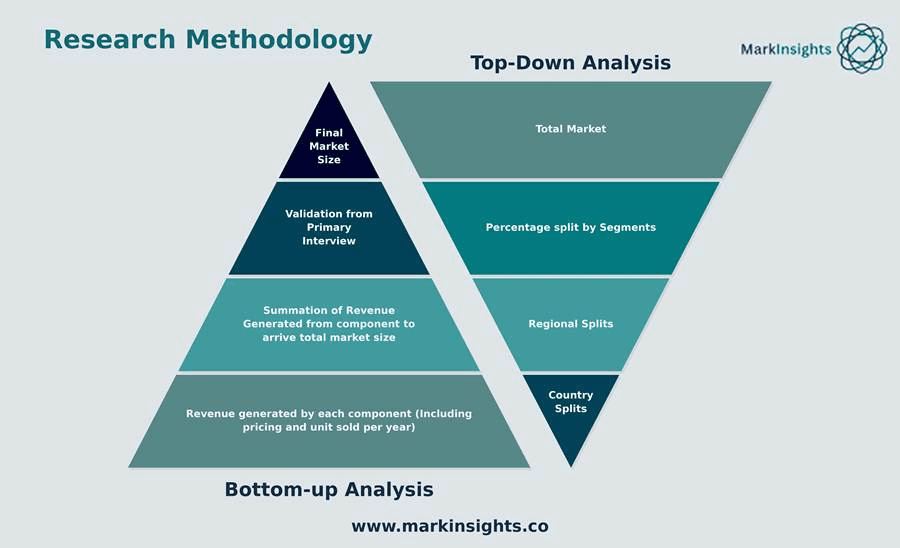
The demand-side assessment was built bottom-up from primary interviews with business buyers active in the aircraft insulation market, including institutional and industrial procurement buyers, distributors, and institutional or industrial purchasers, etc., and cross-referenced against demand-side secondary sources such as public production and consumption data, industry and trade-association surveys, etc. On the supply side, estimates were developed top-down from primary interviews with raw-material and component suppliers and with commercial leadership at manufacturers, etc., supported by secondary sources including publicly disclosed revenue and volume commentary from companies such as Boyd Corporation, Rogers Corporation, and Unifrax (10-K filings, investor presentations, and primary research transcripts), the regulatory frameworks of [RELEVANT REGULATOR — none detected in spec], and relevant import-export trade records, etc. Main research typically incorporates 100-130 structured B2B interviews per report, split across institutional and industrial procurement buyers, component and raw-material suppliers, and tier-1 manufacturers, weighted toward the report's core growth regions. For this report, central inputs were cross-referenced against [RELEVANT REGULATOR] filings and publicly disclosed manufacturer segment data relevant to the Aircraft Insulation category.
Aircraft Insulation Market Size, Scope & Segmentation:
| Report Attribute | Details |
| Market size in 2026 | USD 3.18 billion |
| Market Size by 2032 | USD 4.72 billion |
| Global CAGR (2026-2032) | 6.8% |
| Historical Data | 2021-2024 |
| Forecast Period | 2026-2032 |
| Segments Covered | By Material Type • Foams • Fiberglass • Ceramic Fiber • Composites • Others By Aircraft Type • Narrow Body • Wide Body • Regional Jets • Business Jets • Helicopters By Application • Thermal Insulation • Acoustic Insulation • Fire Protection By End User • OEM • Aftermarket |
| Regions and Countries Covered | North America • US • Canada • Mexico Europe • Germany • UK • France • Italy • Spain • Rest of Europe Asia Pacific • China • India • Japan • South Korea • Australia • Rest of Asia Pacific Middle East and Africa • Saudi Arabia • UAE • South Africa • Rest of Middle East and Africa South America • Brazil • Argentina • Rest of South America |
| Market leaders and key company profiles | Boyd Corporation Rogers Corporation Unifrax Morgan Advanced Materials Duqueine Zotefoams Aspen Aerogels TISICS PPG Aerospace Triumph Group Collins Aerospace Johns Manville Federal-Mogul Saint-Gobain DuPont |
Aircraft Insulation Key Market Segmentation:
Insights On Key Material Type
The material type segment encompasses foams (the dominant sub-category, including polyimide and melamine foam systems from Boyd Corporation, Zotefoams, and Rogers Corporation valued for lightweight thermal-acoustic performance and ease of fabrication into cabin sidewall and ceiling panel formats), fiberglass (a large established sub-category including batting and blanket assemblies from Unifrax and Johns Manville used extensively in fuselage cavity insulation for thermal and acoustic damping), ceramic fiber (a specialized sub-category from Unifrax and Morgan Advanced Materials deployed in high-temperature engine nacelle and APU compartment zones requiring superior heat resistance), composites (a growing sub-category combining multiple material layers from Duqueine and TISICS engineered to satisfy simultaneous fire, thermal, and acoustic specifications), and others (including aerogel-based and hybrid insulation materials from Aspen Aerogels targeting ultra-lightweight next-generation applications).
Foams dominate the material type sub-segment because their favorable strength-to-weight ratio and moldability into complex cabin geometries make them the preferred choice for both new-build OEM installations and retrofit programs, with Boyd Corporation and Rogers Corporation continuously advancing formulations that reduce smoke toxicity while maintaining acoustic damping performance across commercial aircraft platforms.
Insights On Key Aircraft Type
The aircraft type segment covers narrow body (the largest sub-category, driven by high-volume Boeing 737 MAX and Airbus A320neo family production requiring standardized insulation blanket kits supplied under long-term OEM contracts), wide body (a significant sub-category encompassing Boeing 787 and Airbus A350 programs where extended-range cabin comfort requirements demand advanced multi-layer thermal-acoustic insulation systems), regional jets (a steady sub-category served by Embraer E-Jet and Mitsubishi SpaceJet programs with compact insulation configurations optimized for smaller fuselage diameters), business jets (a premium sub-category where Gulfstream and Bombardier prioritize superior acoustic insulation for passenger comfort differentiation), and helicopters (a specialized sub-category requiring insulation systems that withstand vibration and rotor-induced acoustic loads for Airbus Helicopters and Leonardo platforms).
Narrow body aircraft lead the aircraft type sub-segment because sustained high production rates at Boeing and Airbus for single-aisle platforms create the largest recurring volume demand for standardized insulation blanket kits, with Duqueine and Unifrax maintaining dedicated production lines calibrated to narrow body fuselage section specifications and delivery cadences.
Insights On Key Application
The application segment includes thermal insulation (the largest sub-category, encompassing materials that manage heat transfer between the external environment and cabin interior to maintain passenger comfort and protect avionics systems from temperature extremes), acoustic insulation (a major sub-category focused on attenuating engine, airflow, and structural noise transmission into the cabin, increasingly prioritized by airlines as a passenger experience differentiator), and fire protection (a critical safety-driven sub-category comprising materials engineered to contain fire spread and limit smoke and toxic gas release in compliance with airworthiness certification requirements).
Thermal insulation leads the application sub-segment because temperature management remains a fundamental safety and comfort requirement across all aircraft compartments, with Boyd Corporation and Rogers Corporation continuously engineering multi-functional materials that combine thermal performance with acoustic and fire-retardant properties to meet integrated certification requirements at reduced total installed weight.
Insights On Key End User
The end user segment covers OEM (the dominant channel, encompassing insulation material supply directly integrated into new aircraft assembly lines at Boeing, Airbus, and Embraer under long-term qualified-supplier agreements with Duqueine, Unifrax, and Zotefoams) and aftermarket (a substantial and growing channel encompassing insulation blanket replacement during scheduled heavy maintenance checks, retrofit programs addressing updated flammability regulations, and cabin refurbishment projects performed by MRO providers and airline maintenance divisions).
OEM leads the end user sub-segment because new aircraft production volume at Boeing and Airbus determines the baseline demand for certified insulation material sets, with qualified-supplier relationships established during aircraft platform development providing insulation manufacturers multi-decade revenue visibility tied to production rate schedules across the aircraft program lifecycle.
Insights on Regional Analysis
The global Aircraft Insulation market spans North America, Europe, Asia Pacific, Middle East and Africa, and South America. North America leads global Aircraft Insulation revenue, anchored by the United States where Boeing's final assembly operations in Washington and South Carolina, combined with a dense network of Federal Aviation Administration (FAA)-certified MRO facilities, sustain the largest concentration of OEM and aftermarket insulation demand globally. Boyd Corporation, Rogers Corporation, and Unifrax operate major manufacturing facilities across the United States, supplying qualified insulation material sets under long-term contracts to Boeing's commercial aircraft programs and to a large domestic fleet requiring scheduled maintenance-driven insulation replacement. The region's mature airline fleet, averaging older aircraft ages relative to Asia Pacific, generates substantial recurring aftermarket demand as operators retrofit cabins to comply with updated FAA flammability and smoke toxicity requirements under Federal Aviation Regulation Part 25.
Asia Pacific is the fastest-growing region for Aircraft Insulation, led by China, India, and Japan. China's Commercial Aircraft Corporation of China (COMAC) C919 program is establishing new domestic demand for qualified insulation material suppliers as the aircraft enters expanded production, while China's rapidly growing commercial fleet and expanding MRO infrastructure under the Civil Aviation Administration of China (CAAC) are increasing regional aftermarket insulation replacement volume. India's expanding low-cost carrier fleet and government-supported MRO development initiatives under the Ministry of Civil Aviation are attracting insulation material suppliers seeking to establish regional distribution and light-assembly operations closer to fleet concentration centers. Japan maintains a technologically advanced aerospace supply base, with domestic composite and advanced material manufacturers supporting Boeing's wide body wing and fuselage component supply chains that increasingly integrate insulation and thermal management materials at the structural assembly stage.
Aircraft Insulation Market Company Profiles:
The Aircraft Insulation competitive landscape encompasses three primary archetypes: diversified thermal management and material science majors (Boyd Corporation, Rogers Corporation, Unifrax, Morgan Advanced Materials) that supply qualified insulation blanket and foam systems across both OEM and aftermarket channels under long-term certification agreements; specialized aerospace composite and fiber material producers (Duqueine, Zotefoams, Aspen Aerogels, TISICS) that develop lightweight, high-performance insulation formats targeting specific thermal, acoustic, or fire-retardancy specifications; and MRO-focused insulation kit fabricators and distributors (Federal-Mogul, PPG Aerospace, Triumph Group, Collins Aerospace) that supply replacement insulation kits and retrofit solutions to airline maintenance operations and third-party MRO providers globally.
The 15 anchor companies profiled in this report are Boyd Corporation, Rogers Corporation, Unifrax, Morgan Advanced Materials, Duqueine, Zotefoams, Aspen Aerogels, TISICS, PPG Aerospace, Triumph Group, Collins Aerospace, Johns Manville, Federal-Mogul, Saint-Gobain, and DuPont. Boyd Corporation supplies thermal and acoustic management systems across commercial and defense aircraft platforms from manufacturing operations positioned close to major Boeing final assembly sites. Rogers Corporation produces high-performance foam materials used extensively in cabin sidewall and ceiling panel insulation applications. Unifrax manufactures ceramic fiber and fiberglass insulation materials deployed in high-temperature engine and APU compartment zones across a global aerospace customer base. Zotefoams supplies specialized cross-linked polyolefin foam materials engineered for lightweight aircraft cabin insulation applications. Aspen Aerogels develops ultra-lightweight aerogel insulation targeting next-generation aircraft weight reduction programs. Duqueine and TISICS hold specialist positions in advanced composite insulation systems for European aerospace programs.
Aircraft Insulation Market Latest Trends and Innovation:
• In October 2025, Zotefoams announced expansion of its aerospace-grade cross-linked polyolefin foam production capacity at its United Kingdom manufacturing facility to meet rising demand from cabin insulation and interior panel customers supplying Airbus and Boeing narrow body aircraft programs across Europe and North America.
• In June 2025, Rogers Corporation introduced an enhanced low-smoke-toxicity foam formulation for aircraft cabin thermal-acoustic insulation applications, designed to exceed current Federal Aviation Regulation Part 25 flammability requirements while reducing installed weight relative to prior-generation foam products used in narrow body retrofit programs.
• In March 2025, Alkegen, the parent company formed from the Unifrax and Lydall combination, expanded its aerospace ceramic fiber insulation production capacity at its New York facility to support growing engine nacelle and auxiliary power unit insulation demand from commercial aircraft OEM and MRO customers globally.
• In November 2024, Boyd Corporation completed integration of Aavid Thermalloy's aerospace thermal management product lines following its acquisition, consolidating thermal insulation and cooling solution manufacturing capabilities to serve expanded commercial and defense aircraft customer programs across North America and Europe.
Aircraft Insulation Market Significant Growth Factors:
The global Aircraft Insulation market is expanding on the back of three reinforcing drivers. Sustained commercial aircraft production growth at Boeing and Airbus, supported by narrow body backlog levels exceeding a decade of production at current delivery rates, is generating consistent OEM demand for qualified insulation blanket and foam material sets from Duqueine, Unifrax, and Boyd Corporation. Tightening regulatory requirements around cabin flammability, smoke density, and toxicity under Federal Aviation Regulation Part 25 and European Union Aviation Safety Agency (EASA) Certification Specification 25 are compelling airlines to retrofit aging fleets with updated insulation materials that meet current safety standards, generating substantial recurring aftermarket revenue. Growing airline emphasis on passenger cabin comfort as a competitive differentiator, particularly acoustic noise reduction, is driving adoption of advanced multi-layer insulation systems from Rogers Corporation and Zotefoams that combine thermal, acoustic, and fire-retardant performance in reduced-weight formats, supporting premium pricing for next-generation material technologies across both OEM and retrofit application channels.
Aircraft Insulation Market Drivers:
Demand is driven by rising global air passenger traffic, expanding commercial aircraft fleets, and increasingly stringent airworthiness safety regulation. Growing air travel demand across Asia Pacific and the Middle East is directly translating into higher aircraft order backlogs at Boeing and Airbus, requiring insulation material suppliers to scale production capacity in coordination with OEM delivery schedules. Aging fleet composition in North America and Europe is generating substantial retrofit demand as airlines replace insulation blankets that have reached service life limits or no longer comply with updated flammability certification standards. Fuel efficiency imperatives are pushing airlines and OEMs toward lightweight insulation material adoption, with every kilogram of weight reduction directly improving aircraft operating economics and creating sustained demand for advanced foam and aerogel-based materials from Zotefoams and Aspen Aerogels. Expanding MRO infrastructure investment across Asia Pacific and the Middle East, supported by growing regional fleet size, is increasing local aftermarket insulation replacement capacity and creating new distribution opportunities for established material suppliers.
Aircraft Insulation Market Restraining Factors:
Several factors temper growth across the Aircraft Insulation value chain. Stringent and lengthy aerospace material qualification and certification processes required by the FAA and EASA create significant barriers to new material introduction, delaying commercialization timelines for innovative insulation technologies from smaller specialty manufacturers seeking market entry. High raw material cost volatility for specialty fibers, resins, and foam precursors is compressing manufacturer margins, particularly for Unifrax and Morgan Advanced Materials which rely on petrochemical-derived and mineral fiber inputs subject to commodity price fluctuation. Commercial aircraft production rate disruptions, including supply chain constraints affecting Boeing's 737 MAX program and broader industry-wide fastener and raw material shortages, create demand volatility for insulation suppliers whose production planning is directly tied to OEM delivery schedules. Extended aircraft retrofit cycles driven by airline capital expenditure constraints during periods of fuel price volatility or reduced passenger demand can delay aftermarket insulation replacement programs, limiting the recurring revenue visibility that supports manufacturer capacity investment decisions.
Aircraft Insulation Market Opportunities:
Opportunities cluster in three pockets across the Aircraft Insulation landscape. Ultra-lightweight aerogel and next-generation composite insulation materials from Aspen Aerogels and TISICS represent a structural innovation opportunity to capture premium pricing as OEMs pursue aggressive weight reduction targets for next-generation narrow body and wide body aircraft programs entering development. Expanding electric and hybrid-electric aircraft development programs are creating new insulation requirements around battery thermal management and electric propulsion system fire protection, opening adjacent application categories for established aerospace insulation material suppliers with electrical insulation expertise. Growing MRO capacity investment across Asia Pacific and the Middle East, driven by regional fleet expansion and government aviation infrastructure development initiatives, offers insulation material distributors and kit fabricators an opportunity to establish regional supply and light-assembly operations positioned closer to high-growth fleet concentration markets, reducing logistics lead time for time-sensitive maintenance-driven replacement demand.
Aircraft Insulation Market Technology Trends:
Technology direction is set by three converging shifts in Aircraft Insulation material development. Advanced multi-functional foam formulations that simultaneously achieve thermal insulation, acoustic damping, and fire-retardancy performance in a single material layer, developed by Rogers Corporation and Boyd Corporation, are reducing total installed insulation system weight and part count relative to legacy multi-layer blanket assemblies. Aerogel-based insulation materials from Aspen Aerogels are advancing toward broader aerospace qualification, offering superior thermal performance at substantially reduced density compared to conventional fiberglass and foam materials, though cost and durability optimization remain ongoing development priorities. Digital material qualification and simulation tools are enabling faster certification pathway navigation for new insulation formulations, allowing Zotefoams and Duqueine to reduce development-to-certification timelines and respond more rapidly to evolving regulatory flammability and toxicity requirements across both commercial and business aviation segments.
Aircraft Insulation Market Future Trends:
By 2032, the market will be reshaped by broader adoption of aerogel-based ultra-lightweight insulation, the emergence of dedicated insulation solutions for electric and hybrid-electric propulsion architectures, and continued consolidation among specialty material manufacturers seeking integrated thermal-acoustic-fire protection product portfolios. Aerogel-based insulation materials are expected to transition from niche high-value applications toward broader narrow body cabin insulation adoption as Aspen Aerogels and material science partners achieve cost reduction through manufacturing scale. Electric and hybrid-electric aircraft programs under development by established OEMs and emerging entrants will require specialized battery compartment and power electronics insulation solutions, creating a new application category for insulation manufacturers with electrical and thermal runaway containment expertise. Continued industry consolidation, following the pattern established by Boyd Corporation's and Alkegen's recent acquisitions, is expected to concentrate advanced material capability among fewer, larger suppliers capable of offering integrated insulation systems spanning thermal, acoustic, and fire protection specifications under single-source qualified supplier agreements.
Aircraft Insulation Market Supply Chain Analysis:
The Aircraft Insulation supply chain runs from raw material producers of specialty fibers, resins, and foam precursors through material fabrication and blanket assembly manufacturing to qualified-supplier delivery at OEM final assembly lines and MRO facility distribution networks. Upstream raw material supply is anchored by petrochemical and specialty fiber producers supplying polyimide, melamine, and fiberglass precursor materials to fabricators including Boyd Corporation, Rogers Corporation, and Unifrax, which operate dedicated aerospace-grade production lines certified under AS9100 quality management standards. Material fabrication involves precision cutting, layering, and thermal bonding of insulation blankets and panels to meet aircraft-specific fuselage geometry and installation zone specifications, with qualified suppliers maintaining traceability documentation required for airworthiness certification compliance throughout the manufacturing process.
Distribution to OEM assembly lines flows through direct just-in-time delivery arrangements synchronized with Boeing and Airbus production schedules, while aftermarket distribution occurs through MRO facility procurement channels and authorized parts distributors serving airline maintenance operations globally. Key bottlenecks include specialty fiber and foam precursor supply constraints during periods of petrochemical feedstock volatility, extended qualification lead times for new material formulations entering OEM-approved supplier lists, and logistics complexity in delivering time-sensitive insulation kits to geographically dispersed MRO facilities supporting unscheduled maintenance events.
Aircraft Insulation Market Regulatory Analysis:
The global Aircraft Insulation market operates within a stringent aerospace airworthiness and material safety regulatory framework governing flammability, smoke density, toxicity, and thermal-acoustic performance standards. Principal regulatory anchors include the US Federal Aviation Administration (FAA) Federal Aviation Regulation Part 25 Subpart D governing design and construction requirements for cabin materials including insulation blankets, the European Union Aviation Safety Agency (EASA) Certification Specification 25 establishing equivalent European airworthiness standards, and Transport Canada Civil Aviation regulations for aircraft certified in Canada. Material qualification requires compliance with vertical burn, heat release, and smoke density test protocols specified under FAA Technical Standard Order (TSO) requirements, with insulation blanket assemblies additionally subject to moisture absorption and flame propagation testing following historical in-service failure investigations. Quality management compliance under AS9100 aerospace standards is required across the supplier base, and conformity assessment routes include FAA Parts Manufacturer Approval (PMA) certification, EASA Production Organisation Approval, and OEM-specific qualified supplier list qualification testing prior to production integration.
Aircraft Insulation Market Share Analysis:
The top five vendors together account for an estimated 45-55% of global Aircraft Insulation revenue in the OEM supply segment, with the remainder distributed across regional MRO kit fabricators, specialty composite producers, and aftermarket distributors serving smaller airline fleets across Asia Pacific and Latin America. Concentration is highest in the ceramic fiber and high-temperature insulation segment where Unifrax, Morgan Advanced Materials, and Boyd Corporation collectively dominate, while the market is most fragmented in the business jet and helicopter acoustic insulation segment served by regional specialty fabricators.
Aircraft Insulation Market Competitive Landscape:
The Aircraft Insulation competitive landscape is led by Boyd Corporation, Rogers Corporation, Unifrax, Duqueine, and Zotefoams, with significant presence from Morgan Advanced Materials, Aspen Aerogels, TISICS, PPG Aerospace, Triumph Group, Collins Aerospace, Johns Manville, and Saint-Gobain. Boyd Corporation's integration of Aavid Thermalloy's thermal management assets completed in November 2024, Alkegen's ceramic fiber capacity expansion in March 2025, Rogers Corporation's low-smoke-toxicity foam launch in June 2025, and Zotefoams' United Kingdom capacity expansion in October 2025 are the principal developments shaping the competitive map.
Key Player Strategies
Leaders are prioritizing lightweight material innovation to meet OEM fuel efficiency targets, capacity expansion aligned with commercial aircraft production rate increases, and vertical integration through acquisition of complementary thermal management capabilities. Boyd Corporation and Rogers Corporation compete on integrated thermal-acoustic-fire protection product breadth, while Zotefoams and Aspen Aerogels focus on advanced lightweight material differentiation. This parameter analyses the strategic posture of each leading player across material innovation, capacity investment, and qualified-supplier relationship dimensions.
Buyer-Tier Concentration
Concentration differs materially by customer tier across the Aircraft Insulation value chain. Tier-1 OEM buyers, namely Boeing and Airbus, consolidate qualified-supplier relationships almost exclusively with Boyd Corporation, Unifrax, and Duqueine because only these established manufacturers carry the certification history and production scale required for multi-decade platform-life supply agreements. Smaller airlines and regional MRO operators, by contrast, are served through parts distributors such as Satair and Aviall, which blend qualified OEM-grade materials with regional aftermarket kit fabricators, diluting the top-five concentration figure at the point of final aftermarket sale even though it holds firmly at the OEM procurement level.
Company Capability Assessment
Capability leadership is differentiated by material specialization and application zone: Boyd Corporation leads in integrated thermal management systems spanning commercial and defense platforms; Rogers Corporation leads in high-performance foam formulations for cabin sidewall and ceiling insulation; Unifrax leads in ceramic fiber materials for high-temperature engine and APU compartment applications; Zotefoams leads in cross-linked polyolefin foam technology for lightweight cabin insulation; Aspen Aerogels leads in ultra-lightweight aerogel material development for next-generation weight reduction programs. This parameter covers each leader's depth across material science, certification track record, and production scale dimensions.
Market Concentration
The top five vendors account for an estimated 45-55% of global Aircraft Insulation revenue in the OEM supply segment, reflecting substantial market concentration driven by stringent qualification barriers and long-term platform-life supplier agreements. This parameter assesses the degree of vendor concentration relative to total market revenue across OEM and aftermarket channels.
Frequently Asked Questions
How big is the Aircraft Insulation Market and what will it be worth by 2032?
The Aircraft Insulation Market was valued at approximately USD 3.18 billion in 2026 and is projected to reach around USD 4.72 billion by 2032, registering a CAGR of approximately 6.8%.
What is the CAGR of the Aircraft Insulation Market from 2026 to 2032?
The Aircraft Insulation Market is projected to register a CAGR of approximately 6.8% during the forecast period from 2026 to 2032.
What are the key drivers and restraints shaping the Aircraft Insulation Market?
Key Drivers:
• Growing air travel demand across Asia Pacific and the Middle East is directly translating into higher aircraft order backlogs at Boeing and Airbus, requiring insulation material suppliers to scale production capacity in coordination with OEM delivery schedules.
• Aging fleet composition in North America and Europe is generating substantial retrofit demand as airlines replace insulation blankets that have reached service life limits or no longer comply with updated flammability certification standards.
Key Restraints:
• Stringent and lengthy aerospace material qualification and certification processes required by the FAA and EASA create significant barriers to new material introduction, delaying commercialization timelines for innovative insulation technologies from smaller specialty manufacturers seeking market entry.
• High raw material cost volatility for specialty fibers, resins, and foam precursors is compressing manufacturer margins, particularly for Unifrax and Morgan Advanced Materials which rely on petrochemical-derived and mineral fiber inputs subject to commodity price fluctuation.
What are the major segments and which region leads the Aircraft Insulation Market?
Foams (Material Type), Narrow body aircraft (Aircraft Type), Thermal insulation (Application), OEM (End User) lead their respective segments. North America leads global revenue, anchored by the United States. Asia Pacific is the fastest-growing region, led by China, India, and Japan. Full segment-level analysis, including growth drivers, restraints, and country-level detail for every region covered in this study, is provided in the corresponding chapters of the full report.
Who are the leading companies in the Aircraft Insulation Market?
The top five players in the Aircraft Insulation Market — Boyd Corporation, Rogers Corporation, Unifrax, Morgan Advanced Materials, and Duqueine — collectively hold an estimated 45-55% of global revenue. Key companies covered in this report include Boyd Corporation, Rogers Corporation, Unifrax, Morgan Advanced Materials, Duqueine, Zotefoams, Aspen Aerogels, TISICS, PPG Aerospace, Triumph Group, Collins Aerospace, Johns Manville, Federal-Mogul, Saint-Gobain, and DuPont.
Related Reports
Global Aerospace Fastener Market — Forecast to 2032
By Product Type (Bolts, Nuts, Screws, Rivets, Others), By Material (Titanium, Steel, Nickel Alloys, Aluminum, Composite), By Aircraft Type (Commercial Aviation, Military Aviation, General Aviation, Helicopters), By Application (Airframe, Engine, Interior, Landing Gear), By End User (OEM, Maintenance Repair and Overhaul)
From $ 2,500
View Report →Global Advanced Surface Movement Guidance Control System Market — Forecast to 2032
By System Type (Surveillance Systems, Routing Systems, Guidance Systems, Control Systems), By Component (Radar Sensors, Software, Control Towers Equipment, Multilateration Systems), By Airport Category (Category A Airports, Category B Airports, Category C Airports), By Application (Commercial Airports, Military Airbases, Cargo and Freight Airports), By End User (Airport Authorities, Air Navigation Service Providers, Defense Agencies)
From $ 2,500
View Report →Global 5G Market Aviation Market — Forecast to 2032
By Component (Hardware, Software, Services), By Connectivity Type (In-Flight Connectivity, Air-to-Ground Connectivity, Satellite-Based Connectivity), By Application (Passenger Connectivity, Aircraft Operations and Maintenance, Air Traffic Management, Cargo and Logistics Tracking), By Platform (Commercial Aviation, Military Aviation, Business and General Aviation, Unmanned Aerial Vehicles)
From $ 2,500
View Report →