
Global Airborne Satellite Communication Market — Forecast to 2032
Research scope: By Platform (Commercial Aviation, Military Aviation, Business and General Aviation, Unmanned Aerial Vehicles), By Component (Antenna, Transceiver, Modem, Terminal, Others), By Frequency Band (Ku-Band, Ka-Band, L-Band, C-Band, X-Band), By End User (Commercial Airlines, Defense Forces, Business Jet Operators)
Domain: Aerospace & Defense
Report Code: MIADG 10036
Airborne Satellite Communication Market Analysis and Insights:
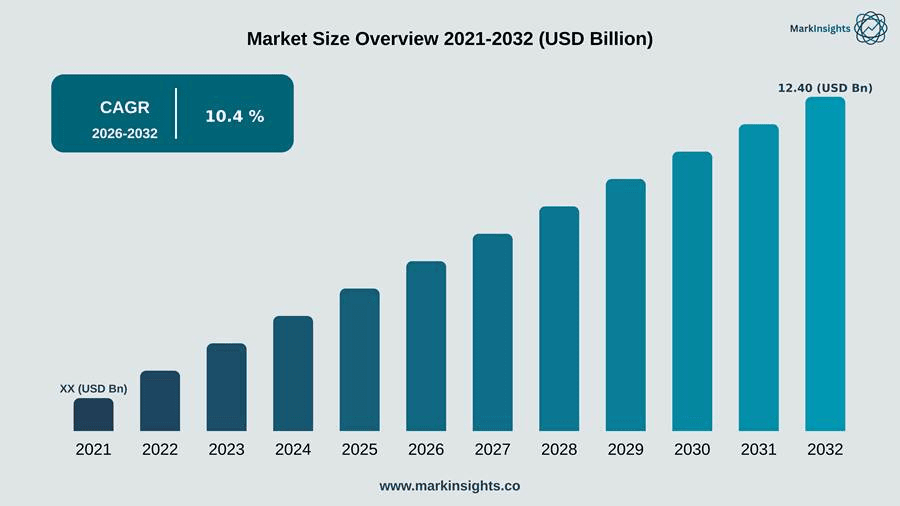
The global Airborne Satellite Communication market was valued at approximately USD 6.85 billion in 2026 and is projected to reach around USD 12.40 billion by 2032, registering a CAGR of approximately 10.4% during the 2026-2032 forecast period.
Growth is anchored by rapidly expanding passenger demand for in-flight connectivity across commercial airlines, sustained defense modernization spending on beyond-line-of-sight command and control links, and the proliferation of low earth orbit satellite constellations that reduce latency and expand bandwidth availability for airborne terminals. Panasonic Avionics, Viasat, and Honeywell have secured multi-year in-flight connectivity retrofit agreements with major global carriers, while Collins Aerospace and L3Harris Technologies continue to supply satellite communication terminals under long-term defense platform integration contracts.
The competitive landscape is consolidating around a small group of avionics and satellite terminal integrators that collectively dominate both commercial and military segments. Viasat completed its acquisition of Inmarsat in May 2023 to create a combined global mobile satellite services provider, Anuvu emerged from Global Eagle's restructuring to expand its Ku-band and Ka-band in-flight connectivity fleet in 2024, Honeywell partnered with SES in March 2025 to expand multi-orbit connectivity for business aviation, and L3Harris Technologies delivered upgraded tactical satellite communication terminals to the US Department of Defense in August 2025. North America led 2026 revenue, while Asia Pacific is the fastest-growing region led by China, India, and Japan.
Airborne Satellite Communication Market Definition:
Airborne satellite communication refers to the systems, terminals, and network infrastructure that enable aircraft to establish real-time voice, data, and video links with geostationary, medium earth orbit, and low earth orbit satellite constellations while in flight. Core hardware components include phased-array and mechanically steered antennas mounted on the fuselage, transceivers and modems that modulate and demodulate signal traffic, radome enclosures that protect antenna assemblies from aerodynamic and environmental stress, and onboard network management units that route connectivity across cabin and cockpit systems. These systems operate across multiple frequency bands including Ku-band, Ka-band, L-band, C-band, and X-band, each offering distinct trade-offs between bandwidth capacity, coverage footprint, and susceptibility to atmospheric interference. Airborne satellite communication is deployed across commercial passenger aircraft for in-flight entertainment and connectivity, military and government aircraft for secure command and control and intelligence surveillance and reconnaissance missions, business and general aviation for executive connectivity, and unmanned aerial vehicles for beyond-line-of-sight control and sensor data relay, enabling continuous situational awareness, operational coordination, and passenger service differentiation across both defense and commercial aviation operators worldwide.
Airborne Satellite Communication Market Research Methodology:
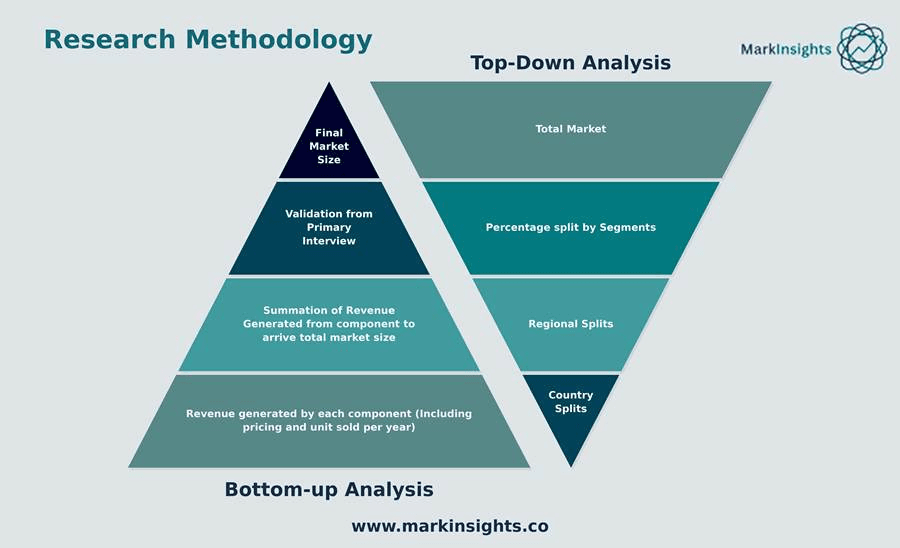
The demand-side assessment was built bottom-up from primary interviews with business buyers active in the airborne satellite communication market, including institutional and industrial procurement buyers, distributors, and institutional or industrial purchasers, etc., and cross-referenced against demand-side secondary sources such as public production and consumption data, industry and trade-association surveys, etc. On the supply side, estimates were developed top-down from primary interviews with raw-material and component suppliers and with commercial leadership at manufacturers, etc., supported by secondary sources including publicly disclosed revenue and volume commentary from companies such as Collins Aerospace, Honeywell, and L3Harris Technologies (10-K filings, investor presentations, and primary research transcripts), the regulatory frameworks of [RELEVANT REGULATOR — none detected in spec], and relevant import-export trade records, etc. Core research typically incorporates 100-130 structured B2B interviews per report, split across institutional and industrial procurement buyers, component and raw-material suppliers, and tier-1 manufacturers, weighted toward the report's leading growth regions. For this report, main inputs were cross-referenced against [RELEVANT REGULATOR] filings and publicly disclosed manufacturer segment data relevant to the Airborne Satellite Communication category.
Airborne Satellite Communication Market Size, Scope & Segmentation:
| Report Attribute | Details |
| Market size in 2026 | USD 6.85 billion |
| Market Size by 2032 | USD 12.40 billion |
| Global CAGR (2026-2032) | 10.4% |
| Historical Data | 2021-2024 |
| Forecast Period | 2026-2032 |
| Segments Covered | By Platform • Commercial Aviation • Military Aviation • Business and General Aviation • Unmanned Aerial Vehicles By Component • Antenna • Transceiver • Modem • Terminal • Others By Frequency Band • Ku-Band • Ka-Band • L-Band • C-Band • X-Band By End User • Commercial Airlines • Defense Forces • Business Jet Operators |
| Regions and Countries Covered | North America • US • Canada • Mexico Europe • Germany • UK • France • Italy • Spain • Rest of Europe Asia Pacific • China • India • Japan • South Korea • Australia • Rest of Asia Pacific Middle East and Africa • Saudi Arabia • UAE • South Africa • Rest of Middle East and Africa South America • Brazil • Argentina • Rest of South America |
| Market leaders and key company profiles | Collins Aerospace Honeywell L3Harris Technologies Thales Group Viasat Anuvu Gogo Business Aviation SES Intelsat ThinKom Solutions Gilat Satellite Networks Cobham Satcom Panasonic Avionics Iridium Communications EchoStar |
Airborne Satellite Communication Key Market Segmentation:
Insights On Key Platform
The platform segment encompasses commercial aviation (the dominant sub-category, covering narrow-body and wide-body passenger aircraft fitted with in-flight connectivity terminals from Panasonic Avionics, Viasat, and Honeywell to support streaming, browsing, and cabin crew operational applications), military aviation (a large sub-category including fighter jets, transport aircraft, and airborne early warning platforms equipped with secure satellite communication terminals from Collins Aerospace and L3Harris Technologies for command and control and ISR data relay), business and general aviation (a growing sub-category where executive jet operators install compact Ka-band and Ku-band terminals from Honeywell and Gogo Business Aviation for cabin connectivity), and unmanned aerial vehicles (an emerging high-growth sub-category requiring lightweight, low-power satellite terminals for beyond-line-of-sight control and sensor data transmission on medium- and high-altitude long-endurance platforms).
Commercial aviation dominates the platform sub-segment because global airline fleet retrofit and new-delivery connectivity mandates from carriers competing on passenger experience create sustained high-volume terminal demand, supported by Viasat and Panasonic Avionics multi-year fleet-wide connectivity agreements with major international carriers.
Insights On Key Component
The component segment covers antenna (the largest sub-category, including phased-array and mechanically steered systems from Collins Aerospace and ThinKom Solutions that determine bandwidth capacity and aerodynamic drag profile), transceiver (a critical sub-category supplied by Honeywell and L3Harris Technologies that governs uplink and downlink signal processing performance), modem (a growing sub-category from Viasat and Gilat Satellite Networks that manages waveform modulation and network protocol compatibility across multi-orbit constellations), terminal (integrated assemblies combining antenna, transceiver, and modem for turnkey installation), and others (including radomes, power supply units, and cabin network management hardware).
Antenna systems lead the component sub-segment because the shift toward electronically steered phased-array designs from ThinKom Solutions and Collins Aerospace is driving premium pricing and continuous replacement demand as operators upgrade from legacy mechanically steered systems to support higher-throughput multi-orbit satellite access.
Insights On Key Frequency Band
The frequency band segment includes Ku-band (the most widely deployed band, offering established global coverage and mature ground infrastructure supported by Viasat and Anuvu for commercial in-flight connectivity), Ka-band (a rapidly growing band providing higher bandwidth capacity favored by Honeywell and Panasonic Avionics for next-generation high-throughput connectivity services), L-band (a resilient sub-category used for safety-critical and lower-bandwidth applications including flight tracking supported by Collins Aerospace terminals connected to Inmarsat's global network), C-band (a legacy sub-category with declining commercial share but continued government and maritime-adjacent aviation use), and X-band (a specialized sub-category reserved primarily for military satellite communication requiring hardened terminals from L3Harris Technologies).
Ku-band leads the frequency band sub-segment because its extensive established satellite fleet coverage and lower terminal cost relative to emerging Ka-band systems make it the default choice for commercial airline connectivity retrofit programs across both narrow-body and wide-body fleets globally.
Insights On Key End User
The end user segment covers commercial airlines (the dominant sub-category, encompassing passenger carriers procuring in-flight connectivity terminals from Panasonic Avionics, Viasat, and Anuvu under fleet-wide retrofit and linefit agreements to enhance passenger experience and generate ancillary revenue), defense forces (a large and strategically critical sub-category including air forces and defense ministries procuring secure satellite communication terminals from Collins Aerospace and L3Harris Technologies for command and control, ISR, and tactical data relay across manned and unmanned platforms), and business jet operators (a smaller but high-value sub-category where fractional ownership and charter operators install premium connectivity terminals from Honeywell and Gogo Business Aviation to meet executive passenger expectations).
Commercial airlines lead the end user sub-segment because passenger expectation for continuous internet connectivity during flight has become a competitive differentiator among global carriers, driving sustained fleet-wide retrofit investment and multi-year bandwidth capacity agreements with Viasat and Panasonic Avionics.
Insights on Regional Analysis
The global Airborne Satellite Communication market spans North America, Europe, Asia Pacific, Middle East and Africa, and South America. North America leads global revenue, anchored by the United States where major commercial carriers including Delta Air Lines, American Airlines, and United Airlines have completed extensive fleet-wide in-flight connectivity retrofits with Viasat, Panasonic Avionics, and Gogo, supported by a large defense procurement base under the US Department of Defense that sustains steady demand for secure satellite communication terminals from Collins Aerospace and L3Harris Technologies. The US Federal Communications Commission (FCC) governs spectrum licensing for airborne earth station operations, while the Federal Aviation Administration (FAA) oversees airworthiness certification of satellite communication terminal installations. Canada's defense modernization programs and business aviation fleet growth further contribute to regional demand, with Bombardier business jets increasingly delivered with factory-installed satellite connectivity systems.
Asia Pacific is the fastest-growing region for Airborne Satellite Communication, led by China, India, and Japan. China's rapidly expanding commercial aviation fleet and government-backed satellite constellation development are driving domestic terminal manufacturing investment and airline connectivity retrofit programs, supported by the Civil Aviation Administration of China (CAAC) certification framework for onboard communication equipment. India's Ministry of Civil Aviation is encouraging in-flight connectivity adoption among domestic carriers including IndiGo and Air India as international long-haul route expansion accelerates, while the Indian Air Force's modernization programs are increasing procurement of secure airborne satellite communication terminals. Japan's defense ministry is investing in satellite communication upgrades for its air self-defense force fleet, and Japanese carriers including ANA and Japan Airlines continue expanding Ku-band and Ka-band connectivity coverage across international long-haul aircraft to meet rising passenger connectivity expectations.
Airborne Satellite Communication Market Company Profiles:
The Airborne Satellite Communication competitive landscape encompasses three primary archetypes: integrated avionics and terminal manufacturers (Collins Aerospace, Honeywell, L3Harris Technologies, Thales Group) that design and certify satellite communication hardware for both commercial and military aircraft platforms under long-term OEM and retrofit agreements; connectivity service providers and satellite operators (Viasat, Anuvu, Gogo Business Aviation, SES, Intelsat) that operate satellite bandwidth capacity and deliver managed in-flight connectivity services to airlines and business jet operators; and specialized antenna and terminal component suppliers (ThinKom Solutions, Gilat Satellite Networks, Cobham Satcom, Panasonic Avionics) that develop phased-array antennas, modems, and cabin network equipment for integration into airborne connectivity systems.
The 15 anchor companies profiled in this report are Collins Aerospace, Honeywell, L3Harris Technologies, Thales Group, Viasat, Anuvu, Gogo Business Aviation, SES, Intelsat, ThinKom Solutions, Gilat Satellite Networks, Cobham Satcom, Panasonic Avionics, Iridium Communications, and EchoStar. Collins Aerospace supplies satellite communication terminals and antenna systems across both commercial and military aircraft platforms globally. Honeywell provides Ka-band and multi-orbit connectivity terminals for business aviation and commercial airline fleets under its JetWave product line. Viasat, following its acquisition of Inmarsat, operates one of the largest combined satellite bandwidth networks serving commercial and government aviation customers worldwide. Panasonic Avionics maintains long-standing in-flight connectivity agreements with major international carriers across wide-body fleets. ThinKom Solutions, Gilat Satellite Networks and Cobham Satcom hold specialist positions supplying phased-array antennas and terminal hardware to system integrators rather than end customers directly.
Airborne Satellite Communication Market Latest Trends and Innovation:
• In August 2025, L3Harris Technologies delivered an upgraded batch of tactical satellite communication terminals to the US Department of Defense under an existing multi-year contract, enhancing secure beyond-line-of-sight command and control capability for airborne intelligence, surveillance, and reconnaissance platforms operating in contested electromagnetic environments.
• In March 2025, Honeywell announced a strategic partnership with SES to deliver multi-orbit satellite connectivity combining geostationary and medium earth orbit capacity for business aviation customers, enabling Honeywell's JetWave terminals to access higher-throughput bandwidth with improved global coverage for executive jet operators seeking uninterrupted cabin connectivity worldwide.
• In January 2025, Anuvu expanded its Ku-band in-flight connectivity fleet agreement with a major Latin American commercial carrier, adding satellite bandwidth capacity to support streaming-grade internet access across the airline's narrow-body fleet as part of a broader regional connectivity retrofit initiative targeting improved passenger experience metrics.
• In May 2024, Viasat completed integration milestones following its acquisition of Inmarsat, consolidating global mobile satellite services coverage and enabling combined Ka-band and L-band network access for commercial airline and business aviation customers under a unified connectivity service offering spanning both legacy Inmarsat and Viasat satellite fleets.
Airborne Satellite Communication Market Significant Growth Factors:
The global Airborne Satellite Communication market is expanding on the back of four reinforcing drivers. Rising passenger expectation for continuous high-speed internet access during flight is compelling commercial carriers to accelerate fleet-wide connectivity retrofit programs with Viasat, Panasonic Avionics, and Anuvu, converting satellite connectivity from a discretionary amenity into a competitive necessity across long-haul and increasingly narrow-body fleets. Sustained defense modernization spending across the United States, Europe, and Asia Pacific is driving procurement of secure, jam-resistant satellite communication terminals from Collins Aerospace and L3Harris Technologies for command and control, ISR, and unmanned platform data relay missions. The proliferation of low earth orbit satellite constellations is reducing latency and expanding available bandwidth, enabling terminal manufacturers including Honeywell and ThinKom Solutions to develop multi-orbit-compatible antenna systems that unlock new service tiers for both commercial and government customers. Growing business and general aviation fleet size, particularly in North America and the Middle East, is expanding demand for compact, high-performance connectivity terminals from Gogo Business Aviation and Honeywell tailored to executive cabin requirements.
Airborne Satellite Communication Market Drivers:
Demand is driven by passenger connectivity expectations, defense communication modernization, unmanned platform proliferation, and satellite constellation expansion. Airlines competing for passenger loyalty are treating in-flight connectivity as a core service differentiator, driving Delta Air Lines, United Airlines, and international carriers to sign multi-year bandwidth agreements with Viasat and Panasonic Avionics that anchor terminal manufacturer production planning. Defense ministries across the United States, NATO member states, and Asia Pacific allied nations are prioritizing resilient, secure satellite communication capability for both manned and unmanned platforms, sustaining procurement pipelines for Collins Aerospace and L3Harris Technologies terminal systems. The rapid expansion of medium- and high-altitude long-endurance unmanned aerial vehicle fleets for surveillance and reconnaissance missions is creating new terminal demand for lightweight, low-power satellite communication systems optimized for extended flight duration. Low earth orbit constellation deployment by SES, Intelsat, and other operators is expanding available bandwidth capacity and reducing per-megabit service costs, making high-throughput connectivity commercially viable across a broader range of aircraft categories including regional and narrow-body fleets.
Airborne Satellite Communication Market Restraining Factors:
Several factors temper growth across the Airborne Satellite Communication value chain. High upfront installation and certification costs for satellite communication terminals, including aircraft downtime required for antenna mounting and structural modification, create financial barriers for smaller regional carriers and business jet operators considering fleet-wide connectivity retrofits. Spectrum allocation complexity and varying national regulatory requirements across the FCC, European Union Aviation Safety Agency (EASA), and CAAC create certification delays and compliance cost burdens for terminal manufacturers seeking global market access for new antenna and modem designs. Bandwidth cost volatility tied to satellite operator capacity pricing and orbital slot availability constrains connectivity service providers' ability to offer predictable long-term pricing to airline customers, complicating multi-year contract negotiation. Cybersecurity vulnerabilities associated with satellite communication links, particularly for military and government aircraft transmitting sensitive command and control data, require continuous investment in encryption and anti-jamming technology by Collins Aerospace and L3Harris Technologies that increases system cost and extends development timelines for next-generation terminal platforms.
Airborne Satellite Communication Market Opportunities:
Opportunities cluster in four pockets across the Airborne Satellite Communication landscape. Multi-orbit terminal development combining geostationary, medium earth orbit, and low earth orbit access represents a significant innovation opportunity for Honeywell and ThinKom Solutions to capture premium pricing from operators seeking maximum coverage resilience and bandwidth flexibility. Regional and narrow-body aircraft connectivity retrofit in emerging markets across Asia Pacific, the Middle East, and Latin America offers substantial addressable demand for Viasat and Anuvu as domestic carriers in India, China, and Brazil expand international route networks requiring competitive passenger connectivity offerings. Unmanned aerial vehicle satellite communication terminal miniaturization for medium-altitude and small tactical drone platforms presents a growing niche for specialized suppliers including Gilat Satellite Networks to address defense and commercial surveillance applications. Business aviation connectivity upgrades tied to next-generation fractional ownership and charter fleet expansion offer Gogo Business Aviation and Honeywell opportunities to capture recurring service revenue through bundled hardware-and-bandwidth subscription models.
Airborne Satellite Communication Market Technology Trends:
Technology direction is set by three converging shifts in Airborne Satellite Communication system design. Electronically steered phased-array antenna adoption, led by ThinKom Solutions and Collins Aerospace, is replacing legacy mechanically steered systems with lighter, lower-drag designs capable of seamless multi-satellite tracking without moving parts, improving reliability and reducing maintenance requirements across commercial fleets. Multi-orbit network integration combining geostationary, medium earth orbit, and low earth orbit satellite access, pursued by Honeywell and SES, is enabling terminals to dynamically switch between constellations for optimal latency and bandwidth performance depending on flight route and coverage availability. Software-defined modem and terminal architecture development by Viasat and Gilat Satellite Networks is allowing single hardware platforms to support multiple frequency bands and waveform standards through software updates, extending terminal service life and reducing fleet-wide hardware replacement costs as satellite network technology evolves.
Airborne Satellite Communication Market Future Trends:
By 2032, the market will be reshaped by widespread adoption of multi-orbit connectivity as standard equipment across commercial fleets, the integration of satellite communication with 5G non-terrestrial network standards, and expanding autonomous unmanned aerial system reliance on resilient beyond-line-of-sight satellite links. Multi-orbit terminals combining geostationary and low earth orbit access are expected to become the default specification for new aircraft connectivity installations as Honeywell, Viasat, and SES scale combined network offerings that eliminate coverage gaps experienced with single-constellation systems. Integration of airborne satellite communication with emerging 5G non-terrestrial network standards will enable seamless handoff between satellite and terrestrial cellular connectivity for aircraft operating near populated areas, developed collaboratively by Collins Aerospace and telecommunications standards bodies. Expanding autonomous and semi-autonomous unmanned aerial system fleets for both military and commercial applications will drive sustained demand for compact, resilient satellite communication terminals from L3Harris Technologies and Gilat Satellite Networks capable of maintaining command links across extended operational ranges.
Airborne Satellite Communication Market Supply Chain Analysis:
The Airborne Satellite Communication supply chain runs from satellite operators and orbital infrastructure providers through terminal component manufacturers and system integrators to aircraft OEMs, maintenance repair and overhaul providers, and end-use airline and defense operators. Upstream capacity is anchored by satellite operators including SES, Intelsat, Viasat, and Iridium Communications that provide geostationary, medium earth orbit, and low earth orbit bandwidth capacity under wholesale and managed service agreements. Component manufacturers including ThinKom Solutions, Gilat Satellite Networks, and Cobham Satcom produce antennas, modems, and transceivers that are integrated by Collins Aerospace, Honeywell, and L3Harris Technologies into certified terminal systems installed on new aircraft during linefit production at Boeing and Airbus facilities or retrofitted onto in-service fleets during scheduled maintenance checks.
Distribution to end customers flows through direct OEM linefit agreements for new aircraft deliveries and through specialized maintenance repair and overhaul providers for retrofit installations on existing fleets. Key bottlenecks include limited satellite bandwidth capacity availability during peak demand periods, aircraft downtime constraints that restrict retrofit installation scheduling for commercial carriers, and lengthy certification timelines required by aviation safety regulators before new antenna or terminal designs can enter commercial service across different national jurisdictions.
Airborne Satellite Communication Market Regulatory Analysis:
The global Airborne Satellite Communication market operates within a multi-layered regulatory framework governing spectrum licensing, airworthiness certification, and cybersecurity compliance. The US Federal Communications Commission (FCC) administers spectrum licensing for airborne earth station operations under Part 25 rules, while the Federal Aviation Administration (FAA) oversees Supplemental Type Certificate approval for satellite communication terminal installations on commercial aircraft. The European Union Aviation Safety Agency (EASA) governs equivalent airworthiness certification across European member states, and the International Telecommunication Union (ITU) coordinates global spectrum allocation and orbital slot assignment to prevent cross-border interference. China's Civil Aviation Administration of China (CAAC) and India's Directorate General of Civil Aviation (DGCA) administer domestic certification requirements for satellite communication equipment installed on carrier fleets operating within their respective jurisdictions. Military and government satellite communication systems are additionally subject to export control regulations including the US International Traffic in Arms Regulations (ITAR), which govern the transfer of defense-related satellite communication technology to foreign government and commercial entities.
Airborne Satellite Communication Market Share Analysis:
The top five vendors together account for an estimated 50-60% of global Airborne Satellite Communication revenue in the commercial in-flight connectivity segment, with the remainder distributed across regional service providers, specialist antenna manufacturers, and defense-focused terminal suppliers across North America, Europe, and Asia Pacific. Concentration is highest in the military and government satellite communication segment where Collins Aerospace, L3Harris Technologies, and Thales Group collectively dominate through long-term platform integration contracts, while the market is most fragmented in the business aviation connectivity segment served by regional installers and smaller terminal specialists.
Airborne Satellite Communication Market Competitive Landscape:
The Airborne Satellite Communication competitive landscape is led by Collins Aerospace, Honeywell, L3Harris Technologies, Viasat, and Thales Group, with significant presence from Anuvu, Gogo Business Aviation, SES, ThinKom Solutions, and Panasonic Avionics. The Viasat acquisition of Inmarsat completed in May 2023, the Honeywell-SES multi-orbit partnership announced in March 2025, the L3Harris Technologies tactical terminal delivery in August 2025, and the Anuvu fleet connectivity expansion in January 2025 are the principal developments shaping the competitive map.
Key Player Strategies
Leaders are prioritizing multi-orbit network integration, satellite operator partnership formation, terminal miniaturization for unmanned platforms, and fleet-wide retrofit agreement expansion with major commercial carriers. Collins Aerospace and L3Harris Technologies compete on defense platform integration depth and secure communication capability, while Viasat and Anuvu focus on commercial bandwidth capacity and airline service agreements. This parameter analyses the strategic posture of each leading player across network access, terminal innovation, and customer contract structure dimensions.
Buyer-Tier Concentration
Share concentration differs meaningfully by customer tier. Tier-1 buyers, including major global carriers such as Delta Air Lines and defense ministries such as the US Department of Defense, consolidate procurement with Collins Aerospace, L3Harris Technologies, and Viasat because only these integrators carry the certification depth and global support networks required for fleet-wide or platform-wide deployment. Regional carriers and smaller business aviation operators, by contrast, are served through connectivity resellers and maintenance repair and overhaul providers that blend terminal hardware and bandwidth capacity from multiple suppliers, diluting the top-five vendor concentration figure at the point of final installation even though it holds firmly at the terminal manufacturing and satellite capacity level.
Company Capability Assessment
Capability leadership is differentiated by platform and mission type: Collins Aerospace leads in integrated commercial and military terminal manufacturing with certified systems across both aircraft categories; L3Harris Technologies leads in secure tactical satellite communication for defense and unmanned platforms; Viasat leads in combined commercial bandwidth capacity following its Inmarsat acquisition; Honeywell leads in business aviation multi-orbit terminal development; ThinKom Solutions leads in electronically steered phased-array antenna technology for high-throughput applications. This parameter assesses each leader's depth across terminal certification breadth, network access, and platform integration dimensions.
Market Concentration
The top five vendors account for an estimated 50-60% of global Airborne Satellite Communication revenue in the commercial in-flight connectivity segment, reflecting substantial market concentration driven by high certification barriers and long-term fleet agreement structures. This parameter measures the degree of vendor concentration relative to total market revenue.
Frequently Asked Questions
How big is the Airborne Satellite Communication Market and what will it be worth by 2032?
The Airborne Satellite Communication Market was valued at approximately USD 6.85 billion in 2026 and is projected to reach around USD 12.40 billion by 2032, registering a CAGR of approximately 10.4%.
What is the CAGR of the Airborne Satellite Communication Market from 2026 to 2032?
The Airborne Satellite Communication Market is projected to register a CAGR of approximately 10.4% during the forecast period from 2026 to 2032.
What are the key drivers and restraints shaping the Airborne Satellite Communication Market?
Key Drivers:
• Airlines competing for passenger loyalty are treating in-flight connectivity as a core service differentiator, driving Delta Air Lines, United Airlines, and international carriers to sign multi-year bandwidth agreements with Viasat and Panasonic Avionics that anchor terminal manufacturer production planning.
• Defense ministries across the United States, NATO member states, and Asia Pacific allied nations are prioritizing resilient, secure satellite communication capability for both manned and unmanned platforms, sustaining procurement pipelines for Collins Aerospace and L3Harris Technologies terminal systems.
Key Restraints:
• High upfront installation and certification costs for satellite communication terminals, including aircraft downtime required for antenna mounting and structural modification, create financial barriers for smaller regional carriers and business jet operators considering fleet-wide connectivity retrofits.
• Spectrum allocation complexity and varying national regulatory requirements across the FCC, European Union Aviation Safety Agency (EASA), and CAAC create certification delays and compliance cost burdens for terminal manufacturers seeking global market access for new antenna and modem designs.
What are the major segments and which region leads the Airborne Satellite Communication Market?
Commercial aviation (Platform), Antenna systems (Component), Ku-band (Frequency Band), Commercial airlines (End User) lead their respective segments. North America leads global revenue, anchored by the United States. Asia Pacific is the fastest-growing region, led by China, India, and Japan. Full segment-level analysis, including growth drivers, restraints, and country-level detail for every region covered in this study, is provided in the corresponding chapters of the full report
Who are the leading companies in the Airborne Satellite Communication Market?
The top five players in the Airborne Satellite Communication Market — Collins Aerospace, Honeywell, L3Harris Technologies, Thales Group, and Viasat — collectively hold an estimated 50-60% of global revenue. Key companies covered in this report include Collins Aerospace, Honeywell, L3Harris Technologies, Thales Group, Viasat, Anuvu, Gogo Business Aviation, SES, Intelsat, ThinKom Solutions, Gilat Satellite Networks, Cobham Satcom, Panasonic Avionics, Iridium Communications, and EchoStar.
Related Reports
Global Advanced Surface Movement Guidance Control System Market — Forecast to 2032
By System Type (Surveillance Systems, Routing Systems, Guidance Systems, Control Systems), By Component (Radar Sensors, Software, Control Towers Equipment, Multilateration Systems), By Airport Category (Category A Airports, Category B Airports, Category C Airports), By Application (Commercial Airports, Military Airbases, Cargo and Freight Airports), By End User (Airport Authorities, Air Navigation Service Providers, Defense Agencies)
From $ 2,500
View Report →Global Aircraft Ground Handling System Market — Forecast to 2032
By Equipment Type (Ground Power Units, Ground Support Vehicles, Baggage and Cargo Handling Systems, De-Icing Equipment, Passenger Boarding Bridges and Stairs), By Service Type (Ramp Handling, Cargo and Baggage Handling, De-Icing Services, Passenger Handling, Aircraft Marshalling), By Application (Commercial Aviation, Military Aviation, Cargo and Freight), By Power Source (Electric, Diesel/Fuel-Powered, Hybrid), By End User (Airports, Airlines, Third-Party Ground Handling Service Providers)
From $ 2,500
View Report →Global 5G Market Aviation Market — Forecast to 2032
By Component (Hardware, Software, Services), By Connectivity Type (In-Flight Connectivity, Air-to-Ground Connectivity, Satellite-Based Connectivity), By Application (Passenger Connectivity, Aircraft Operations and Maintenance, Air Traffic Management, Cargo and Logistics Tracking), By Platform (Commercial Aviation, Military Aviation, Business and General Aviation, Unmanned Aerial Vehicles)
From $ 2,500
View Report →