
Global Air Traffic Control Equipment Market — Forecast to 2032
Research scope: By System Type (Communication Systems, Navigation Systems, Surveillance Systems, Automation Systems), By Platform (Ground-Based, Airborne, Space-Based), By Application (Civil, Military), By End User (Airports, Air Navigation Service Providers, Defense Forces)
Domain: Aerospace & Defense
Report Code: MIADG 10028
Air Traffic Control Equipment Market Analysis and Insights:
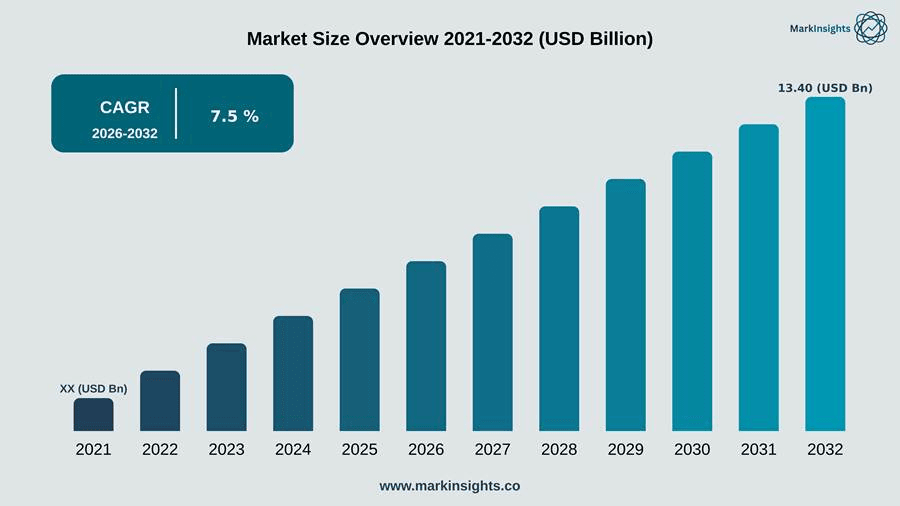
The global Air Traffic Control Equipment market was valued at approximately USD 8.65 billion in 2026 and is projected to reach around USD 13.40 billion by 2032, registering a CAGR of approximately 7.5% during the 2026-2032 forecast period.
Growth is anchored by rising global air passenger traffic requiring modernized surveillance and automation infrastructure, sustained government investment in next-generation airspace modernization programs including the US NextGen initiative and Europe's SESAR deployment, and increasing adoption of satellite-based navigation and Automatic Dependent Surveillance-Broadcast (ADS-B) systems replacing legacy radar networks. Air navigation service providers including the FAA, Eurocontrol member states, and the Airports Authority of India are committing multi-year procurement contracts to Thales, Raytheon Technologies (Collins Aerospace), and Indra Sistemas, anchoring stable long-cycle demand for ground and airborne ATC equipment upgrades.
The competitive landscape is consolidating around a small group of integrated systems majors that dominate large-scale national airspace modernization contracts. Thales Group expanded its air traffic management software portfolio through a strategic partnership with Airbus announced in March 2025, Leonardo S.p.A. secured a major surveillance radar contract with ENAV in July 2025, Raytheon Technologies' Collins Aerospace delivered upgraded automation systems to the FAA under a NextGen contract extension in late 2024, and Indra Sistemas won a multi-country ADS-B deployment contract across Latin America in early 2025. North America led 2026 revenue, while Asia Pacific is the fastest-growing region led by China, India, and Southeast Asia.
Air Traffic Control Equipment Market Definition:
Air traffic control equipment encompasses the ground-based, airborne, and space-based systems used by air navigation service providers, airport operators, and military authorities to monitor, direct, and separate aircraft safely through controlled airspace and at airport surfaces. Core system categories include communication systems such as very high frequency (VHF) and controller-pilot data link communication (CPDLC) equipment enabling voice and data exchange between controllers and pilots, navigation systems including instrument landing systems (ILS), very high frequency omnidirectional range (VOR), and satellite-based augmentation systems that guide aircraft along approach and en route flight paths, surveillance systems such as primary and secondary surveillance radar and Automatic Dependent Surveillance-Broadcast (ADS-B) that track aircraft position in real time, and automation systems including flight data processing, conflict detection, and air traffic flow management software that support controller decision-making. These systems are deployed across civil airports, area control centers, and military airspace management installations, enabling airspace authorities to maintain safe aircraft separation, optimize traffic flow, and support the transition toward performance-based navigation and trajectory-based operations across both developed and emerging aviation market geographies.
Air Traffic Control Equipment Market Research Methodology:
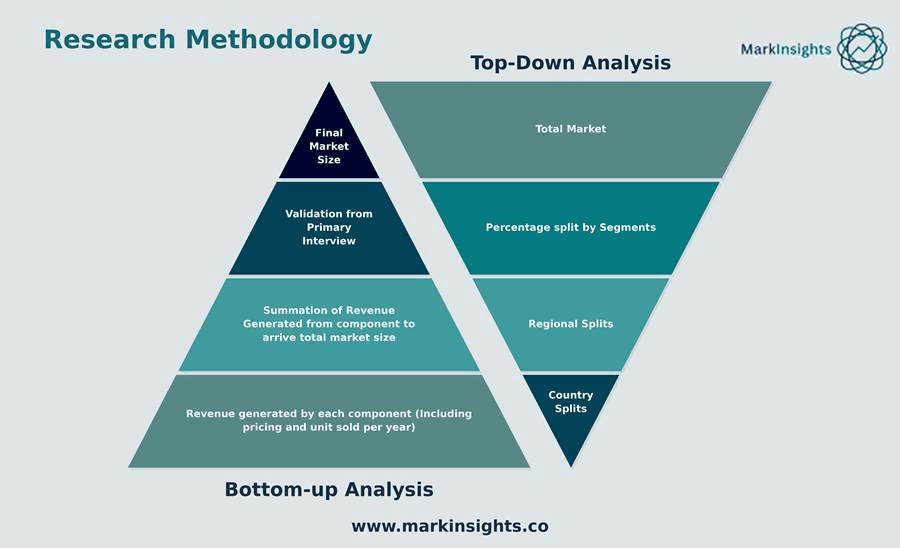
The demand-side assessment was built bottom-up from primary interviews with business buyers active in the air traffic control equipment market, including institutional and industrial procurement buyers, distributors, and institutional or industrial purchasers, etc., and cross-referenced against demand-side secondary sources such as public production and consumption data, industry and trade-association surveys, etc. On the supply side, estimates were developed top-down from primary interviews with raw-material and component suppliers and with commercial leadership at manufacturers, etc., supported by secondary sources including publicly disclosed revenue and volume commentary from companies such as Thales, Leonardo, and Raytheon Technologies (10-K filings, investor presentations, and primary research transcripts), the regulatory frameworks of [RELEVANT REGULATOR — none detected in spec], and relevant import-export trade records, etc. Central research typically incorporates 100-130 structured B2B interviews per report, split across institutional and industrial procurement buyers, component and raw-material suppliers, and tier-1 manufacturers, weighted toward the report's leading growth regions. For this report, main inputs were cross-referenced against [RELEVANT REGULATOR] filings and publicly disclosed manufacturer segment data relevant to the Air Traffic Control Equipment category.
Air Traffic Control Equipment Market Size, Scope & Segmentation:
| Report Attribute | Details |
| Market size in 2026 | USD 8.65 billion |
| Market Size by 2032 | USD 13.40 billion |
| Global CAGR (2026-2032) | 7.5% |
| Historical Data | 2021-2024 |
| Forecast Period | 2026-2032 |
| Segments Covered | By System Type • Communication Systems • Navigation Systems • Surveillance Systems • Automation Systems By Platform • Ground-Based • Airborne • Space-Based By Application • Civil • Military By End User • Airports • Air Navigation Service Providers • Defense Forces |
| Regions and Countries Covered | North America • US • Canada • Mexico Europe • Germany • UK • France • Italy • Spain • Rest of Europe Asia Pacific • China • India • Japan • South Korea • Australia • Rest of Asia Pacific Middle East and Africa • Saudi Arabia • UAE • South Africa • Rest of Middle East and Africa South America • Brazil • Argentina • Rest of South America |
| Market leaders and key company profiles | Thales Leonardo Raytheon Technologies Indra Sistemas Honeywell Collins Aerospace Rohde & Schwarz Frequentis Saab Leidos L3Harris Technologies Northrop Grumman Aireon NEC Corporation Terma |
Air Traffic Control Equipment Key Market Segmentation:
Insights On Key System Type
The system type segment encompasses communication systems (including VHF radios and CPDLC data link equipment from Thales and Rohde & Schwarz that enable voice and digital exchange between controllers and flight crews), navigation systems (including ILS, VOR, and satellite-based augmentation systems from Honeywell and Leonardo that guide aircraft approach and en route navigation), surveillance systems (the dominant sub-category, including primary and secondary surveillance radar and ADS-B equipment from Raytheon Technologies, Indra Sistemas, and Saab that provide real-time aircraft position tracking), and automation systems (including flight data processing and conflict detection software from Frequentis and Leidos that support controller workload management and traffic flow optimization).
Surveillance systems dominate the system type sub-segment because the global transition from legacy radar networks to ADS-B and multilateration surveillance technology is driving sustained replacement and upgrade investment by air navigation service providers, supported by mandated ADS-B Out equipage requirements enforced by the FAA and the European Union Aviation Safety Agency across controlled airspace.
Insights On Key Platform
The platform segment covers ground-based (the dominant sub-category, encompassing area control center radar, communication towers, and navigation aid infrastructure installed at airports and en route facilities by Thales, Leonardo, and Indra Sistemas), airborne (including onboard transponders, traffic collision avoidance systems, and CPDLC avionics from Honeywell and Collins Aerospace fitted to commercial and military aircraft), and space-based (an emerging sub-category including satellite-based ADS-B and navigation augmentation payloads supported by Aireon and government satellite navigation programs).
Ground-based platforms lead the platform sub-segment because national airspace modernization programs continue to prioritize replacement of aging terrestrial radar and communication infrastructure, with Thales and Leonardo securing large multi-year ground infrastructure contracts from national air navigation service providers across Europe, the Middle East, and Asia Pacific.
Insights On Key Application
The application segment includes civil (the dominant sub-category, encompassing commercial airport and area control center equipment procured by national air navigation service providers such as the FAA, Eurocontrol member states, and Airports Authority of India to manage growing commercial air traffic volumes) and military (encompassing tactical air defense radar, mobile air traffic control units, and airspace management systems procured by defense forces from Leonardo, Saab, and Raytheon Technologies to support military airfield operations and airspace surveillance).
Civil applications dominate the application sub-segment because sustained global commercial air passenger traffic growth is driving continuous airport and airspace capacity expansion investment, with national civil aviation authorities across Asia Pacific and the Middle East committing large-scale airport modernization budgets to Indra Sistemas and Thales.
Insights On Key End User
The end user segment covers airports (encompassing tower and approach control equipment procured directly by airport operators for surface movement and terminal airspace management), air navigation service providers (the largest end-user category, encompassing national and regional bodies including the FAA, NAV CANADA, and Eurocontrol member state agencies that procure en route surveillance, communication, and automation systems for controlled airspace management), and defense forces (encompassing military branches procuring tactical and fixed-base air traffic control systems from Leonardo, Saab, and Raytheon Technologies for airbase and battlefield airspace management).
Air navigation service providers lead the end user sub-segment because these agencies control the largest procurement budgets for en route and terminal airspace infrastructure modernization, with multi-year national airspace modernization programs such as NextGen and SESAR providing predictable long-cycle demand for Thales, Raytheon Technologies, and Indra Sistemas equipment portfolios.
Insights on Regional Analysis
The global Air Traffic Control Equipment market spans North America, Europe, Asia Pacific, Middle East and Africa, and South America. North America leads global revenue, anchored by the United States and Canada where the Federal Aviation Administration's NextGen airspace modernization program continues to drive sustained procurement of satellite-based navigation, ADS-B surveillance, and automated flight data processing systems across national en route and terminal airspace facilities. NAV CANADA's ongoing infrastructure renewal program and the FAA's continued rollout of Data Communications and Time-Based Flow Management capabilities are sustaining multi-year contract awards to Raytheon Technologies' Collins Aerospace, Leidos, and Thales USA. The region's dense commercial aviation network, combined with Federal Aviation Regulation Part 171 non-federal navigation facility standards and mandated ADS-B Out equipage enforced since January 2020, continues to anchor stable replacement and upgrade demand across both civil and military airspace segments.
Asia Pacific is the fastest-growing region for Air Traffic Control Equipment, led by China, India, and Southeast Asia. China's rapid commercial airport construction program and the Civil Aviation Administration of China's airspace capacity expansion initiatives are driving substantial investment in surveillance radar, communication, and automation systems from domestic and international suppliers including Indra Sistemas and Thales. India's Airports Authority of India is executing a large-scale modernization program covering greenfield airport development and ADS-B surveillance network expansion under the government's UDAN regional connectivity scheme, creating sustained procurement opportunities for Leonardo and Frequentis. Southeast Asian nations including Indonesia, Vietnam, and the Philippines are similarly investing in air navigation infrastructure upgrades to accommodate rapidly growing low-cost carrier traffic, with Saab and Honeywell maintaining active regional distribution and systems integration partnerships supporting national civil aviation authority modernization roadmaps.
Air Traffic Control Equipment Market Company Profiles:
The Air Traffic Control Equipment competitive landscape encompasses three primary archetypes: integrated systems majors (Thales, Leonardo, Raytheon Technologies, Indra Sistemas) that design, manufacture, and integrate full-suite communication, navigation, surveillance, and automation systems for national airspace modernization programs; specialist avionics and communication providers (Honeywell, Collins Aerospace, Rohde & Schwarz, Frequentis) that supply airborne avionics, ground communication systems, and voice/data switching platforms to airports and air navigation service providers; and defense-oriented radar and surveillance specialists (Saab, Leidos, Northrop Grumman, Harris Corporation successor L3Harris) that serve military airspace management and tactical surveillance procurement.
The 15 anchor companies profiled in this report are Thales, Leonardo, Raytheon Technologies, Indra Sistemas, Honeywell, Collins Aerospace, Rohde & Schwarz, Frequentis, Saab, Leidos, L3Harris Technologies, Northrop Grumman, Aireon, NEC Corporation, and Terma. Thales is a global leader in air traffic management systems, supplying surveillance, communication, and automation equipment to national air navigation service providers across more than 180 countries. Leonardo supplies advanced surveillance radar and secondary surveillance systems widely deployed across European and Middle Eastern civil and military airspace networks. Raytheon Technologies, through its Collins Aerospace and Raytheon divisions, provides automation software and radar systems under long-term FAA NextGen contracts. Indra Sistemas is a leading provider of ADS-B and automation systems across Latin America, Europe, and Asia Pacific. Frequentis specializes in voice communication and safety-critical control center software for civil and defense airspace operators. Aireon and NEC Corporation hold specialist positions in space-based ADS-B surveillance and regional systems integration respectively, competing on technology niche rather than full-suite scale.
Air Traffic Control Equipment Market Latest Trends and Innovation:
• In February 2026, Thales announced the deployment of its next-generation TopSky air traffic management automation suite to a major European air navigation service provider, extending its controller decision-support software footprint across additional en route control centers and reinforcing its position in the region's SESAR-aligned airspace modernization program.
• In July 2025, Leonardo secured a multi-year surveillance radar modernization contract with ENAV, Italy's national air navigation service provider, to upgrade primary and secondary surveillance radar coverage across major Italian airports and terminal control areas, strengthening its domestic surveillance systems installed base.
• In March 2025, Thales and Airbus announced an expanded strategic partnership to jointly develop next-generation air traffic management software addressing rising airspace capacity constraints, combining Thales's ATM systems expertise with Airbus's aircraft data integration capabilities to support future trajectory-based operations concepts.
• In January 2025, Indra Sistemas was awarded a contract to deploy ADS-B surveillance infrastructure across multiple Latin American countries in coordination with regional civil aviation authorities, extending its surveillance systems footprint and supporting the region's transition from radar-dependent to satellite-based aircraft tracking.
Air Traffic Control Equipment Market Significant Growth Factors:
The global Air Traffic Control Equipment market is expanding on the back of four reinforcing drivers. Sustained global commercial air passenger traffic recovery and growth is compelling air navigation service providers to expand airspace capacity through modernized surveillance, communication, and automation infrastructure procured from Thales, Leonardo, and Raytheon Technologies. Government-funded national airspace modernization programs, including the FAA's NextGen initiative in the United States and the SESAR deployment program across Europe, continue to provide predictable multi-year procurement budgets that anchor long-cycle equipment replacement and upgrade investment. The accelerating global transition from legacy primary and secondary surveillance radar toward ADS-B and satellite-based surveillance technology is driving equipment replacement cycles across both developed and emerging aviation markets as regulators mandate equipage compliance. Rising greenfield airport construction activity across China, India, and the Middle East is creating substantial new-build demand for complete communication, navigation, and surveillance system installations from Indra Sistemas, Honeywell, and Frequentis as these markets expand commercial aviation infrastructure to accommodate rapidly growing passenger volumes.
Air Traffic Control Equipment Market Drivers:
Demand is driven by rising global air traffic volumes, aging infrastructure replacement cycles, regulatory equipage mandates, and defense airspace modernization. Growing commercial passenger and cargo air traffic across Asia Pacific and the Middle East is directly increasing the number of aircraft movements that national air navigation service providers must safely manage, requiring capacity-expanding surveillance and automation system investment from Leonardo and Thales. Many developed markets operate air traffic control infrastructure installed decades ago, creating a substantial replacement demand pipeline for Raytheon Technologies and Collins Aerospace as national authorities retire aging radar and communication equipment nearing end of service life. Regulatory mandates requiring ADS-B Out equipage, enforced by the FAA since January 2020 and by the European Union Aviation Safety Agency across controlled airspace, continue to compel airlines and air navigation service providers to invest in compliant surveillance equipment from Garmin and Honeywell. Defense forces globally are modernizing tactical and fixed-base air traffic control systems to support expanded military airspace surveillance requirements, driving procurement from Saab, Leidos, and L3Harris Technologies for mobile and hardened control installations.
Air Traffic Control Equipment Market Restraining Factors:
Several factors temper growth across the Air Traffic Control Equipment value chain. Long government procurement cycles and complex multi-year budget approval processes for national airspace modernization programs create extended sales cycles and revenue recognition delays for Thales, Leonardo, and Indra Sistemas, limiting the pace at which new contract awards translate into recognized equipment revenue. High system integration complexity when interfacing new automation and surveillance equipment with legacy air traffic control infrastructure increases implementation risk and cost overrun exposure for both suppliers and air navigation service provider customers during modernization program execution. Constrained government defense and civil aviation infrastructure budgets in several emerging markets limit the pace of new equipment procurement, particularly for advanced automation and satellite-based surveillance systems that require substantial upfront capital investment relative to available national budgets. Cybersecurity vulnerabilities inherent in increasingly networked and satellite-dependent air traffic control systems raise implementation and certification costs, as suppliers including Raytheon Technologies and Frequentis must satisfy stringent national security and safety certification requirements before system deployment approval.
Air Traffic Control Equipment Market Opportunities:
Opportunities cluster in four pockets across the Air Traffic Control Equipment landscape. Space-based ADS-B surveillance expansion, pioneered by Aireon's satellite constellation partnership with Iridium, represents a structural opportunity to extend real-time aircraft tracking coverage over oceanic and remote airspace regions previously reliant on procedural separation, creating new revenue streams for satellite-based surveillance system providers. Rapid greenfield airport development across India, Southeast Asia, and the Middle East offers substantial new-installation opportunities for Indra Sistemas, Honeywell, and Frequentis to deploy complete communication, navigation, and surveillance system packages rather than incremental upgrades. Growing demand for unmanned aircraft systems traffic management (UTM) infrastructure, driven by expanding commercial drone operations, is creating an emerging equipment category for Leidos and Frequentis to develop specialized low-altitude airspace surveillance and deconfliction systems. Artificial intelligence-enabled predictive conflict detection and traffic flow optimization software presents a high-margin upgrade opportunity for automation system suppliers including Thales and Leonardo to differentiate their offerings within mature national airspace modernization program tenders.
Air Traffic Control Equipment Market Technology Trends:
Technology direction is set by three converging shifts in Air Traffic Control Equipment design and deployment. Satellite-based ADS-B and space-based surveillance technology, advanced through Aireon's operational satellite constellation, is enabling air navigation service providers to achieve continuous global aircraft tracking coverage including previously unmonitored oceanic and polar airspace, reducing reliance on ground-based radar infrastructure in remote regions. Artificial intelligence and machine learning integration into flight data processing and conflict detection automation systems, deployed by Thales and Leonardo in next-generation control center software, is enabling predictive traffic flow management and earlier conflict resolution recommendations that reduce controller workload during peak traffic periods. Remote and digital tower technology, implemented by Frequentis and Saab at select regional airports in Sweden, the United Kingdom, and the United States, is enabling centralized control of multiple smaller airports from a single remote facility using high-definition camera arrays and augmented reality display systems, reducing staffing and infrastructure costs for lower-traffic airport operations.
Air Traffic Control Equipment Market Future Trends:
By 2032, the market will be reshaped by the widespread adoption of trajectory-based operations replacing traditional airspace sector control, the maturation of unmanned aircraft systems traffic management as a standalone equipment category, and the integration of quantum-resistant cybersecurity architecture into next-generation air traffic control networks. Trajectory-based operations, supported by expanded data link communication and satellite navigation precision from Honeywell and Collins Aerospace, are expected to enable more efficient four-dimensional aircraft routing that reduces fuel consumption and airspace congestion relative to conventional sector-based control methods. UTM infrastructure for commercial drone traffic management, developed by Leidos and Frequentis, is anticipated to become a distinct procurement category as regulators establish dedicated low-altitude airspace integration frameworks for increasingly dense urban drone operations. Quantum-resistant encryption and cybersecurity architecture will become a standard requirement for national airspace modernization program tenders as Thales and Raytheon Technologies work with national security agencies to protect increasingly networked and satellite-dependent control infrastructure from emerging cyber threats.
Air Traffic Control Equipment Market Supply Chain Analysis:
The Air Traffic Control Equipment supply chain runs from specialized electronic component and radar transmitter manufacturers through systems integrators and software developers to installation, certification, and long-term maintenance service providers serving national air navigation service providers and defense airspace authorities. Upstream component supply is anchored by specialized radio frequency component, radar transmitter, and precision antenna manufacturers supplying Thales, Leonardo, and Raytheon Technologies, who integrate these components alongside proprietary automation and communication software into complete air traffic management system packages. Systems integrators conduct extensive factory acceptance testing, site-specific configuration, and interoperability validation before delivering completed installations to airport authorities and area control centers, with the entire process typically governed by national civil aviation authority certification requirements including FAA Technical Standard Orders and European Union Aviation Safety Agency equipment approval processes.
Following installation, long-term maintenance and software update contracts, often spanning ten to twenty years, are provided directly by original equipment suppliers including Indra Sistemas and Frequentis to ensure continuous system availability and cybersecurity patch management. Key bottlenecks include extended lead times for specialized radar transmitter and precision timing component procurement, complex multi-stakeholder certification processes involving national regulators and international aviation standards bodies that can delay deployment schedules, and legacy system interoperability challenges that increase integration risk and cost during phased modernization program rollouts across large national airspace networks.
Air Traffic Control Equipment Market Regulatory Analysis:
The global Air Traffic Control Equipment market operates within a stringent aviation safety and technical standards regulatory framework governing equipment certification, spectrum allocation, and operational performance requirements. Principal regulatory anchors include the US Federal Aviation Administration (FAA) Technical Standard Orders governing equipment certification and the NextGen program technical requirements, the European Union Aviation Safety Agency (EASA) equipment approval and SESAR interoperability standards, the International Civil Aviation Organization (ICAO) Standards and Recommended Practices (SARPs) that establish globally harmonized technical requirements for communication, navigation, and surveillance systems, and national telecommunications regulators including the US Federal Communications Commission (FCC) that allocate radio frequency spectrum for aeronautical communication and navigation use. Additional oversight is provided by national civil aviation authorities such as India's Directorate General of Civil Aviation (DGCA) and China's Civil Aviation Administration of China (CAAC), which mandate equipment type approval and site-specific commissioning testing. Conformity assessment routes typically require ICAO SARPs compliance documentation, national type certification, and site acceptance testing before commissioning into operational airspace service.
Air Traffic Control Equipment Market Share Analysis:
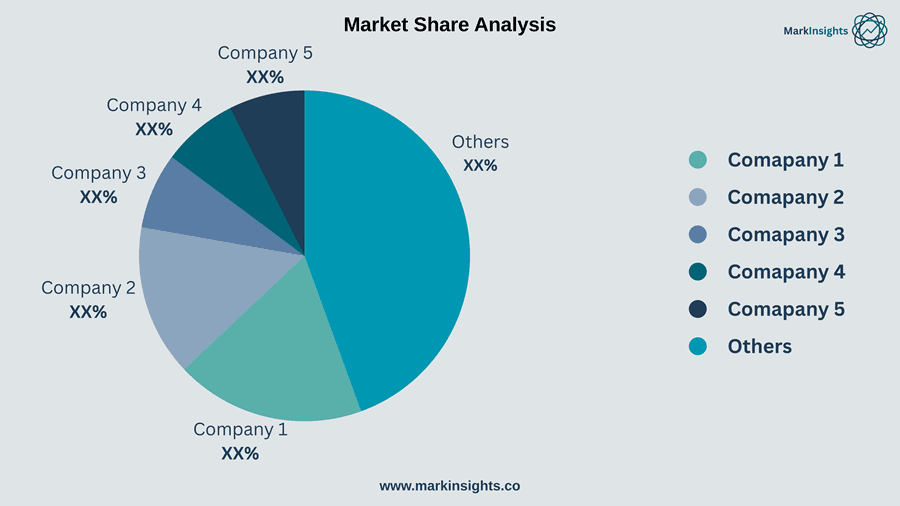
The top five vendors together account for an estimated 55-65% of global Air Traffic Control Equipment revenue in the surveillance and automation systems segment, with the remainder distributed across specialist communication equipment suppliers, regional systems integrators, and defense-focused radar manufacturers across Asia Pacific and the Middle East. Concentration is highest in the national airspace modernization automation software segment where Thales, Leonardo, Raytheon Technologies, and Indra Sistemas collectively dominate, while the market is most fragmented in the ground communication equipment segment served by regional and specialist manufacturers.
Air Traffic Control Equipment Market Competitive Landscape:
The Air Traffic Control Equipment competitive landscape is led by Thales, Leonardo, Raytheon Technologies, Indra Sistemas, and Honeywell, with significant presence from Collins Aerospace, Frequentis, Saab, Leidos, and L3Harris Technologies. The Thales-Airbus strategic partnership announced in March 2025, the Leonardo-ENAV surveillance radar contract in July 2025, the Indra Sistemas Latin America ADS-B deployment in January 2025, and the Collins Aerospace FAA NextGen contract extension in late 2024 are the principal developments shaping the competitive map.
Key Player Strategies
Leaders are prioritizing satellite-based surveillance technology investment, strategic partnerships with aircraft manufacturers for integrated data solutions, geographic expansion into greenfield airport modernization markets, and long-term maintenance contract retention. Thales and Leonardo compete on full-suite systems integration scale across national airspace modernization programs, while Frequentis and Saab focus on specialized communication and remote tower niches. This parameter analyses the strategic posture of each leading player across technology investment, partnership formation, and geographic expansion dimensions.
Buyer-Tier Concentration
Share concentration differs sharply by customer tier rather than by system category alone. Tier-1 national air navigation service providers such as the FAA, Eurocontrol member state agencies, and the Civil Aviation Administration of China overwhelmingly consolidate large-scale automation and surveillance procurement with Thales, Leonardo, and Raytheon Technologies because only these integrators carry the certification track record and multi-decade support infrastructure required for national airspace contracts. Smaller regional airport authorities and developing-market civil aviation agencies, by contrast, are serviced through regional systems integrators and distributors that blend components from multiple original equipment manufacturers, diluting the top-five vendor concentration figure at the point of final installation even though it holds at the primary contract level.
Company Capability Assessment
Capability leadership is differentiated by system category and geography: Thales leads in integrated air traffic management software with deployments spanning more than 180 countries; Leonardo leads in surveillance radar systems with strong installed bases across Europe and the Middle East; Raytheon Technologies leads in automation systems through its Collins Aerospace division's long-standing FAA NextGen program involvement; Indra Sistemas leads in ADS-B surveillance deployment across Latin America and expanding Asia Pacific markets; Frequentis leads in voice communication and safety-critical control center software for civil and defense operators. This parameter covers each leader's depth across systems integration scale, technology breadth, and regional installed base.
Market Concentration
The top five vendors account for an estimated 55-65% of global Air Traffic Control Equipment revenue in the surveillance and automation systems segment, reflecting high market concentration driven by capital-intensive certification requirements and the long-term contract relationships between integrators and national air navigation service providers. This parameter measures the degree of vendor concentration relative to total market revenue.
Frequently Asked Questions
How big is the Air Traffic Control Equipment Market and what will it be worth by 2032?
The Air Traffic Control Equipment Market was valued at approximately USD 8.65 billion in 2026 and is projected to reach around USD 13.40 billion by 2032, registering a CAGR of approximately 7.5%.
What is the CAGR of the Air Traffic Control Equipment Market from 2026 to 2032?
The Air Traffic Control Equipment Market is projected to register a CAGR of approximately 7.5% during the forecast period from 2026 to 2032.
What are the key drivers and restraints shaping the Air Traffic Control Equipment Market?
Key Drivers:
• Growing commercial passenger and cargo air traffic across Asia Pacific and the Middle East is directly increasing the number of aircraft movements that national air navigation service providers must safely manage, requiring capacity-expanding surveillance and automation system investment from Leonardo and Thales.
• Many developed markets operate air traffic control infrastructure installed decades ago, creating a substantial replacement demand pipeline for Raytheon Technologies and Collins Aerospace as national authorities retire aging radar and communication equipment nearing end of service life.
Key Restraints:
• Long government procurement cycles and complex multi-year budget approval processes for national airspace modernization programs create extended sales cycles and revenue recognition delays for Thales, Leonardo, and Indra Sistemas, limiting the pace at which new contract awards translate into recognized equipment revenue.
• High system integration complexity when interfacing new automation and surveillance equipment with legacy air traffic control infrastructure increases implementation risk and cost overrun exposure for both suppliers and air navigation service provider customers during modernization program execution.
What are the major segments and which region leads the Air Traffic Control Equipment Market?
Surveillance systems (System Type), Ground-based platforms (Platform), Civil applications (Application), Air navigation service providers (End User) lead their respective segments. North America leads global revenue, anchored by the United States and Canada. Asia Pacific is the fastest-growing region, led by China, India, and Southeast Asia. Full segment-level analysis, including growth drivers, restraints, and country-level detail for every region covered in this study, is provided in the corresponding chapters of the full report.
Who are the leading companies in the Air Traffic Control Equipment Market?
The top five players in the Air Traffic Control Equipment Market — Thales, Leonardo, Raytheon Technologies, Indra Sistemas, and Honeywell — collectively hold an estimated 55-65% of global revenue. Key companies covered in this report include Thales, Leonardo, Raytheon Technologies, Indra Sistemas, Honeywell, Collins Aerospace, Rohde & Schwarz, Frequentis, Saab, Leidos, L3Harris Technologies, Northrop Grumman, Aireon, NEC Corporation, and Terma.
Related Reports
Global Advanced Surface Movement Guidance Control System Market — Forecast to 2032
By System Type (Surveillance Systems, Routing Systems, Guidance Systems, Control Systems), By Component (Radar Sensors, Software, Control Towers Equipment, Multilateration Systems), By Airport Category (Category A Airports, Category B Airports, Category C Airports), By Application (Commercial Airports, Military Airbases, Cargo and Freight Airports), By End User (Airport Authorities, Air Navigation Service Providers, Defense Agencies)
From $ 2,500
View Report →Global Aircraft Ground Handling System Market — Forecast to 2032
By Equipment Type (Ground Power Units, Ground Support Vehicles, Baggage and Cargo Handling Systems, De-Icing Equipment, Passenger Boarding Bridges and Stairs), By Service Type (Ramp Handling, Cargo and Baggage Handling, De-Icing Services, Passenger Handling, Aircraft Marshalling), By Application (Commercial Aviation, Military Aviation, Cargo and Freight), By Power Source (Electric, Diesel/Fuel-Powered, Hybrid), By End User (Airports, Airlines, Third-Party Ground Handling Service Providers)
From $ 2,500
View Report →Global 5G Market Aviation Market — Forecast to 2032
By Component (Hardware, Software, Services), By Connectivity Type (In-Flight Connectivity, Air-to-Ground Connectivity, Satellite-Based Connectivity), By Application (Passenger Connectivity, Aircraft Operations and Maintenance, Air Traffic Management, Cargo and Logistics Tracking), By Platform (Commercial Aviation, Military Aviation, Business and General Aviation, Unmanned Aerial Vehicles)
From $ 2,500
View Report →