
Global Air To Air Refueling Market — Forecast to 2032
Research scope: By Platform (Fixed Wing Tanker Aircraft, Unmanned Aerial Refueling Systems), By System Type (Probe and Drogue System, Flying Boom System), By Component (Refueling Pods, Boom Operator Systems, Hose and Drogue Units, Fuel Tanks and Pumps, Others), By Application (Military Aviation, Commercial and Experimental Aviation), By End User (Air Force, Navy, Other Defense Agencies)
Domain: Aerospace & Defense
Report Code: MIADG 10027
Air To Air Refueling Market Analysis and Insights:
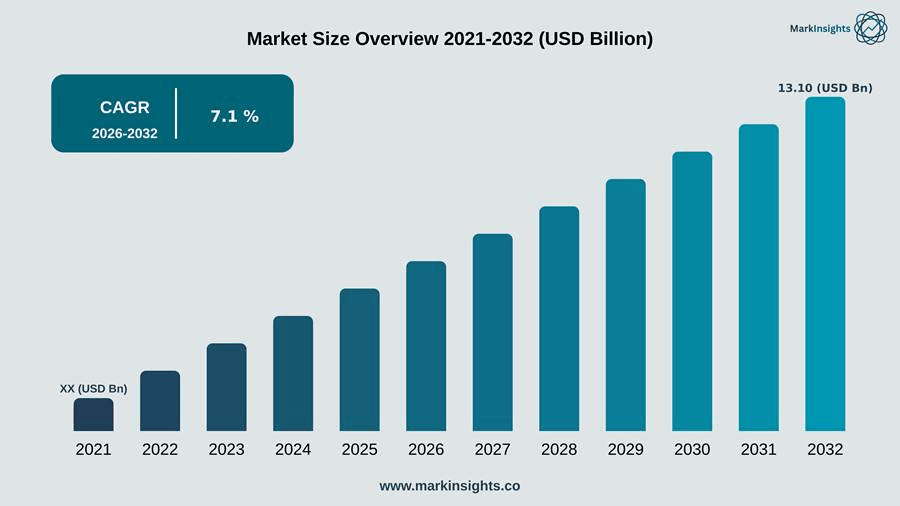
The global Air To Air Refueling market was valued at approximately USD 8.65 billion in 2026 and is projected to reach around USD 13.10 billion by 2032, registering a CAGR of approximately 7.1% during the 2026-2032 forecast period.
Growth is anchored by sustained defense budget allocation toward extended-range strike and persistent air superiority missions across the United States, NATO member states, and Indo-Pacific air forces seeking to counter contested airspace scenarios, alongside the ongoing global fleet replacement of legacy tanker aircraft with next-generation platforms offering higher fuel offload capacity and multi-role cargo flexibility. Boeing's KC-46A Pegasus program and Airbus Defence and Space's A330 Multi Role Tanker Transport (MRTT) continue to anchor multi-year procurement pipelines across the US Air Force, NATO Multinational MRTT Fleet, and allied air forces in Asia Pacific and the Middle East.
The competitive landscape is consolidating around a small group of prime aerostructure and systems integrators that dominate large fixed-wing tanker programs. Boeing delivered additional KC-46A Pegasus tankers to the US Air Force under an expanded production contract in June 2025, Airbus Defence and Space secured a further A330 MRTT order from an Indo-Pacific air force in March 2025, Cobham Mission Systems Australia was awarded a hose and drogue refueling pod upgrade contract in October 2024, and L3Harris Technologies advanced its autonomous aerial refueling drone demonstration program in January 2025. North America led 2026 revenue, while Asia Pacific is the fastest-growing region led by India, Japan, and South Korea.
Air To Air Refueling Market Definition:
Air to air refueling encompasses the specialized aerospace systems, aircraft platforms, and operational procedures that enable the transfer of aviation fuel from a tanker aircraft to a receiver aircraft during flight, extending mission range, loiter time, and payload flexibility without requiring ground-based refueling stops. The market covers two principal system architectures: probe and drogue systems, in which a flexible hose trailing a basket-shaped drogue is deployed from the tanker and engaged by a probe mounted on the receiver aircraft, commonly used by naval and multi-role fighter fleets, and flying boom systems, in which a rigid telescoping boom operated by a dedicated crew member is guided into a receptacle on the receiver aircraft, typically used for higher fuel-flow-rate transfers to larger aircraft. Core components include refueling pods, boom operator control stations, hose and drogue units, fuel tanks, pumps, and associated avionics and sensor systems that ensure safe closure and fuel transfer during formation flight. These capabilities are deployed by air forces, naval aviation branches, and select commercial and experimental aviation programs to extend combat aircraft range, support strategic airlift operations, and enable rapid global force projection.
Air To Air Refueling Market Research Methodology:
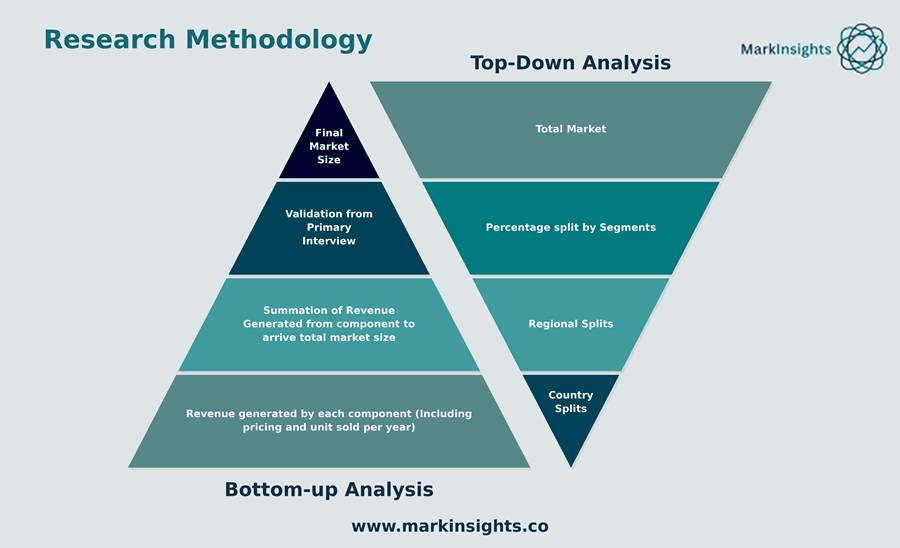
The demand-side assessment was built bottom-up from primary interviews with business buyers active in the air to air refueling market, including institutional and industrial procurement buyers, distributors, and institutional or industrial purchasers, etc., and cross-referenced against demand-side secondary sources such as public production and consumption data, industry and trade-association surveys, etc. On the supply side, estimates were developed top-down from primary interviews with raw-material and component suppliers and with commercial leadership at manufacturers, etc., supported by secondary sources including publicly disclosed revenue and volume commentary from companies such as Boeing, Airbus Defence and Space, and Lockheed Martin (10-K filings, investor presentations, and primary research transcripts), the regulatory frameworks of [RELEVANT REGULATOR — none detected in spec], and relevant import-export trade records, etc. Leading research typically incorporates 100-130 structured B2B interviews per report, split across institutional and industrial procurement buyers, component and raw-material suppliers, and tier-1 manufacturers, weighted toward the report's main growth regions. For this report, central inputs were cross-referenced against [RELEVANT REGULATOR] filings and publicly disclosed manufacturer segment data relevant to the Air To Air Refueling category.
Air To Air Refueling Market Size, Scope & Segmentation:
| Report Attribute | Details |
| Market size in 2026 | USD 8.65 billion |
| Market Size by 2032 | USD 13.10 billion |
| Global CAGR (2026-2032) | 7.1% |
| Historical Data | 2021-2024 |
| Forecast Period | 2026-2032 |
| Segments Covered | By Platform • Fixed Wing Tanker Aircraft • Unmanned Aerial Refueling Systems By System Type • Probe and Drogue System • Flying Boom System By Component • Refueling Pods • Boom Operator Systems • Hose and Drogue Units • Fuel Tanks and Pumps • Others By Application • Military Aviation • Commercial and Experimental Aviation By End User • Air Force • Navy • Other Defense Agencies |
| Regions and Countries Covered | North America • US • Canada • Mexico Europe • Germany • UK • France • Italy • Spain • Rest of Europe Asia Pacific • China • India • Japan • South Korea • Australia • Rest of Asia Pacific Middle East and Africa • Saudi Arabia • UAE • South Africa • Rest of Middle East and Africa South America • Brazil • Argentina • Rest of South America |
| Market leaders and key company profiles | Boeing Airbus Defence and Space Lockheed Martin Ilyushin Aviation Complex Cobham Mission Systems Safran Eaton Aerospace Marshall Aerospace and Defence Group L3Harris Technologies General Atomics Aeronautical Systems Northrop Grumman Israel Aerospace Industries Korean Air Aerospace Division Rockwell Collins Elbit Systems |
Air To Air Refueling Key Market Segmentation:
Insights On Key Platform
The platform segment comprises fixed wing tanker aircraft (the dominant sub-category, including dedicated and converted tanker platforms such as the Boeing KC-46A Pegasus, Airbus A330 MRTT, and Ilyushin Il-78 that serve as the primary global aerial refueling backbone for air force fleets) and unmanned aerial refueling systems (an emerging sub-category including autonomous refueling drone concepts under development by Boeing, L3Harris Technologies, and the US Navy's MQ-25 Stingray program designed to extend carrier air wing operational range without placing crewed tankers in contested airspace).
Fixed wing tanker aircraft dominate the platform sub-segment because large multi-role tanker transports remain the only proven high-volume fuel offload solution capable of servicing multiple receiver aircraft types simultaneously, sustaining continued procurement by the US Air Force, NATO Multinational MRTT Fleet, and allied Asia Pacific and Middle East air forces replacing legacy Boeing KC-135 and KC-10 aircraft.
Insights On Key System Type
The system type segment covers probe and drogue system (the larger sub-category by installed base, widely adopted by naval aviation, multi-role fighter fleets, and NATO allied air forces for its lower infrastructure requirement and compatibility across diverse receiver aircraft types) and flying boom system (used primarily by the US Air Force and select allied operators for high fuel-flow-rate transfer to strategic bombers, large transport aircraft, and fighter fleets requiring rapid turnaround refueling during extended-range missions).
Probe and drogue systems lead the system type sub-segment because the broader compatibility of drogue-based refueling across naval carrier air wings, multi-national coalition fighter fleets, and helicopter refueling requirements creates a larger installed base relative to the more specialized flying boom architecture concentrated within US and select allied strategic tanker fleets.
Insights On Key Component
The component segment includes refueling pods (supplied by Cobham Mission Systems and Safran, mounted on wing pylons or centerline stations to enable probe and drogue refueling from multi-role tanker and fighter aircraft), boom operator systems (including remote vision systems and control stations from Boeing and L3Harris Technologies that enable precision boom guidance during flying boom refueling operations), hose and drogue units (mechanical fuel transfer assemblies supplied by Cobham Mission Systems and Eaton Aerospace), fuel tanks and pumps (high-capacity fuel storage and transfer systems integrated by Airbus Defence and Space and Marshall Aerospace and Defence Group), and others (including sensor, avionics, and formation-flight guidance systems).
Refueling pods lead the component sub-segment because their modular, retrofit-compatible design allows air forces to add probe and drogue refueling capability to existing multi-role fighter and transport fleets without full aircraft redesign, sustaining continuous demand from Cobham Mission Systems and Safran across both new-build and upgrade programs.
Insights On Key Application
The application segment covers military aviation (the dominant sub-category, encompassing air force strategic bomber, fighter, and transport aircraft refueling operations as well as naval carrier air wing sustainment missions) and commercial and experimental aviation (a small but growing sub-category including record-attempt flights, humanitarian and disaster-response long-endurance missions, and emerging business aviation range-extension trials).
Military aviation leads the application sub-segment because sustained defense modernization budgets across NATO, Indo-Pacific, and Middle Eastern air forces continue to fund large-scale tanker fleet replacement and expansion programs, whereas commercial and experimental applications remain limited by regulatory certification complexity and the absence of a proven civil business case.
Insights On Key End User
The end user segment includes air force (the largest sub-category, representing the primary institutional buyer of fixed wing tanker aircraft and flying boom refueling systems for strategic and tactical mission support), navy (encompassing carrier-based probe and drogue refueling operations supporting naval aviation range extension and the US Navy's MQ-25 Stingray unmanned tanker program), and other defense agencies (including joint multinational commands and select coast guard or homeland defense aviation units).
Air force leads the end user sub-segment because national air forces operate the largest fixed-wing tanker fleets and maintain the most extensive multi-year procurement and sustainment budgets for aerial refueling capability, exemplified by the US Air Force's ongoing KC-46A Pegasus acquisition program and equivalent NATO and Indo-Pacific fleet modernization efforts.
Insights on Regional Analysis
The global Air To Air Refueling market spans North America, Europe, Asia Pacific, Middle East and Africa, and South America. North America leads global revenue, anchored by the United States, where the US Air Force operates the world's largest tanker fleet and continues to receive Boeing KC-46A Pegasus aircraft under a multi-year production contract intended to replace the legacy KC-135 Stratotanker fleet. The US Federal Aviation Administration (FAA) and the Department of Defense's airworthiness certification processes govern aircraft modification and system integration standards for both military and any dual-use refueling platforms. Boeing, L3Harris Technologies, and Eaton Aerospace maintain major manufacturing, systems integration, and sustainment operations across Washington, Texas, and Ohio, supplying both new-build tankers and legacy fleet upgrade kits. Continued congressional appropriations for tanker recapitalization and the planned Next Generation Air-refueling System (NGAS) program are expected to sustain North American procurement activity through the forecast period.
Asia Pacific is the fastest-growing region for Air To Air Refueling, led by India, Japan, and South Korea. Rising territorial tension across the Indo-Pacific region is driving accelerated air force modernization budgets, with India's Ministry of Defence advancing indigenous and imported tanker acquisition programs to extend Su-30MKI and Rafale fighter fleet operational range, and Japan's Ministry of Defense continuing to operate and expand its Boeing KC-46A Pegasus fleet under bilateral defense cooperation frameworks with the United States. South Korea's Defense Acquisition Program Administration (DAPA) is evaluating additional Airbus A330 MRTT procurement to extend Korean Air Force fighter and surveillance aircraft range across contested regional airspace. Australia's Department of Defence continues to operate and upgrade its KC-30A Multi Role Tanker Transport fleet, while China's continued investment in indigenous tanker platforms including the Xian Y-20U underscores the region's structural shift toward extended-range power projection capability.
Air To Air Refueling Market Company Profiles:
The Air To Air Refueling competitive landscape encompasses three primary archetypes: prime aerostructure and platform integrators (Boeing, Airbus Defence and Space, Lockheed Martin, and Ilyushin Aviation Complex) that design, manufacture, and integrate complete tanker aircraft platforms under large multi-year government procurement contracts; specialized refueling systems and component suppliers (Cobham Mission Systems, Safran, Eaton Aerospace, and Marshall Aerospace and Defence Group) that supply refueling pods, hose and drogue units, and boom control systems as subsystem contractors to prime integrators and for fleet retrofit programs; and defense electronics and autonomy specialists (L3Harris Technologies, General Atomics Aeronautical Systems, and Northrop Grumman) that are developing remote vision systems, sensor integration, and unmanned aerial refueling technology for next-generation programs.
The 15 anchor companies profiled in this report are Boeing, Airbus Defence and Space, Lockheed Martin, Ilyushin Aviation Complex, Cobham Mission Systems, Safran, Eaton Aerospace, Marshall Aerospace and Defence Group, L3Harris Technologies, General Atomics Aeronautical Systems, Northrop Grumman, Israel Aerospace Industries, Korean Air Aerospace Division, Rockwell Collins, and Elbit Systems. Boeing manufactures the KC-46A Pegasus, the primary strategic tanker for the US Air Force and the Japan Air Self-Defense Force, integrating a boom operator remote vision system for precision flying boom refueling. Airbus Defence and Space produces the A330 MRTT, operated by NATO's Multinational MRTT Fleet and air forces across the Middle East, Asia Pacific, and Europe. Cobham Mission Systems supplies probe and drogue refueling pods to naval and multi-role fighter fleets worldwide. General Atomics Aeronautical Systems is advancing MQ-25 Stingray unmanned carrier-based aerial refueling development for the US Navy. Marshall Aerospace and Defence Group and Elbit Systems hold specialist positions in fleet upgrade kits and regional integration programs across Europe and the Middle East.
Air To Air Refueling Market Latest Trends and Innovation:
• In June 2025, Boeing delivered an additional batch of KC-46A Pegasus tanker aircraft to the US Air Force under an expanded low-rate production contract, incorporating updated remote vision system software intended to resolve earlier boom operator visibility issues and improve refueling precision during nighttime and adverse weather operations.
• In March 2025, Airbus Defence and Space secured a follow-on order for additional A330 Multi Role Tanker Transport aircraft from an Indo-Pacific air force customer, expanding the regional operator's fleet to extend fighter aircraft range and support long-duration maritime patrol and transport missions across contested airspace.
• In January 2025, L3Harris Technologies advanced flight testing of its autonomous aerial refueling demonstration program under a US Department of Defense research contract, validating automated boom guidance and formation-flight algorithms intended to reduce crew workload and support future unmanned tanker aircraft development.
• In October 2024, Cobham Mission Systems Australia was awarded a contract to upgrade hose and drogue refueling pod systems installed on Royal Australian Air Force KC-30A Multi Role Tanker Transport aircraft, extending the platform's operational service life and improving fuel transfer reliability for coalition interoperability missions.
Air To Air Refueling Market Significant Growth Factors:
The global Air To Air Refueling market is expanding on the back of four reinforcing drivers. Sustained defense budget growth across NATO member states, the United States, and Indo-Pacific air forces is funding large-scale tanker fleet replacement programs as legacy platforms including the Boeing KC-135 Stratotanker approach the end of their operational service life. Rising geopolitical tension across the Indo-Pacific and Eastern European theaters is elevating strategic priority for extended-range strike and persistent combat air patrol capability, directly increasing demand for tanker aircraft that enable fighter and bomber fleets to operate beyond forward operating base range. Continuous investment in boom operator remote vision systems and automated formation-flight guidance technology by Boeing and L3Harris Technologies is improving refueling safety and operational tempo, supporting broader fleet-wide adoption. Growing interest in unmanned aerial refueling platforms, exemplified by the US Navy's MQ-25 Stingray program, is opening a new procurement category that extends carrier air wing range without exposing crewed tankers to contested airspace risk.
Air To Air Refueling Market Drivers:
Demand is driven by legacy fleet replacement cycles, rising defense expenditure, coalition interoperability requirements, and extended-range mission doctrine adoption. Air forces operating aging tanker fleets, including the US Air Force's remaining KC-135 aircraft and various NATO members' legacy platforms, face mounting sustainment costs that are accelerating transition toward Boeing KC-46A Pegasus and Airbus A330 MRTT acquisition programs. Rising global defense expenditure, particularly across NATO member states responding to regional security commitments and Indo-Pacific nations countering contested maritime and airspace scenarios, is translating directly into multi-year tanker procurement budget allocation. NATO and allied coalition interoperability standards are driving harmonized adoption of both probe and drogue and flying boom refueling capability across member air forces to enable joint mission planning and mutual aerial refueling support during combined operations. The doctrinal shift toward extended-range precision strike and persistent intelligence, surveillance, and reconnaissance missions is increasing average sortie duration requirements, directly elevating the fuel offload capacity air forces demand from next-generation tanker platforms.
Air To Air Refueling Market Restraining Factors:
Several factors temper growth across the Air To Air Refueling value chain. High unit acquisition cost and long development lead times for large fixed-wing tanker platforms, often exceeding a decade from contract award to full operational capability, constrain the pace at which air forces with limited defense budgets can modernize aging fleets. Technical integration challenges, including the boom operator remote vision system reliability issues encountered during the Boeing KC-46A Pegasus program, have historically delayed delivery schedules and increased program cost overruns that affect both prime contractors and government customers. Limited defense budget flexibility in several emerging market air forces restricts the addressable customer base for new tanker acquisition, leaving many operators dependent on used aircraft conversion or extended sustainment of legacy platforms rather than new-build procurement. Export control restrictions and government-to-government approval processes governing advanced refueling technology transfer, particularly for boom systems and remote vision avionics, add procurement complexity and extend timelines for international customers seeking to acquire systems from US and European suppliers.
Air To Air Refueling Market Opportunities:
Opportunities cluster in four pockets across the Air To Air Refueling landscape. Unmanned aerial refueling platform development, led by General Atomics Aeronautical Systems' MQ-25 Stingray program for the US Navy, represents a structural new-category opportunity that could extend to allied navies and eventually land-based unmanned tanker applications over the forecast period. Fleet retrofit and modernization programs for existing probe and drogue and flying boom systems offer Cobham Mission Systems, Safran, and Marshall Aerospace and Defence Group a recurring revenue stream as air forces extend legacy aircraft service life rather than pursuing full fleet replacement. Growing Indo-Pacific defense spending, particularly in India, Japan, South Korea, and Australia, is creating substantial new-build tanker procurement opportunity for Boeing and Airbus Defence and Space as regional air forces seek to extend fighter and surveillance aircraft operational range. Advanced sensor and automation technology integration, including AI-assisted boom guidance and formation-flight collision avoidance systems, offers L3Harris Technologies and Northrop Grumman a differentiated capability positioning as air forces prioritize refueling safety and reduced crew workload.
Air To Air Refueling Market Technology Trends:
Technology direction is set by three converging shifts in aerial refueling system development. Remote vision system advancement, led by Boeing's ongoing KC-46A Pegasus software and camera hardware upgrades, is improving boom operator depth perception and precision guidance accuracy during nighttime and adverse weather refueling operations, addressing reliability concerns identified in earlier program iterations. Autonomous and semi-autonomous refueling technology, demonstrated through L3Harris Technologies' automated boom guidance flight testing and General Atomics Aeronautical Systems' MQ-25 Stingray carrier-based unmanned tanker program, is progressing toward operational deployment and is expected to reduce crew workload while enabling refueling operations in higher-risk contested airspace scenarios. Advanced fuel transfer and pod design innovation from Cobham Mission Systems and Safran, including lighter composite materials and improved hose retraction mechanisms, is enabling faster turnaround times and higher fuel-flow rates for probe and drogue systems across both fighter and rotary-wing receiver aircraft platforms.
Air To Air Refueling Market Future Trends:
By 2032, the market will be reshaped by the operational maturation of unmanned aerial refueling platforms, the introduction of next-generation tanker aircraft under the US Air Force's planned Next Generation Air-refueling System (NGAS) program, and expanded multinational fleet pooling arrangements among allied air forces. Unmanned carrier-based tankers derived from the General Atomics Aeronautical Systems MQ-25 Stingray program are expected to reach initial operational capability with the US Navy, establishing a template that allied navies may pursue for their own carrier air wing range-extension requirements. The US Air Force's NGAS initiative, intended to succeed the KC-46A Pegasus with a platform better suited to contested airspace operations, is expected to shape competitive positioning among Boeing, Lockheed Martin, and Northrop Grumman as design concepts mature toward program milestones. Expanded multinational fleet pooling arrangements, building on NATO's Multinational MRTT Fleet model, are expected to extend to additional allied groupings in the Indo-Pacific and Middle East as smaller air forces seek cost-shared access to strategic tanker capability without full fleet ownership.
Air To Air Refueling Market Supply Chain Analysis:
The Air To Air Refueling supply chain runs from airframe manufacturers and aerostructure suppliers through refueling systems integration, avionics and sensor installation, and final assembly and flight testing to government acceptance and long-term sustainment support. Airframe platforms sourced from Boeing's commercial 767 production line and Airbus's A330 commercial airframe production serve as the base structure for military tanker conversion, with prime contractors integrating military-specific fuel systems, refueling booms or pods, and mission avionics at dedicated defense conversion facilities. Component-level suppliers including Cobham Mission Systems, Safran, and Eaton Aerospace deliver hose and drogue units, refueling pods, and fuel transfer pumps to prime integrators under long-term subcontract agreements that specify military qualification and reliability standards.
Following systems integration, aircraft undergo extensive flight testing and government airworthiness certification before delivery to air force operational squadrons, with sustainment support flowing through prime contractor and subcontractor maintenance, repair, and overhaul networks located near major air force bases. Key bottlenecks include prolonged software and remote vision system certification cycles that have historically delayed tanker delivery schedules, limited global capacity for military-grade wide-body airframe conversion facilities, and long lead times for specialized boom and pod components that constrain the industry's ability to rapidly scale production in response to accelerated defense procurement timelines.
Air To Air Refueling Market Regulatory Analysis:
The global Air To Air Refueling market operates within defense procurement and airworthiness certification frameworks administered primarily by national defense ministries and civil aviation authorities. In the United States, the Federal Aviation Administration (FAA) and the Department of Defense's military airworthiness certification process govern structural modification and systems integration standards for tanker aircraft derived from commercial airframes, while the Defense Contract Management Agency (DCMA) oversees prime contractor compliance during production. The European Union Aviation Safety Agency (EASA) and national defense procurement agencies across NATO member states apply parallel certification requirements for Airbus Defence and Space platforms. Export of advanced refueling technology, including boom systems and remote vision avionics, is governed by the US International Traffic in Arms Regulations (ITAR) and equivalent European dual-use export control frameworks, requiring government-to-government approval for international sales. India's Ministry of Defence and South Korea's Defense Acquisition Program Administration (DAPA) apply national offset and indigenous content requirements to foreign tanker acquisition programs, shaping supplier partnership structures for regional procurement contracts.
Air To Air Refueling Market Share Analysis:
The top five vendors together account for an estimated 60-70% of global Air To Air Refueling platform revenue, with the remainder distributed among specialized component suppliers, regional integrators, and legacy platform sustainment contractors across Europe, Asia Pacific, and the Middle East. Concentration is highest in the fixed wing tanker aircraft segment where Boeing, Airbus Defence and Space, Lockheed Martin, and Ilyushin Aviation Complex collectively dominate large-platform procurement, while the market is most fragmented in the refueling component and retrofit kit segment served by specialized suppliers such as Cobham Mission Systems, Safran, and Marshall Aerospace and Defence Group.
Air To Air Refueling Market Competitive Landscape:
The Air To Air Refueling competitive landscape is led by Boeing, Airbus Defence and Space, Lockheed Martin, and Ilyushin Aviation Complex, with significant presence from Cobham Mission Systems, Safran, L3Harris Technologies, General Atomics Aeronautical Systems, and Northrop Grumman. Boeing's June 2025 KC-46A Pegasus delivery expansion, Airbus's March 2025 A330 MRTT follow-on order, L3Harris Technologies' January 2025 autonomous refueling demonstration, and Cobham Mission Systems Australia's October 2024 pod upgrade contract are the principal developments shaping the competitive map.
Key Player Strategies
Leaders are prioritizing multi-year government contract capture, remote vision and automation technology investment, international fleet interoperability partnerships, and unmanned platform development to secure long-term positioning. Boeing and Airbus Defence and Space compete primarily on tanker platform scale and government relationship depth, while Cobham Mission Systems and Safran focus on component specialization and retrofit program capture. This parameter analyses the strategic posture of each leading player across platform integration, technology investment, and export market expansion dimensions.
Buyer-Tier Concentration
Concentration differs markedly by customer tier. Tier-1 buyers such as the US Air Force, NATO's Multinational MRTT Fleet consortium, and Japan's Ministry of Defense consolidate almost all large fixed-wing tanker procurement with Boeing and Airbus Defence and Space because only these two integrators can meet the scale, certification, and sustainment requirements of national strategic tanker fleets. Smaller air forces and regional defense agencies, by contrast, are served through used aircraft conversion specialists and component-level suppliers such as Marshall Aerospace and Defence Group and Cobham Mission Systems, which provide retrofit and sustainment packages that dilute top-tier vendor concentration at the point of smaller-fleet acquisition even as it remains high at the prime platform level.
Company Capability Assessment
Capability leadership is differentiated by platform and technology segment: Boeing leads in flying boom tanker platform scale with the KC-46A Pegasus program serving the US Air Force and Japan Air Self-Defense Force; Airbus Defence and Space leads in multi-role tanker transport versatility with the A330 MRTT serving NATO and Indo-Pacific customers; General Atomics Aeronautical Systems leads in unmanned carrier-based refueling development through the MQ-25 Stingray program; Cobham Mission Systems leads in probe and drogue pod supply for naval and multi-role fighter fleets; L3Harris Technologies leads in remote vision and autonomous guidance system development. This parameter assesses each leader's depth across platform integration, systems technology, and program sustainment dimensions.
Market Concentration
The top five vendors account for an estimated 60-70% of global Air To Air Refueling platform revenue, reflecting high concentration driven by the capital-intensive nature of tanker aircraft development and the limited number of qualified prime integrators. This parameter covers the degree of vendor concentration relative to total addressable market revenue across platform and component categories.
Frequently Asked Questions
How big is the Air To Air Refueling Market and what will it be worth by 2032?
The Air To Air Refueling Market was valued at approximately USD 8.65 billion in 2026 and is projected to reach around USD 13.10 billion by 2032, registering a CAGR of approximately 7.1%.
What is the CAGR of the Air To Air Refueling Market from 2026 to 2032?
The Air To Air Refueling Market is projected to register a CAGR of approximately 7.1% during the forecast period from 2026 to 2032.
What are the key drivers and restraints shaping the Air To Air Refueling Market?
Key Drivers:
• Air forces operating aging tanker fleets, including the US Air Force's remaining KC-135 aircraft and various NATO members' legacy platforms, face mounting sustainment costs that are accelerating transition toward Boeing KC-46A Pegasus and Airbus A330 MRTT acquisition programs.
• Rising global defense expenditure, particularly across NATO member states responding to regional security commitments and Indo-Pacific nations countering contested maritime and airspace scenarios, is translating directly into multi-year tanker procurement budget allocation.
Key Restraints:
• High unit acquisition cost and long development lead times for large fixed-wing tanker platforms, often exceeding a decade from contract award to full operational capability, constrain the pace at which air forces with limited defense budgets can modernize aging fleets.
• Technical integration challenges, including the boom operator remote vision system reliability issues encountered during the Boeing KC-46A Pegasus program, have historically delayed delivery schedules and increased program cost overruns that affect both prime contractors and government customers.
What are the major segments and which region leads the Air To Air Refueling Market?
Fixed wing tanker aircraft (Platform), Probe and drogue systems (System Type), Refueling pods (Component), Military aviation (Application), Air force (End User) lead their respective segments. North America leads global revenue, anchored by the United States,. Asia Pacific is the fastest-growing region, led by India, Japan, and South Korea. Full segment-level analysis, including growth drivers, restraints, and country-level detail for every region covered in this study, is provided in the corresponding chapters of the full report.
Who are the leading companies in the Air To Air Refueling Market?
The top five players in the Air To Air Refueling Market — Boeing, Airbus Defence and Space, Lockheed Martin, Ilyushin Aviation Complex, and Cobham Mission Systems — collectively hold an estimated 60-70% of global revenue. Key companies covered in this report include Boeing, Airbus Defence and Space, Lockheed Martin, Ilyushin Aviation Complex, Cobham Mission Systems, Safran, Eaton Aerospace, Marshall Aerospace and Defence Group, L3Harris Technologies, General Atomics Aeronautical Systems, Northrop Grumman, Israel Aerospace Industries, Korean Air Aerospace Division, Rockwell Collins, and Elbit Systems.
Related Reports
Global Advanced Surface Movement Guidance Control System Market — Forecast to 2032
By System Type (Surveillance Systems, Routing Systems, Guidance Systems, Control Systems), By Component (Radar Sensors, Software, Control Towers Equipment, Multilateration Systems), By Airport Category (Category A Airports, Category B Airports, Category C Airports), By Application (Commercial Airports, Military Airbases, Cargo and Freight Airports), By End User (Airport Authorities, Air Navigation Service Providers, Defense Agencies)
From $ 2,500
View Report →Global Aircraft Ground Handling System Market — Forecast to 2032
By Equipment Type (Ground Power Units, Ground Support Vehicles, Baggage and Cargo Handling Systems, De-Icing Equipment, Passenger Boarding Bridges and Stairs), By Service Type (Ramp Handling, Cargo and Baggage Handling, De-Icing Services, Passenger Handling, Aircraft Marshalling), By Application (Commercial Aviation, Military Aviation, Cargo and Freight), By Power Source (Electric, Diesel/Fuel-Powered, Hybrid), By End User (Airports, Airlines, Third-Party Ground Handling Service Providers)
From $ 2,500
View Report →Global 5G Market Aviation Market — Forecast to 2032
By Component (Hardware, Software, Services), By Connectivity Type (In-Flight Connectivity, Air-to-Ground Connectivity, Satellite-Based Connectivity), By Application (Passenger Connectivity, Aircraft Operations and Maintenance, Air Traffic Management, Cargo and Logistics Tracking), By Platform (Commercial Aviation, Military Aviation, Business and General Aviation, Unmanned Aerial Vehicles)
From $ 2,500
View Report →