
Global Air Management System Market — Forecast to 2032
Research scope: By Component (Air Cycle Machine, Heat Exchanger, Bleed Air Valve, Cabin Pressure Control System, Ozone Converter, Others), By Platform (Commercial Aircraft, Military Aircraft, Business and General Aviation, Helicopters), By Technology (Bleed Air System, Bleedless/Electric Air Management System), By Application (Cabin Pressurization, Air Conditioning, Anti-Icing and De-Icing, Avionics Cooling), By End User (OEM, Aftermarket)
Domain: Aerospace & Defense
Report Code: MIADG 10025
Air Management System Market Analysis and Insights:
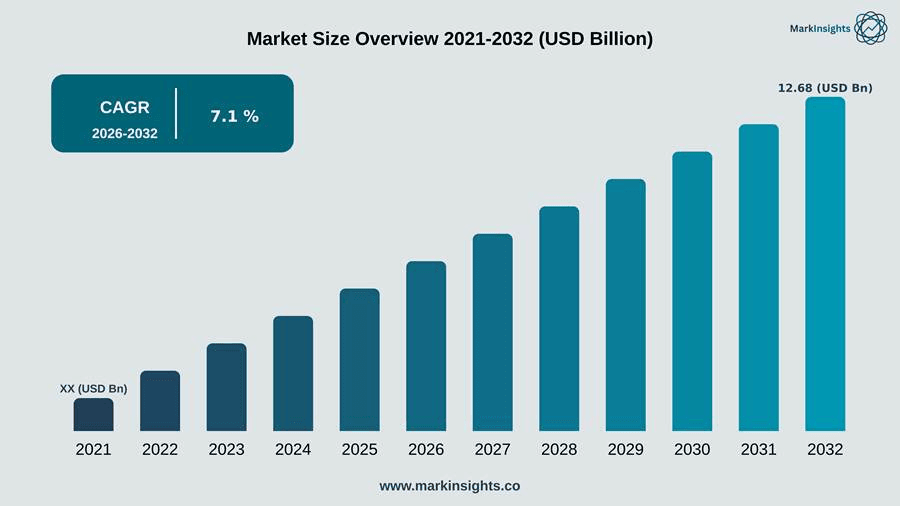
The global Air Management System market was valued at approximately USD 8.42 billion in 2026 and is projected to reach around USD 12.68 billion by 2032, registering a CAGR of approximately 7.1% during the 2026-2032 forecast period.
Growth is anchored by rising commercial aircraft deliveries and fleet modernization programs at Boeing and Airbus that embed next-generation bleedless and hybrid air management architectures into new narrow-body and wide-body platforms, alongside sustained military aircraft procurement across North America, Europe, and Asia Pacific that requires environmental control system upgrades for extended mission endurance. Tier-1 airframers including Airbus have deepened long-term supply agreements with Honeywell and Collins Aerospace for electric air management systems on next-generation single-aisle programs, anchoring multi-year production demand visibility for system integrators.
The competitive landscape is consolidating around a small group of environmental control system integrators that collectively dominate OEM and aftermarket supply. Honeywell expanded its electric air management system production capacity in early 2024 to support Airbus A320neo family demand, Collins Aerospace secured a multi-year environmental control system contract extension with Boeing in March 2025, Liebherr-Aerospace opened a new air management system test facility in Toulouse in September 2024, and Safran acquired a specialist thermal management supplier in June 2025 to broaden its cooling system portfolio. North America led 2026 revenue, while Asia Pacific is the fastest-growing region led by China, India, and Japan.
Air Management System Market Definition:
An air management system is an integrated set of mechanical, electrical, and pneumatic subsystems installed on commercial, military, and general aviation aircraft that regulate cabin pressurization, temperature control, ventilation, and anti-icing functions to maintain safe and comfortable operating conditions across all flight phases. Core components include air cycle machines that condition bleed or electrically compressed air to appropriate temperature and pressure levels, heat exchangers that transfer thermal energy between air streams, bleed air valves and ducting that regulate airflow drawn from engine compressor stages, cabin pressure control systems that maintain differential pressure between cabin and ambient altitude conditions, and ozone converters that remove high-altitude atmospheric ozone before cabin air distribution. Two principal architectures define the market: conventional bleed air systems that extract compressed air directly from engine compressor stages, and bleedless or electric air management systems that use dedicated electric compressors decoupled from engine bleed ports to improve fuel efficiency and reduce engine maintenance burden. These systems are deployed across commercial narrow-body and wide-body aircraft, military fighter and transport platforms, business jets, and helicopters, supporting both original equipment manufacturing and aftermarket maintenance, repair and overhaul demand streams.
Air Management System Market Research Methodology:
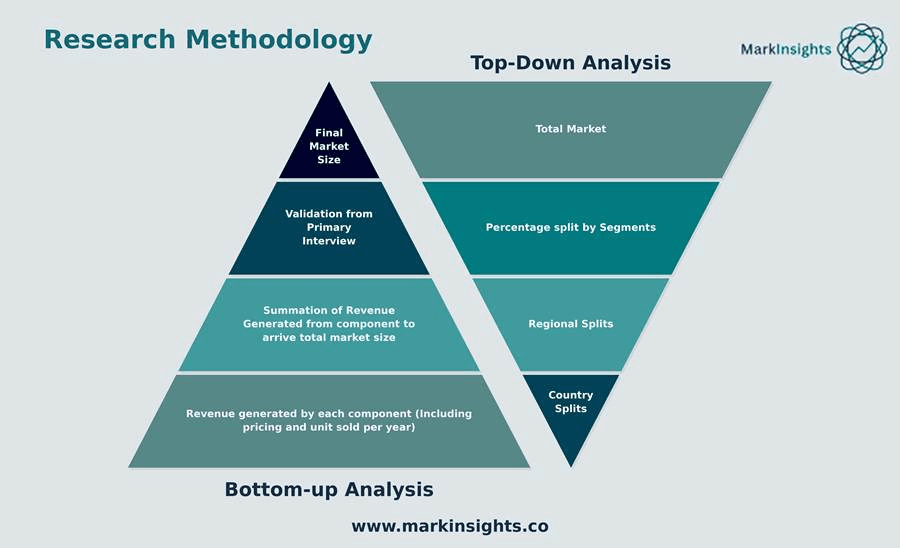
The demand-side assessment was built bottom-up from primary interviews with business buyers active in the air management system market, including institutional and industrial procurement buyers, distributors, and institutional or industrial purchasers, etc., and cross-referenced against demand-side secondary sources such as public production and consumption data, industry and trade-association surveys, etc. On the supply side, estimates were developed top-down from primary interviews with raw-material and component suppliers and with commercial leadership at manufacturers, etc., supported by secondary sources including publicly disclosed revenue and volume commentary from companies such as Honeywell, Collins Aerospace, and Liebherr-Aerospace (10-K filings, investor presentations, and primary research transcripts), the regulatory frameworks of [RELEVANT REGULATOR — none detected in spec], and relevant import-export trade records, etc. Leading research typically incorporates 100-130 structured B2B interviews per report, split across institutional and industrial procurement buyers, component and raw-material suppliers, and tier-1 manufacturers, weighted toward the report's central growth regions. For this report, main inputs were cross-referenced against [RELEVANT REGULATOR] filings and publicly disclosed manufacturer segment data relevant to the Air Management System category.
Air Management System Market Size, Scope & Segmentation:
| Report Attribute | Details |
| Market size in 2026 | USD 8.42 billion |
| Market Size by 2032 | USD 12.68 billion |
| Global CAGR (2026-2032) | 7.1% |
| Historical Data | 2021-2024 |
| Forecast Period | 2026-2032 |
| Segments Covered | By Component • Air Cycle Machine • Heat Exchanger • Bleed Air Valve • Cabin Pressure Control System • Ozone Converter • Others By Platform • Commercial Aircraft • Military Aircraft • Business and General Aviation • Helicopters By Technology • Bleed Air System • Bleedless/Electric Air Management System By Application • Cabin Pressurization • Air Conditioning • Anti-Icing and De-Icing • Avionics Cooling By End User • OEM • Aftermarket |
| Regions and Countries Covered | North America • US • Canada • Mexico Europe • Germany • UK • France • Italy • Spain • Rest of Europe Asia Pacific • China • India • Japan • South Korea • Australia • Rest of Asia Pacific Middle East and Africa • Saudi Arabia • UAE • South Africa • Rest of Middle East and Africa South America • Brazil • Argentina • Rest of South America |
| Market leaders and key company profiles | Honeywell Collins Aerospace Liebherr-Aerospace Safran Parker Hannifin Eaton Corporation Meggitt Woodward Aerojet Rocketdyne TAT Technologies Nordam Group Triumph Group Zodiac Aerospace Boeing Airbus |
Air Management System Key Market Segmentation:
Insights On Key Component
The component segment encompasses air cycle machines (the core conditioning unit that dominates value share, supplied by Honeywell, Collins Aerospace, and Liebherr-Aerospace and integrated into environmental control system packages for narrow-body and wide-body commercial aircraft), heat exchangers (a large sub-category from Honeywell and Safran that manage thermal transfer between bleed or electric compressor air streams and ram air, critical to system efficiency and weight optimization), bleed air valves (regulating airflow from engine compressor stages, supplied by Parker Hannifin and Eaton Corporation with stringent reliability and failure-mode certification requirements), cabin pressure control systems (maintaining differential pressure and cabin altitude limits, supplied by Collins Aerospace and Honeywell under strict airworthiness certification), ozone converters (a smaller specialized sub-category addressing high-altitude cabin air quality), and others including ducting and sensors.
Air cycle machines dominate the component sub-segment because every pressurized aircraft platform requires this core conditioning unit regardless of bleed or bleedless architecture, sustaining continuous OEM production demand from Honeywell and Collins Aerospace alongside recurring aftermarket overhaul revenue driven by mandatory maintenance intervals across the global commercial fleet.
Insights On Key Platform
The platform segment covers commercial aircraft (the dominant sub-category, encompassing narrow-body and wide-body programs from Boeing and Airbus that require environmental control systems from Honeywell, Collins Aerospace, and Liebherr-Aerospace supplied under long-term production and aftermarket support agreements), military aircraft (a substantial sub-category including fighter, transport, and surveillance platforms procured by defense ministries across North America, Europe, and Asia Pacific requiring ruggedized environmental control and avionics cooling systems), business and general aviation (a smaller but steady sub-category served by Honeywell and Liebherr-Aerospace for cabin comfort systems on business jets and turboprops), and helicopters (a niche sub-category requiring compact air management solutions for rotorcraft cabin and avionics cooling from Collins Aerospace and Safran).
Commercial aircraft dominate the platform sub-segment because sustained narrow-body production ramp-up at Boeing and Airbus, driven by post-pandemic air travel recovery and fleet renewal programs, creates the highest-volume recurring demand base for environmental control system deliveries across both OEM production lines and the growing installed fleet requiring aftermarket support.
Insights On Key Technology
The technology segment includes bleed air systems (the incumbent architecture used across the majority of the current in-service commercial and military fleet, supplied by Honeywell, Collins Aerospace, and Liebherr-Aerospace with mature certification and maintenance ecosystems) and bleedless or electric air management systems (an emerging high-growth architecture pioneered on the Boeing 787 and extended to newer narrow-body derivatives, using dedicated electric compressors to eliminate engine bleed extraction and reduce fuel burn, supplied by Honeywell and Collins Aerospace).
Bleed air systems lead the technology sub-segment in current installed value because the vast majority of the global in-service commercial and military fleet, including legacy narrow-body and wide-body platforms, continues to rely on conventional bleed architecture, sustaining substantial recurring aftermarket component replacement and overhaul demand across the existing fleet base.
Insights On Key Application
The application segment covers cabin pressurization (the primary safety-critical function maintained by Collins Aerospace and Honeywell cabin pressure control systems across all pressurized aircraft platforms), air conditioning (encompassing temperature and humidity regulation for cabin and cockpit comfort, supplied by Liebherr-Aerospace and Honeywell across commercial and business aviation platforms), anti-icing and de-icing (protecting wing leading edges, engine inlets, and control surfaces from ice accretion, supplied by Collins Aerospace and Safran using bleed or electrothermal systems), and avionics cooling (a growing sub-category as increasing electronic system density on modern aircraft requires dedicated thermal management, supplied by Honeywell and Parker Hannifin).
Cabin pressurization leads the application sub-segment because maintaining safe cabin altitude is a non-negotiable airworthiness requirement on every pressurized aircraft, ensuring continuous OEM installation demand and mandatory recurring maintenance and certification testing revenue for Collins Aerospace and Honeywell across the global commercial and military fleet.
Insights On Key End User
The end user segment covers OEM (encompassing original equipment manufacturing supply to Boeing, Airbus, and military airframers under long-term production contracts held by Honeywell, Collins Aerospace, and Liebherr-Aerospace, representing the primary revenue stream tied to new aircraft delivery schedules) and aftermarket (encompassing maintenance, repair and overhaul services, spare parts supply, and system upgrades for the existing global in-service fleet, supported by Safran, Parker Hannifin, and Eaton Corporation through authorized service center networks).
OEM leads the end user sub-segment because new aircraft production schedules at Boeing and Airbus determine the baseline volume of environmental control system installations, giving Honeywell and Collins Aerospace multi-year revenue visibility through platform-specific production contracts that anchor long-term capacity investment decisions.
Insights on Regional Analysis
The global Air Management System market spans North America, Europe, Asia Pacific, Middle East and Africa, and South America. North America leads global revenue, anchored by the United States where Boeing's commercial aircraft production, sustained US Department of Defense fighter and transport aircraft procurement, and a dense network of Tier-1 system integrators including Honeywell, Collins Aerospace, and Parker Hannifin support the region's dominant share. The US Federal Aviation Administration (FAA) airworthiness certification framework under Title 14 CFR Part 25 governs environmental control system design approval for commercial transport aircraft, while the US Department of Defense procurement pipeline sustains demand for ruggedized military air management systems. Honeywell and Collins Aerospace operate major production and testing facilities across Arizona, Iowa, and Connecticut, supplying both domestic and export commercial and military aircraft programs, while established maintenance, repair and overhaul networks across the United States sustain recurring aftermarket component replacement revenue tied to the world's largest in-service commercial fleet.
Asia Pacific is the fastest-growing region for Air Management System, led by China, India, and Japan. China's rapidly expanding domestic commercial aviation fleet, the COMAC C919 narrow-body production ramp-up, and sustained military aircraft modernization programs under the People's Liberation Army Air Force are driving significant demand for both indigenous and imported environmental control system components. India's civil aviation sector expansion, supported by the Ministry of Civil Aviation's regional connectivity and fleet growth initiatives alongside domestic military aircraft procurement under the Ministry of Defence's indigenization programs, is expanding demand for air management system aftermarket support and technology transfer partnerships. Japan's aerospace manufacturing base, anchored by Mitsubishi Heavy Industries and its role as a Boeing structural supplier, alongside Japan Air Self-Defense Force fleet modernization, sustains steady regional demand for both OEM and aftermarket air management system components across commercial and defense platforms.
Air Management System Market Company Profiles:
The Air Management System competitive landscape encompasses three primary archetypes: global environmental control system integrators (Honeywell, Collins Aerospace, Liebherr-Aerospace, Safran) that hold long-term OEM production contracts with Boeing and Airbus across the full commercial and military platform range and provide integrated air cycle machine, heat exchanger, and cabin pressure control system packages; component and subsystem specialists (Parker Hannifin, Eaton Corporation, Meggitt, Woodward) that supply bleed air valves, ducting, sensors, and actuation components to Tier-1 integrators and airframers under sub-contract arrangements; and regional and platform-specific suppliers (Aerojet Rocketdyne, TAT Technologies, Nordam Group, Triumph Group) that serve niche military, business aviation, or aftermarket maintenance segments with focused product ranges.
The 15 anchor companies profiled in this report are Honeywell, Collins Aerospace, Liebherr-Aerospace, Safran, Parker Hannifin, Eaton Corporation, Meggitt, Woodward, Aerojet Rocketdyne, TAT Technologies, Nordam Group, Triumph Group, Zodiac Aerospace, Boeing, and Airbus. Honeywell supplies environmental control systems and air cycle machines across the majority of Boeing and Airbus narrow-body and wide-body platforms from its Arizona and Iowa production facilities. Collins Aerospace, a Raytheon Technologies business, provides cabin pressure control systems and bleedless air management architecture on the Boeing 787 and Airbus A350 programs. Liebherr-Aerospace specializes in air management systems for Airbus programs from its Toulouse engineering and test center. Parker Hannifin and Eaton Corporation supply bleed air valves and pneumatic ducting components to Tier-1 integrators across commercial and military platforms. TAT Technologies and Nordam Group hold specialist positions in heat exchanger manufacturing and aftermarket component overhaul serving regional and niche military platform segments.
Air Management System Market Latest Trends and Innovation:
• In February 2026, Honeywell announced completion of an expanded electric air management system production line at its Phoenix, Arizona facility, increasing output capacity to support rising Airbus A320neo family order backlog and reflecting sustained demand for bleedless environmental control architecture across new narrow-body deliveries entering commercial fleet service.
• In June 2025, Safran completed the acquisition of a specialist thermal management systems supplier to broaden its avionics cooling and heat exchanger product portfolio, strengthening its position in the growing electric and hybrid environmental control system segment for next-generation commercial and business aviation platforms.
• In March 2025, Collins Aerospace, a Raytheon Technologies business, secured a multi-year contract extension with Boeing covering environmental control system components for the 737 MAX and 787 programs, reinforcing its long-term integrated supply position across Boeing's commercial narrow-body and wide-body production lines through the end of the decade.
• In September 2024, Liebherr-Aerospace opened a new air management system qualification and endurance test facility at its Toulouse site, expanding its capability to validate next-generation bleedless architecture components for Airbus programs ahead of certification submissions to the European Union Aviation Safety Agency (EASA).
Air Management System Market Significant Growth Factors:
The global Air Management System market is expanding on the back of four reinforcing drivers. Sustained commercial aircraft production ramp-up at Boeing and Airbus, driven by post-pandemic air travel recovery and airline fleet renewal cycles, is generating continuous OEM demand for environmental control system installations across narrow-body and wide-body programs. Growing adoption of bleedless and electric air management architecture, pioneered on the Boeing 787 and extended to newer platform derivatives, is creating incremental value per aircraft as airframers prioritize fuel efficiency and reduced engine maintenance burden over legacy bleed air systems. Sustained global military aircraft procurement and modernization programs across North America, Europe, and Asia Pacific are requiring environmental control system upgrades to support extended mission endurance and increasing avionics thermal loads on modern fighter and transport platforms. Expansion of the global in-service commercial fleet is sustaining recurring aftermarket maintenance, repair and overhaul demand for air cycle machines, heat exchangers, and cabin pressure control components as mandatory maintenance intervals drive predictable replacement part revenue for Honeywell and Collins Aerospace.
Air Management System Market Drivers:
Demand is driven by commercial aircraft delivery growth, military modernization programs, fuel efficiency mandates, and rising avionics thermal management requirements. Boeing and Airbus narrow-body production rate increases are translating directly into higher unit volume demand for air cycle machines and cabin pressure control systems from Honeywell and Collins Aerospace under long-term platform-specific supply contracts. Defense ministries across the United States, Europe, and Asia Pacific are procuring next-generation fighter and transport aircraft with more sophisticated environmental control requirements to support advanced avionics suites, driving demand for ruggedized air management systems from Parker Hannifin and Safran. Airline and airframer fuel efficiency mandates are accelerating adoption of bleedless electric air management architecture that reduces engine bleed extraction penalty, creating a structural shift in technology mix that favors Honeywell's and Collins Aerospace's electric compressor product lines. Increasing electronic system density and higher-power avionics on modern commercial and military aircraft are expanding demand for dedicated avionics cooling subsystems, requiring thermal management innovation from Woodward and Meggitt to prevent electronic component overheating during extended flight operations.
Air Management System Market Restraining Factors:
Several factors temper growth across the Air Management System value chain. Long aircraft certification cycles under FAA and EASA airworthiness frameworks create multi-year lead times between technology development and revenue recognition for Honeywell and Collins Aerospace, delaying the commercial payoff of new bleedless architecture investment. Persistent supply chain disruption affecting titanium, aluminum, and specialty alloy availability, exacerbated by geopolitical trade tensions, continues to constrain production throughput for Parker Hannifin and Eaton Corporation component manufacturing. High development and certification costs for new environmental control system architectures create significant barriers to entry that limit competitive intensity but also slow the pace of innovation diffusion across smaller platform-specific suppliers such as TAT Technologies and Nordam Group. Commercial aircraft production rate volatility, driven by engine supply constraints affecting Boeing and Airbus narrow-body assembly lines, creates order timing unpredictability that complicates capacity planning and inventory management for Tier-1 environmental control system integrators across the value chain.
Air Management System Market Opportunities:
Opportunities cluster in four pockets across the Air Management System landscape. Retrofit and upgrade programs converting legacy bleed air-equipped aircraft to hybrid or partially electric environmental control architecture represent a significant aftermarket revenue opportunity for Honeywell and Collins Aerospace as airlines seek fuel efficiency gains without full fleet replacement. Expanding military aircraft fleets across India, China, and Southeast Asia under domestic modernization and indigenization programs offer growth pathways for Safran and Liebherr-Aerospace through technology transfer partnerships and licensed local production arrangements. Growing electric and hybrid-electric aircraft development programs, including regional and urban air mobility platforms, create a nascent but high-potential demand segment for compact, lightweight air management subsystems suited to Woodward and Parker Hannifin's component engineering capabilities. Increasing aftermarket digitalization, including predictive maintenance analytics for air cycle machine and heat exchanger health monitoring, offers Meggitt and Eaton Corporation opportunities to capture higher-margin service revenue beyond traditional parts replacement business models.
Air Management System Market Technology Trends:
Technology direction is set by three converging shifts in Air Management System design and integration. Bleedless and electric air management architecture, first validated on the Boeing 787 and now extending to newer narrow-body derivatives, is being refined by Honeywell and Collins Aerospace to reduce weight and improve reliability while maintaining fuel efficiency advantages over conventional bleed extraction systems. Advanced heat exchanger materials and additive manufacturing techniques are enabling Safran and Liebherr-Aerospace to produce lighter, more compact thermal management components with improved heat transfer efficiency, supporting higher avionics power density on modern aircraft platforms. Digital health monitoring and predictive maintenance sensor integration into air cycle machines and cabin pressure control systems is being deployed by Woodward and Meggitt to enable condition-based maintenance scheduling, reducing unscheduled removals and improving aftermarket service economics for airline and military fleet operators.
Air Management System Market Future Trends:
By 2032, the market will be reshaped by broader adoption of fully electric environmental control systems on new narrow-body platforms, deeper integration of air management subsystems with electric and hybrid-electric propulsion thermal management architecture, and expanded use of predictive digital twin modeling for fleet-wide maintenance optimization. Fully electric environmental control systems, extending the bleedless architecture pioneered on the Boeing 787, are expected to become the default configuration on next-generation single-aisle aircraft as Honeywell and Collins Aerospace mature electric compressor reliability and cost competitiveness relative to legacy bleed systems. Growing electric and hybrid-electric propulsion development for regional and urban air mobility platforms will require Safran and Parker Hannifin to develop integrated thermal management solutions that jointly address cabin conditioning and battery or motor cooling requirements within shared subsystem architecture. Digital twin modeling of air management system performance across entire operator fleets is expected to become standard practice for Woodward and Meggitt aftermarket service offerings, enabling predictive component replacement scheduling that reduces unscheduled maintenance events and improves aircraft dispatch reliability.
Air Management System Market Supply Chain Analysis:
The Air Management System supply chain runs from specialty metal and composite material suppliers through component manufacturers producing air cycle machines, heat exchangers, valves, and sensors to Tier-1 system integrators that assemble and qualify complete environmental control system packages for delivery to airframers. Upstream raw material supply is anchored by titanium, aluminum, and nickel-based superalloy producers serving component manufacturers including Parker Hannifin, Eaton Corporation, and Meggitt, which machine and assemble bleed air valves, ducting, and heat exchanger cores under stringent aerospace quality standards. Tier-1 integrators including Honeywell, Collins Aerospace, and Liebherr-Aerospace design, integrate, and qualify complete air management system packages that undergo extensive ground and flight testing before delivery to Boeing and Airbus final assembly lines under AS9100 aerospace quality management system certification.
Distribution to OEM assembly lines follows just-in-time delivery schedules synchronized with aircraft production rates, while aftermarket distribution flows through authorized service centers and airline maintenance, repair and overhaul networks that stock spare components for scheduled and unscheduled maintenance events. Key bottlenecks include specialty alloy and semiconductor component shortages that have periodically constrained production throughput, long qualification and certification lead times for new component designs under FAA and EASA oversight, and capacity constraints at Tier-1 integrators during periods of simultaneous high commercial and military production demand.
Air Management System Market Regulatory Analysis:
The global Air Management System market operates within a stringent aerospace airworthiness and quality regulatory framework governing design certification, manufacturing quality, and continued operational safety. Principal regulatory anchors include the US Federal Aviation Administration (FAA) airworthiness certification requirements under Title 14 CFR Part 25 for commercial transport aircraft environmental control systems, the European Union Aviation Safety Agency (EASA) Certification Specifications CS-25 governing equivalent European airworthiness standards, and the US Department of Defense MIL-STD specifications governing military aircraft environmental control system design and testing. Manufacturing quality is governed by AS9100 aerospace quality management system certification, required of all Tier-1 integrators and component suppliers including Honeywell, Collins Aerospace, and Parker Hannifin. Conformity assessment routes include FAA Type Certificate and Supplemental Type Certificate approval processes, EASA equivalent certification for European-registered aircraft, and Defense Contract Management Agency (DCMA) oversight for military procurement programs, alongside export control compliance under the US International Traffic in Arms Regulations (ITAR) for military-related technology transfer.
Air Management System Market Share Analysis:
The top five vendors together account for an estimated 60-70% of global Air Management System revenue in the commercial OEM segment, with the remainder distributed across specialist component suppliers, regional maintenance providers, and military-focused integrators across North America, Europe, and Asia Pacific. Concentration is highest in the bleedless electric air management systems segment where Honeywell, Collins Aerospace, and Liebherr-Aerospace collectively dominate platform-specific supply contracts, while the market is most fragmented in the aftermarket component overhaul segment served by regional maintenance, repair and overhaul providers.
Air Management System Market Competitive Landscape:
The Air Management System competitive landscape is led by Honeywell, Collins Aerospace, Liebherr-Aerospace, Safran, and Parker Hannifin, with significant presence from Eaton Corporation, Meggitt, Woodward, TAT Technologies, and Nordam Group. Honeywell's electric air management system capacity expansion in February 2026, Collins Aerospace's Boeing contract extension in March 2025, Liebherr-Aerospace's new Toulouse test facility opened in September 2024, and Safran's thermal management supplier acquisition in June 2025 are the principal developments shaping the competitive map.
Key Player Strategies
Leaders are prioritizing electric and bleedless architecture development to capture next-generation platform demand, long-term production contract renewal with Boeing and Airbus, capacity expansion at key manufacturing sites, and targeted acquisitions to broaden thermal management and cooling system portfolios. Honeywell and Collins Aerospace compete on integrated system scale and platform breadth, while Liebherr-Aerospace and Safran focus on European program depth and specialist thermal engineering capability. This parameter analyses the strategic posture of each leading player across technology development, contract renewal, and geographic expansion dimensions.
Buyer-Tier Concentration
Concentration differs sharply by customer tier. Tier-1 airframers Boeing and Airbus consolidate the vast majority of new-platform environmental control system procurement with Honeywell, Collins Aerospace, and Liebherr-Aerospace, the only integrators with the certification track record and production scale to support multi-decade single-aisle and wide-body programs. Smaller buyers, including regional airlines and business jet operators sourcing aftermarket components, are served through distributors and authorized service centers operated by Meggitt and Nordam Group, which blend Tier-1 original parts with overhauled and third-party components, diluting the top-five concentration figure at the point of final component sale even though it holds firmly at the OEM production level.
Company Capability Assessment
Capability leadership is differentiated by platform and technology segment: Honeywell leads in electric air management system production scale supplying multiple Airbus and Boeing narrow-body programs; Collins Aerospace leads in integrated cabin pressure control and bleedless architecture for the Boeing 787 and Airbus A350; Liebherr-Aerospace leads in Airbus-specific environmental control system engineering from its Toulouse center; Safran leads in avionics cooling and thermal management following its recent acquisition; Parker Hannifin leads in bleed air valve and pneumatic component reliability across both commercial and military platforms. This parameter assesses each leader's depth across technology breadth, platform coverage, and production capacity dimensions.
Market Concentration
The top five vendors account for an estimated 60-70% of global Air Management System revenue in the commercial OEM segment, reflecting high concentration driven by capital-intensive certification requirements and long-term platform-specific supply contracts. This parameter covers the degree of vendor concentration relative to total addressable market revenue.
Frequently Asked Questions
How big is the Air Management System Market and what will it be worth by 2032?
The Air Management System Market was valued at approximately USD 8.42 billion in 2026 and is projected to reach around USD 12.68 billion by 2032, registering a CAGR of approximately 7.1%.
What is the CAGR of the Air Management System Market from 2026 to 2032?
The Air Management System Market is projected to register a CAGR of approximately 7.1% during the forecast period from 2026 to 2032.
What are the key drivers and restraints shaping the Air Management System Market?
Key Drivers:
• Boeing and Airbus narrow-body production rate increases are translating directly into higher unit volume demand for air cycle machines and cabin pressure control systems from Honeywell and Collins Aerospace under long-term platform-specific supply contracts.
• Defense ministries across the United States, Europe, and Asia Pacific are procuring next-generation fighter and transport aircraft with more sophisticated environmental control requirements to support advanced avionics suites, driving demand for ruggedized air management systems from Parker Hannifin and Safran.
Key Restraints:
• Long aircraft certification cycles under FAA and EASA airworthiness frameworks create multi-year lead times between technology development and revenue recognition for Honeywell and Collins Aerospace, delaying the commercial payoff of new bleedless architecture investment.
• Persistent supply chain disruption affecting titanium, aluminum, and specialty alloy availability, exacerbated by geopolitical trade tensions, continues to constrain production throughput for Parker Hannifin and Eaton Corporation component manufacturing.
What are the major segments and which region leads the Air Management System Market?
Air cycle machines (Component), Commercial aircraft (Platform), Bleed air systems (Technology), Cabin pressurization (Application), OEM (End User) lead their respective segments. North America leads global revenue, anchored by the United States. Asia Pacific is the fastest-growing region, led by China, India, and Japan. Full segment-level analysis, including growth drivers, restraints, and country-level detail for every region covered in this study, is provided in the corresponding chapters of the full report.
Who are the leading companies in the Air Management System Market?
The top five players in the Air Management System Market — Honeywell, Collins Aerospace, Liebherr-Aerospace, Safran, and Parker Hannifin — collectively hold an estimated 60-70% of global revenue. Key companies covered in this report include Honeywell, Collins Aerospace, Liebherr-Aerospace, Safran, Parker Hannifin, Eaton Corporation, Meggitt, Woodward, Aerojet Rocketdyne, TAT Technologies, Nordam Group, Triumph Group, Zodiac Aerospace, Boeing, and Airbus.
Related Reports
Global Advanced Surface Movement Guidance Control System Market — Forecast to 2032
By System Type (Surveillance Systems, Routing Systems, Guidance Systems, Control Systems), By Component (Radar Sensors, Software, Control Towers Equipment, Multilateration Systems), By Airport Category (Category A Airports, Category B Airports, Category C Airports), By Application (Commercial Airports, Military Airbases, Cargo and Freight Airports), By End User (Airport Authorities, Air Navigation Service Providers, Defense Agencies)
From $ 2,500
View Report →Global Aircraft Ground Handling System Market — Forecast to 2032
By Equipment Type (Ground Power Units, Ground Support Vehicles, Baggage and Cargo Handling Systems, De-Icing Equipment, Passenger Boarding Bridges and Stairs), By Service Type (Ramp Handling, Cargo and Baggage Handling, De-Icing Services, Passenger Handling, Aircraft Marshalling), By Application (Commercial Aviation, Military Aviation, Cargo and Freight), By Power Source (Electric, Diesel/Fuel-Powered, Hybrid), By End User (Airports, Airlines, Third-Party Ground Handling Service Providers)
From $ 2,500
View Report →Global 5G Market Aviation Market — Forecast to 2032
By Component (Hardware, Software, Services), By Connectivity Type (In-Flight Connectivity, Air-to-Ground Connectivity, Satellite-Based Connectivity), By Application (Passenger Connectivity, Aircraft Operations and Maintenance, Air Traffic Management, Cargo and Logistics Tracking), By Platform (Commercial Aviation, Military Aviation, Business and General Aviation, Unmanned Aerial Vehicles)
From $ 2,500
View Report →