
Global 5G From Space Market — Forecast to 2032
Research scope: By Component (Satellites, Ground Equipment, Terminals, Software and Services), By Orbit Type (Low Earth Orbit, Medium Earth Orbit, Geostationary Earth Orbit), By Application (Broadband Connectivity, IoT and M2M Communication, Backhaul, Direct-to-Device, Maritime and Aviation Connectivity), By End User (Telecommunication Operators, Government and Defense, Enterprises, Maritime and Aviation)
Domain: Aerospace & Defense
Report Code: MIADG 10005
5G From Space Market Analysis and Insights:
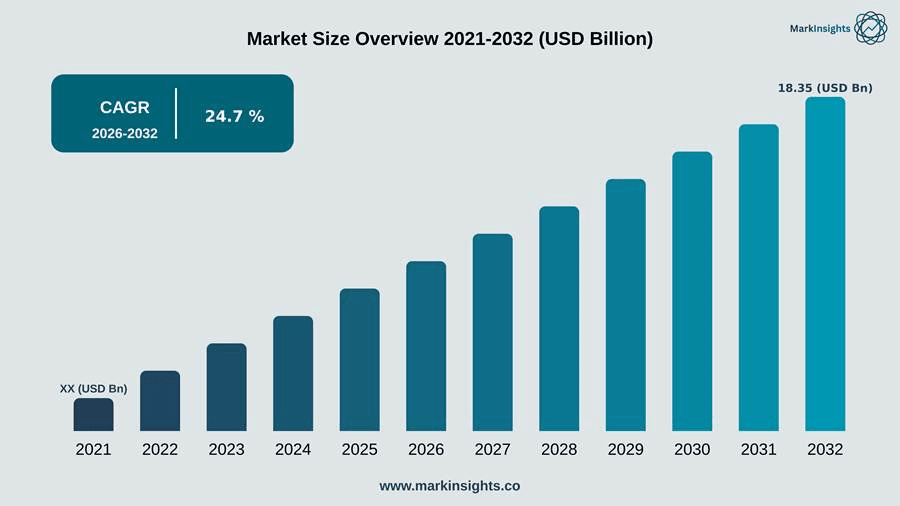
The global 5G From Space market was valued at approximately USD 4.85 billion in 2026 and is projected to reach around USD 18.35 billion by 2032, registering a CAGR of approximately 24.7% during the 2026-2032 forecast period.
Growth is anchored by accelerating low earth orbit satellite constellation deployment enabling direct-to-device connectivity for underserved and remote geographies, sustained government and defense investment in resilient non-terrestrial network backhaul, and deepening collaboration between satellite operators and terrestrial mobile network operators to extend 5G New Radio non-terrestrial network standards. SpaceX Starlink's direct-to-cell service expansion with T-Mobile and AST SpaceMobile's commercial partnerships with AT&T and Verizon are anchoring a stable demand floor for space-based 5G infrastructure that supports operator and satellite manufacturer capital investment planning.
The competitive landscape is consolidating around a small group of satellite operators and telecommunications equipment vendors that collectively dominate the non-terrestrial network segment. AST SpaceMobile completed additional BlueBird satellite launches in 2025 to expand its direct-to-device commercial coverage footprint, Eutelsat OneWeb finalized its merger integration to strengthen combined low earth orbit and geostationary connectivity offerings, Nokia expanded its non-terrestrial network radio access portfolio in partnership with satellite operators through 2025, and Lockheed Martin advanced its 5G.MIL software-defined satellite communication program for defense customers. North America led 2026 revenue, while Asia Pacific is the fastest-growing region led by China, India, and Japan.
5G From Space Market Definition:
5G from space refers to the delivery of fifth-generation mobile network connectivity through satellite-based non-terrestrial network infrastructure that extends or substitutes conventional terrestrial cellular towers, enabling broadband, narrowband internet of things, and direct-to-device communication services from low earth orbit, medium earth orbit, and geostationary earth orbit satellite constellations. Core system components include communication satellites equipped with 5G New Radio compatible payloads, ground gateway stations and teleports that interface satellite links with terrestrial core networks, user terminals ranging from fixed very small aperture terminal installations to standard unmodified smartphones supporting direct-to-device links, and software platforms managing network orchestration, spectrum coordination, and handover between satellite and terrestrial links. These systems are deployed to extend broadband connectivity into rural and remote geographies lacking terrestrial infrastructure, provide resilient backhaul for mobile network operators, support maritime and aviation connectivity requirements, enable government and defense secure communication networks, and deliver internet of things and machine-to-machine connectivity for asset tracking and remote monitoring applications across industries including agriculture, energy, shipping, and logistics.
5G From Space Market Research Methodology:
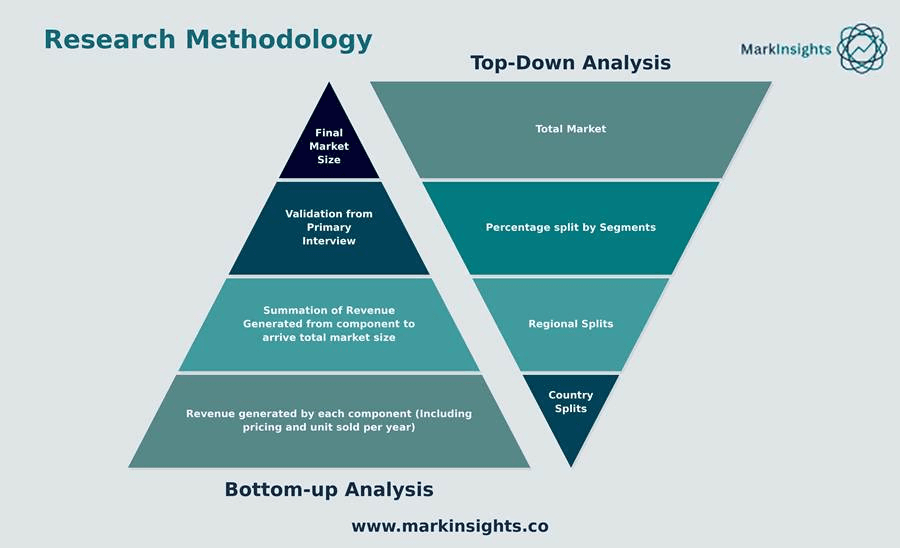
The demand-side assessment was built bottom-up from primary interviews with business buyers active in the 5g from space market, including institutional and industrial procurement buyers, distributors, and institutional or industrial purchasers, etc., and cross-referenced against demand-side secondary sources such as public production and consumption data, industry and trade-association surveys, etc. On the supply side, estimates were developed top-down from primary interviews with raw-material and component suppliers and with commercial leadership at manufacturers, etc., supported by secondary sources including publicly disclosed revenue and volume commentary from companies such as SpaceX, AST SpaceMobile, and Eutelsat OneWeb (10-K filings, investor presentations, and primary research transcripts), the regulatory frameworks of [RELEVANT REGULATOR — none detected in spec], and relevant import-export trade records, etc. Main research typically incorporates 100-130 structured B2B interviews per report, split across institutional and industrial procurement buyers, component and raw-material suppliers, and tier-1 manufacturers, weighted toward the report's central growth regions. For this report, leading inputs were cross-referenced against [RELEVANT REGULATOR] filings and publicly disclosed manufacturer segment data relevant to the 5G From Space category.
5G From Space Market Size, Scope & Segmentation:
| Report Attribute | Details |
| Market size in 2026 | USD 4.85 billion |
| Market Size by 2032 | USD 18.35 billion |
| Global CAGR (2026-2032) | 24.7% |
| Historical Data | 2021-2024 |
| Forecast Period | 2026-2032 |
| Segments Covered | By Component • Satellites • Ground Equipment • Terminals • Software and Services By Orbit Type • Low Earth Orbit • Medium Earth Orbit • Geostationary Earth Orbit By Application • Broadband Connectivity • IoT and M2M Communication • Backhaul • Direct-to-Device • Maritime and Aviation Connectivity By End User • Telecommunication Operators • Government and Defense • Enterprises • Maritime and Aviation |
| Regions and Countries Covered | North America • US • Canada • Mexico Europe • Germany • UK • France • Italy • Spain • Rest of Europe Asia Pacific • China • India • Japan • South Korea • Australia • Rest of Asia Pacific Middle East and Africa • Saudi Arabia • UAE • South Africa • Rest of Middle East and Africa South America • Brazil • Argentina • Rest of South America |
| Market leaders and key company profiles | SpaceX AST SpaceMobile Eutelsat OneWeb Iridium Communications Lynk Global Nokia Ericsson Qualcomm Lockheed Martin Viasat Hughes Network Systems SES Telesat Airbus Defence and Space Thales Alenia Space |
5G From Space Key Market Segmentation:
Insights On Key Component
The component segment encompasses satellites (the dominant sub-category, including communication payloads and buses manufactured by SpaceX, AST SpaceMobile, and Airbus Defence and Space that carry 5G New Radio compatible transponders and phased array antennas into orbit), ground equipment (including gateway stations, teleports, and feeder link infrastructure from Viasat and SES that interface satellite constellations with terrestrial telecommunications core networks), terminals (including fixed very small aperture terminal units, mobile satellite phones, and unmodified smartphone direct-to-device receivers supported by Lynk Global and AST SpaceMobile), and software and services (including network orchestration, spectrum management, and managed connectivity services from Nokia and Ericsson that enable seamless handover between satellite and terrestrial 5G networks).
Satellites dominate the component sub-segment because constellation deployment represents the largest single capital outlay in any space-based 5G program, with SpaceX, AST SpaceMobile, and Eutelsat OneWeb continuing to launch replenishment and expansion satellites that anchor recurring manufacturing and launch service revenue across the value chain.
Insights On Key Orbit Type
The orbit type segment covers low earth orbit (the leading sub-category, favored for its low latency and suitability for direct-to-device and broadband applications, deployed by SpaceX Starlink, AST SpaceMobile, and Eutelsat OneWeb), medium earth orbit (a growing sub-category balancing coverage footprint and latency, used by SES O3b mPOWER for enterprise and government backhaul applications), and geostationary earth orbit (an established sub-category providing wide-area fixed coverage for maritime, aviation, and broadcast-adjacent connectivity services from Viasat and Hughes Network Systems).
Low earth orbit leads the orbit type sub-segment because its proximity to Earth delivers latency characteristics compatible with real-time 5G applications including voice and low-latency data, driving sustained constellation investment by SpaceX and AST SpaceMobile ahead of medium earth orbit and geostationary earth orbit alternatives.
Insights On Key Application
The application segment includes broadband connectivity (the largest sub-category, delivering residential and enterprise internet access to underserved geographies through SpaceX Starlink and Eutelsat OneWeb terminals), internet of things and machine-to-machine communication (a fast-growing sub-category serving agriculture, energy, and logistics asset tracking through Iridium and Lynk Global narrowband connectivity), backhaul (providing resilient network extension for mobile network operators through SES and Viasat gateway links), direct-to-device (an emerging high-growth sub-category enabling unmodified smartphone connectivity through AST SpaceMobile and Lynk Global partnerships with terrestrial carriers), and maritime and aviation connectivity (serving in-flight and vessel-based broadband through Viasat and Hughes Network Systems terminals).
Broadband connectivity leads the application sub-segment because residential and enterprise demand for internet access in geographies lacking terrestrial fiber or cellular infrastructure represents the largest addressable revenue pool, sustaining continued terminal shipment growth for SpaceX Starlink and Eutelsat OneWeb across rural and remote markets globally.
Insights On Key End User
The end user segment covers telecommunication operators (the dominant sub-category, encompassing mobile network operators including T-Mobile, AT&T, and Verizon that partner with satellite operators to extend coverage through direct-to-device and backhaul arrangements), government and defense (including secure communication networks and resilient backhaul procured by defense agencies from Lockheed Martin and Viasat), enterprises (including agriculture, energy, and logistics companies deploying internet of things connectivity through Iridium and Eutelsat OneWeb terminals), and maritime and aviation (including shipping operators and airlines procuring connectivity terminals from Viasat and Hughes Network Systems).
Telecommunication operators lead the end user sub-segment because mobile network operator partnerships with satellite constellation operators represent the primary commercial pathway for delivering space-based 5G connectivity to mass-market consumers, with T-Mobile, AT&T, and Verizon each maintaining direct-to-device commercial agreements that anchor subscriber-facing revenue generation.
Insights on Regional Analysis
The global 5G From Space market spans North America, Europe, Asia Pacific, Middle East and Africa, and South America. North America leads global 5G From Space revenue, anchored by the United States where SpaceX, AST SpaceMobile, and Lockheed Martin maintain concentrated satellite manufacturing, launch, and network operations infrastructure supported by Federal Communications Commission (FCC) spectrum licensing frameworks and National Telecommunications and Information Administration (NTIA) coordination on non-terrestrial network spectrum sharing. T-Mobile's commercial direct-to-cell partnership with SpaceX Starlink and AT&T and Verizon's respective agreements with AST SpaceMobile have established the United States as the primary commercial proving ground for direct-to-device satellite connectivity. The Federal Aviation Administration (FAA) launch licensing regime and Department of Defense procurement programs including the Space Development Agency's proliferated warfighter space architecture further reinforce sustained American demand for space-based 5G infrastructure across both commercial and defense applications.
Asia Pacific is the fastest-growing region for 5G From Space, led by China, India, and Japan. China's state-directed satellite internet constellation programs, including the Guowang and Qianfan initiatives coordinated by the China Satellite Network Group, are driving substantial domestic investment in low earth orbit 5G-compatible infrastructure aimed at both commercial connectivity and strategic technology independence. India's Department of Telecommunications and Indian Space Research Organisation (ISRO) are supporting satellite communication licensing reform and spectrum allocation frameworks that are enabling Eutelsat OneWeb and emerging domestic operators to expand rural broadband coverage across underserved regions. Japan's Ministry of Internal Affairs and Communications is coordinating with SoftBank and AST SpaceMobile on direct-to-device trial programs, while Australia's remote geography and mining sector connectivity requirements are sustaining incremental demand for satellite-based 5G backhaul and internet of things applications across the broader Asia Pacific region.
5G From Space Market Company Profiles:
The 5G From Space competitive landscape encompasses three primary archetypes: satellite constellation operators (SpaceX, AST SpaceMobile, Eutelsat OneWeb, Iridium Communications, Lynk Global) that design, launch, and operate low earth orbit and medium earth orbit constellations carrying 5G-compatible payloads for broadband and direct-to-device services; telecommunications equipment and network vendors (Nokia, Ericsson, Qualcomm, Lockheed Martin) that supply non-terrestrial network radio access equipment, chipsets, and defense-grade satellite communication systems integrating satellite links with terrestrial 5G cores; and established satellite service providers (Viasat, Hughes Network Systems, SES, Telesat) that operate geostationary and medium earth orbit fleets serving enterprise, maritime, aviation, and government connectivity markets with broadband and backhaul services.
The 15 anchor companies profiled in this report are SpaceX, AST SpaceMobile, Eutelsat OneWeb, Iridium Communications, Lynk Global, Nokia, Ericsson, Qualcomm, Lockheed Martin, Viasat, Hughes Network Systems, SES, Telesat, Airbus Defence and Space, and Thales Alenia Space. SpaceX operates the Starlink constellation exceeding six thousand satellites and has commercialized direct-to-cell service through a partnership with T-Mobile covering unmodified smartphone messaging and voice connectivity. AST SpaceMobile has launched its BlueBird satellite series designed for broadband direct-to-device connectivity and maintains commercial agreements with AT&T and Verizon in the United States. Eutelsat OneWeb operates a combined low earth orbit and geostationary fleet following its merger, serving enterprise, government, and maritime connectivity markets. Lockheed Martin's 5G.MIL program integrates software-defined satellite communication capability for defense network resilience applications. Iridium Communications and Lynk Global hold specialist positions in narrowband internet of things and direct-to-device messaging built on established low earth orbit constellation assets rather than broadband-scale capacity.
5G From Space Market Latest Trends and Innovation:
• In October 2025, AST SpaceMobile announced the successful launch and orbital deployment of additional BlueBird satellites aboard a SpaceX Falcon 9 rocket, expanding its commercial direct-to-device broadband coverage footprint across North America and preparing for expanded service availability under its agreements with AT&T and Verizon.
• In July 2025, SpaceX and T-Mobile expanded their direct-to-cell satellite messaging service to general availability across the United States, enabling unmodified smartphone users on compatible devices to send text messages via Starlink satellites in areas without terrestrial cellular coverage, marking a major commercial milestone for direct-to-device connectivity.
• In March 2025, Eutelsat OneWeb completed integration milestones following its merger, announcing expanded low earth orbit and geostationary combined service offerings for enterprise, maritime, and government customers across Europe, the Middle East, and Asia Pacific, strengthening its competitive position against SpaceX Starlink in the broadband connectivity segment.
• In January 2025, Lockheed Martin announced continued development of its 5G.MIL software-defined satellite communication architecture under contract with the United States Department of Defense, advancing hybrid space and terrestrial network resilience capabilities for tactical and strategic military communication requirements.
5G From Space Market Significant Growth Factors:
The global 5G From Space market is expanding on the back of four reinforcing drivers. Accelerating low earth orbit constellation deployment by SpaceX, AST SpaceMobile, and Eutelsat OneWeb is rapidly increasing available satellite capacity for broadband and direct-to-device services, enabling commercial launch of coverage in geographies previously unserved by terrestrial cellular infrastructure. Deepening commercial partnerships between satellite operators and terrestrial mobile network operators, exemplified by T-Mobile's collaboration with SpaceX and AT&T and Verizon's agreements with AST SpaceMobile, are converting technical capability into subscriber-facing commercial services that generate recurring revenue streams. Sustained government and defense investment in resilient non-terrestrial network architecture, led by Lockheed Martin's 5G.MIL program and Space Development Agency procurement, is providing a stable demand floor independent of commercial broadband adoption cycles. Continuous cost reduction in satellite manufacturing and reusable launch vehicle access, driven by SpaceX's Falcon 9 cadence, is lowering the capital barrier for constellation deployment and enabling smaller operators including Lynk Global to pursue niche direct-to-device and internet of things connectivity opportunities.
5G From Space Market Drivers:
Demand is driven by rural connectivity gaps, mobile network operator coverage extension needs, defense modernization programs, and internet of things proliferation. Persistent terrestrial infrastructure gaps across rural North America, sub-Saharan Africa, and remote Asia Pacific geographies are creating structural demand for satellite-delivered broadband and messaging services that SpaceX and AST SpaceMobile are addressing through direct-to-device commercial launches. Mobile network operators including T-Mobile, AT&T, and Verizon are pursuing satellite partnerships to eliminate cellular dead zones and differentiate service offerings without the capital expenditure required for additional terrestrial tower construction. Defense and government agencies globally are prioritizing resilient, jam-resistant communication architectures that combine satellite and terrestrial links, driving procurement of Lockheed Martin and Viasat non-terrestrial network solutions for tactical and strategic applications. Rapid growth in internet of things device deployment across agriculture, energy, and logistics sectors is expanding demand for narrowband satellite connectivity from Iridium Communications and Lynk Global, particularly in geographies where cellular infrastructure remains sparse or unreliable for asset tracking applications.
5G From Space Market Restraining Factors:
Several factors temper growth across the 5G From Space value chain. Spectrum allocation and coordination complexity between satellite operators and terrestrial mobile network operators, requiring extensive regulatory review by the Federal Communications Commission and International Telecommunication Union, creates approval delays that can postpone commercial service launches by AST SpaceMobile and SpaceX in specific national markets. High capital intensity of satellite constellation deployment, including manufacturing, launch, and ground infrastructure costs, creates significant financial risk for operators and restricts market entry to well-capitalized players such as SpaceX and Eutelsat OneWeb, limiting competitive diversity. Latency and bandwidth limitations of geostationary and certain medium earth orbit systems relative to terrestrial fiber and 5G networks continue to constrain space-based connectivity to use cases where terrestrial alternatives are unavailable or impractical. Orbital debris accumulation and growing concern over low earth orbit congestion, highlighted by tracking programs at NASA and the European Space Agency, are increasing regulatory scrutiny of large constellation deployments and could result in stricter licensing conditions that slow future satellite launch cadence for operators including SpaceX and Amazon Kuiper.
5G From Space Market Opportunities:
Opportunities cluster in four pockets across the 5G From Space landscape. Direct-to-device connectivity for unmodified smartphones represents the single largest near-term commercial opportunity, with AST SpaceMobile and Lynk Global positioned to capture subscriber-facing revenue as carrier partnerships including those with AT&T, Verizon, and T-Mobile scale toward general availability across additional national markets. Maritime and aviation connectivity upgrades, driven by passenger expectation for continuous broadband access during transit, offer Viasat and Hughes Network Systems growth pathways through fleet-wide terminal retrofit programs across commercial shipping and airline customers. Government and defense non-terrestrial network modernization, anchored by Lockheed Martin's 5G.MIL architecture and allied nation procurement programs, provides a long-cycle revenue opportunity less exposed to commercial subscriber churn dynamics. Emerging market rural broadband initiatives supported by national telecommunications regulators in India, Africa, and Southeast Asia present expansion opportunities for Eutelsat OneWeb and SES to extend service under public-private infrastructure partnership frameworks targeting universal connectivity goals.
5G From Space Market Technology Trends:
Technology direction is set by three converging shifts in 5G From Space network architecture. Standardization of 3GPP non-terrestrial network specifications is enabling Nokia, Ericsson, and Qualcomm to develop chipsets and radio access equipment that support seamless handover between terrestrial and satellite 5G links without requiring specialized user hardware, a critical enabler for mass-market direct-to-device adoption. Phased array antenna miniaturization and beamforming advances are allowing AST SpaceMobile and SpaceX to achieve sufficient signal strength for unmodified smartphone connectivity from low earth orbit altitudes, overcoming a technical barrier that previously required dedicated satellite terminals. Software-defined satellite payload architecture, exemplified by Lockheed Martin's 5G.MIL program and Airbus Defence and Space's flexible payload systems, is enabling operators to reconfigure coverage, capacity, and frequency allocation in orbit without hardware replacement, extending satellite operational lifespan and adaptability. Inter-satellite laser link technology deployed across SpaceX Starlink and Telesat Lightspeed constellations is reducing dependency on ground gateway density by enabling data routing directly between satellites, improving latency and coverage continuity over oceans and remote regions lacking terrestrial gateway infrastructure.
5G From Space Market Future Trends:
By 2032, the market will be reshaped by the maturation of direct-to-device connectivity into a standard carrier offering, the integration of satellite links into unified 6G non-terrestrial network standards, and the emergence of dedicated space-based internet of things constellations serving industrial customers at scale. Direct-to-device services from AST SpaceMobile, SpaceX, and Lynk Global are expected to transition from supplementary messaging capability into full broadband-capable connectivity embedded as a default feature across major smartphone carriers globally, reducing the distinction between terrestrial and satellite coverage for end users. Early 6G standardization work at 3GPP is expected to formally integrate non-terrestrial network architecture from initial specification rather than retrofitting satellite compatibility, positioning Nokia, Ericsson, and Qualcomm to design unified terrestrial-satellite chipsets. Dedicated industrial internet of things constellations from Iridium Communications and emerging operators are expected to scale to serve agriculture, energy, and logistics customers with dense low-cost sensor connectivity, while consolidation among smaller satellite operators is likely as capital-intensive constellation economics favor scale players including SpaceX and Amazon Kuiper.
5G From Space Market Supply Chain Analysis:
The 5G From Space supply chain runs from satellite component manufacturing and payload integration through launch services to ground infrastructure deployment and end-user terminal distribution. Upstream component supply is anchored by phased array antenna manufacturers, radiation-hardened semiconductor suppliers, and satellite bus producers including Airbus Defence and Space and Thales Alenia Space, which integrate communication payloads for operators including AST SpaceMobile and Eutelsat OneWeb. Launch services are concentrated among SpaceX, Arianespace, and emerging providers including Rocket Lab, which deliver constellation satellites to low earth orbit and medium earth orbit destinations under multi-launch manifest agreements that determine constellation deployment timelines and operator capital expenditure schedules.
Ground segment infrastructure including gateway stations, teleports, and network operations centers is deployed by satellite operators in partnership with telecommunications infrastructure providers, connecting satellite links to terrestrial core networks operated by mobile network operators including T-Mobile, AT&T, and Verizon. Terminal distribution flows through direct operator sales for very small aperture terminal hardware and through embedded carrier partnerships for direct-to-device smartphone compatibility requiring no additional consumer hardware. Key bottlenecks include launch vehicle capacity constraints during periods of high constellation deployment demand, radiation-hardened component supply limitations, and spectrum coordination delays between satellite operators and incumbent terrestrial license holders that can postpone regional service commercialization.
5G From Space Market Regulatory Analysis:
The global 5G From Space market operates within a complex multinational regulatory framework governing spectrum allocation, satellite licensing, and orbital debris mitigation across major markets. Principal regulatory anchors include the Federal Communications Commission (FCC) spectrum licensing and orbital debris mitigation rules in the United States, the International Telecommunication Union (ITU) Radio Regulations governing global spectrum coordination and orbital slot allocation, the European Space Agency (ESA) and European Union Agency for the Space Programme (EUSPA) coordination frameworks across European Union member states, and the Department of Telecommunications and Indian National Space Promotion and Authorization Centre (IN-SPACe) satellite communication licensing regime in India. The Federal Aviation Administration (FAA) governs commercial launch licensing for United States-based launch providers, while China's National Radio Administration and the National Development and Reform Commission oversee domestic satellite constellation spectrum allocation and program approval. Conformity assessment routes include 3GPP non-terrestrial network standard compliance certification, national type-approval for user terminal equipment, and orbital debris mitigation plan submission required for constellation licensing across most major spacefaring jurisdictions.
5G From Space Market Share Analysis:
The top five vendors together account for an estimated 60-70% of global 5G From Space revenue in the direct-to-device and broadband connectivity segment, with the remainder distributed across regional satellite operators, specialist internet of things constellation providers, and defense-focused system integrators across North America, Europe, and Asia Pacific. Concentration is highest in the low earth orbit broadband segment where SpaceX, AST SpaceMobile, and Eutelsat OneWeb collectively dominate satellite capacity and commercial carrier partnerships, while the market is most fragmented in the maritime and aviation connectivity segment served by regional terminal integrators and specialist service providers.
5G From Space Market Competitive Landscape:
The 5G From Space competitive landscape is led by SpaceX, AST SpaceMobile, Eutelsat OneWeb, Lockheed Martin, and Nokia, with significant presence from Viasat, Hughes Network Systems, Iridium Communications, Lynk Global, and SES. The AST SpaceMobile BlueBird satellite launch expansion in October 2025, the SpaceX and T-Mobile direct-to-cell general availability launch in July 2025, the Eutelsat OneWeb merger integration completion in March 2025, and the Lockheed Martin 5G.MIL program advancement in January 2025 are the principal developments shaping the competitive map.
Key Player Strategies
Leaders are prioritizing constellation capacity expansion through accelerated satellite launch cadence, deepening commercial partnerships with terrestrial mobile network operators, and defense contract capture through resilient non-terrestrial network architecture development. SpaceX and AST SpaceMobile compete on direct-to-device broadband capability and carrier partnership breadth, while Lockheed Martin and Viasat focus on government and enterprise-grade resilient connectivity solutions. This parameter analyses the strategic posture of each leading player across constellation scale, carrier partnership depth, and defense program positioning dimensions.
Buyer-Tier Concentration
Share concentration differs sharply by customer tier across the value chain. Tier-1 mobile network operators including T-Mobile, AT&T, and Verizon consolidate direct-to-device partnerships almost exclusively with SpaceX and AST SpaceMobile because only these operators currently possess sufficient constellation scale and regulatory approval to deliver nationwide unmodified smartphone connectivity. Smaller regional carriers and enterprise customers are served through distributors and systems integrators partnering with Viasat, Hughes Network Systems, and SES, which blend geostationary and medium earth orbit capacity across multiple operators, diluting the top-tier concentration figure at the point of end-customer service delivery even though satellite capacity ownership remains concentrated upstream.
Company Capability Assessment
Capability leadership is differentiated by orbit type and application: SpaceX leads in low earth orbit broadband constellation scale with the largest deployed satellite fleet globally; AST SpaceMobile leads in direct-to-device unmodified smartphone connectivity technology with its BlueBird satellite architecture; Eutelsat OneWeb leads in combined low earth orbit and geostationary enterprise and government service delivery following its merger; Lockheed Martin leads in defense-grade software-defined satellite communication through its 5G.MIL program; Viasat leads in maritime and aviation connectivity terminal deployment and geostationary broadband service. This parameter assesses each leader's depth across constellation scale, technology differentiation, and customer segment penetration.
Market Concentration
The top five vendors account for an estimated 60-70% of global 5G From Space revenue in the direct-to-device and broadband connectivity segment, reflecting high concentration driven by the capital-intensive nature of constellation deployment and the limited number of operators with regulatory approval for direct-to-device service. This parameter covers the degree of vendor concentration relative to total addressable market revenue.
Frequently Asked Questions
How big is the 5G From Space Market and what will it be worth by 2032?
The 5G From Space Market was valued at approximately USD 4.85 billion in 2026 and is projected to reach around USD 18.35 billion by 2032, registering a CAGR of approximately 24.7%.
What is the CAGR of the 5G From Space Market from 2026 to 2032?
The 5G From Space Market is projected to register a CAGR of approximately 24.7% during the forecast period from 2026 to 2032.
What are the key drivers and restraints shaping the 5G From Space Market?
Key Drivers:
• Persistent terrestrial infrastructure gaps across rural North America, sub-Saharan Africa, and remote Asia Pacific geographies are creating structural demand for satellite-delivered broadband and messaging services that SpaceX and AST SpaceMobile are addressing through direct-to-device commercial launches.
• Mobile network operators including T-Mobile, AT&T, and Verizon are pursuing satellite partnerships to eliminate cellular dead zones and differentiate service offerings without the capital expenditure required for additional terrestrial tower construction.
Key Restraints:
• Spectrum allocation and coordination complexity between satellite operators and terrestrial mobile network operators, requiring extensive regulatory review by the Federal Communications Commission and International Telecommunication Union, creates approval delays that can postpone commercial service launches by AST SpaceMobile and SpaceX in specific national markets.
• High capital intensity of satellite constellation deployment, including manufacturing, launch, and ground infrastructure costs, creates significant financial risk for operators and restricts market entry to well-capitalized players such as SpaceX and Eutelsat OneWeb, limiting competitive diversity.
What are the major segments and which region leads the 5G From Space Market?
Satellites (Component), Low earth orbit (Orbit Type), Broadband connectivity (Application), Telecommunication operators (End User) lead their respective segments. North America leads global revenue, anchored by the United States. Asia Pacific is the fastest-growing region, led by China, India, and Japan. Full segment-level analysis, including growth drivers, restraints, and country-level detail for every region covered in this study, is provided in the corresponding chapters of the full report.
Who are the leading companies in the 5G From Space Market?
The top five players in the 5G From Space Market — SpaceX, AST SpaceMobile, Eutelsat OneWeb, Iridium Communications, and Lynk Global — collectively hold an estimated 60-70% of global revenue. Key companies covered in this report include SpaceX, AST SpaceMobile, Eutelsat OneWeb, Iridium Communications, Lynk Global, Nokia, Ericsson, Qualcomm, Lockheed Martin, Viasat, Hughes Network Systems, SES, Telesat, Airbus Defence and Space, and Thales Alenia Space.
Related Reports
Global Advanced Surface Movement Guidance Control System Market — Forecast to 2032
By System Type (Surveillance Systems, Routing Systems, Guidance Systems, Control Systems), By Component (Radar Sensors, Software, Control Towers Equipment, Multilateration Systems), By Airport Category (Category A Airports, Category B Airports, Category C Airports), By Application (Commercial Airports, Military Airbases, Cargo and Freight Airports), By End User (Airport Authorities, Air Navigation Service Providers, Defense Agencies)
From $ 2,500
View Report →Global Aircraft Ground Handling System Market — Forecast to 2032
By Equipment Type (Ground Power Units, Ground Support Vehicles, Baggage and Cargo Handling Systems, De-Icing Equipment, Passenger Boarding Bridges and Stairs), By Service Type (Ramp Handling, Cargo and Baggage Handling, De-Icing Services, Passenger Handling, Aircraft Marshalling), By Application (Commercial Aviation, Military Aviation, Cargo and Freight), By Power Source (Electric, Diesel/Fuel-Powered, Hybrid), By End User (Airports, Airlines, Third-Party Ground Handling Service Providers)
From $ 2,500
View Report →Global 5G Market Aviation Market — Forecast to 2032
By Component (Hardware, Software, Services), By Connectivity Type (In-Flight Connectivity, Air-to-Ground Connectivity, Satellite-Based Connectivity), By Application (Passenger Connectivity, Aircraft Operations and Maintenance, Air Traffic Management, Cargo and Logistics Tracking), By Platform (Commercial Aviation, Military Aviation, Business and General Aviation, Unmanned Aerial Vehicles)
From $ 2,500
View Report →