
Global 3D Printed Satellites Market — Forecast to 2032
Research scope: By Component Type (Structural Components, Antenna and RF Components, Propulsion Components, Thermal Management Components, Others), By Printing Technology (Fused Deposition Modeling, Selective Laser Melting, Direct Metal Laser Sintering, Electron Beam Melting), By Material (Metals, Polymers, Ceramics, Composites), By Satellite Type (CubeSats and Nanosatellites, Small Satellites, Medium and Large Satellites), By End User (Commercial Operators, Government and Defense Agencies, Research and Academic Institutions)
Domain: Aerospace & Defense
Report Code: MIADG 10002
3D Printed Satellites Market Analysis and Insights:
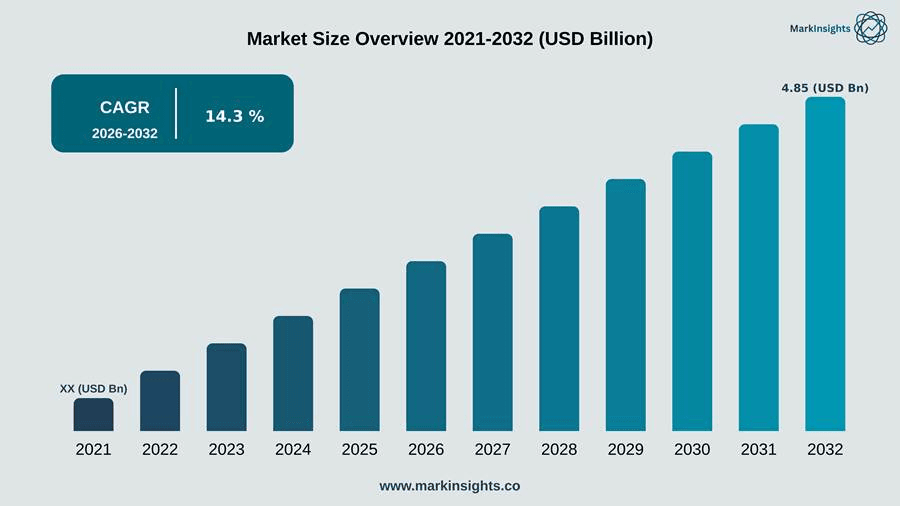
The global 3D Printed Satellites market was valued at approximately USD 2.18 billion in 2026 and is projected to reach around USD 4.85 billion by 2032, registering a CAGR of approximately 14.3% during the 2026-2032 forecast period.
Growth is anchored by rapid smallsat and CubeSat constellation deployment demanding lightweight, rapidly manufactured structural and propulsion components, alongside additive manufacturing's ability to consolidate multi-part assemblies into single printed structures that reduce mass and lead time. Relativity Space and Rocket Lab have integrated metal additive manufacturing directly into flight-qualified structural and propulsion hardware production, anchoring industrial confidence in the technology's spaceflight readiness.
The competitive landscape is consolidating around specialized metal additive manufacturers and satellite primes collaborating on qualified flight hardware. Airbus Defence and Space expanded its metal 3D printing capability for satellite bracket production in March 2025, Relativity Space advanced Terran R development leveraging fully 3D printed rocket structures in September 2024, Redwire Space acquired Qinetiq Space in June 2024 to broaden its in-space manufacturing and satellite component portfolio, and 3D Systems partnered with a satellite propulsion developer on printed thruster components in January 2025. North America led 2026 revenue, while Asia Pacific is the fastest-growing region led by China, India, and Japan.
3D Printed Satellites Market Definition:
The 3D printed satellites market encompasses the design, additive manufacturing, and integration of satellite structural, propulsion, thermal, and antenna components produced through layer-by-layer fabrication processes including fused deposition modeling, selective laser melting, direct metal laser sintering, and electron beam melting. These additive manufacturing techniques enable satellite manufacturers and component suppliers to produce complex, lightweight, and topology-optimized parts including brackets, waveguides, propellant tanks, heat exchangers, and antenna reflectors that would be difficult or costly to manufacture through conventional subtractive machining or casting methods. The market spans metal powder-based systems using titanium, aluminum, and nickel alloys for load-bearing structural and propulsion applications, polymer-based systems for lightweight non-structural brackets and housings, and emerging ceramic and composite material systems for thermal protection and radio frequency components. End users span commercial satellite operators building CubeSat and smallsat constellations for communications and earth observation, government and defense agencies procuring specialized satellite hardware, and research and academic institutions developing experimental satellite platforms, all benefiting from additive manufacturing's rapid prototyping, part consolidation, and on-demand production capabilities that compress satellite development timelines and reduce total component count relative to traditionally manufactured spacecraft.
3D Printed Satellites Market Research Methodology:
The demand-side assessment was built bottom-up from primary interviews with business buyers active in the 3d printed satellites market, including institutional and industrial procurement buyers, distributors, and institutional or industrial purchasers, etc., and cross-referenced against demand-side secondary sources such as public production and consumption data, industry and trade-association surveys, etc. On the supply side, estimates were developed top-down from primary interviews with raw-material and component suppliers and with commercial leadership at manufacturers, etc., supported by secondary sources including publicly disclosed revenue and volume commentary from companies such as Relativity Space, Redwire Space, and Airbus Defence and Space (10-K filings, investor presentations, and primary research transcripts), the regulatory frameworks of [RELEVANT REGULATOR — none detected in spec], and relevant import-export trade records, etc. Central research typically incorporates 100-130 structured B2B interviews per report, split across institutional and industrial procurement buyers, component and raw-material suppliers, and tier-1 manufacturers, weighted toward the report's leading growth regions. For this report, core inputs were cross-referenced against [RELEVANT REGULATOR] filings and publicly disclosed manufacturer segment data relevant to the 3D Printed Satellites category.
3D Printed Satellites Market Size, Scope & Segmentation:
| Report Attribute | Details |
| Market size in 2026 | USD 2.18 billion |
| Market Size by 2032 | USD 4.85 billion |
| Global CAGR (2026-2032) | 14.3% |
| Historical Data | 2021-2024 |
| Forecast Period | 2026-2032 |
| Segments Covered | By Component Type • Structural Components • Antenna and RF Components • Propulsion Components • Thermal Management Components • Others By Printing Technology • Fused Deposition Modeling • Selective Laser Melting • Direct Metal Laser Sintering • Electron Beam Melting By Material • Metals • Polymers • Ceramics • Composites By Satellite Type • CubeSats and Nanosatellites • Small Satellites • Medium and Large Satellites By End User • Commercial Operators • Government and Defense Agencies • Research and Academic Institutions |
| Regions and Countries Covered | North America • US • Canada • Mexico Europe • Germany • UK • France • Italy • Spain • Rest of Europe Asia Pacific • China • India • Japan • South Korea • Australia • Rest of Asia Pacific Middle East and Africa • Saudi Arabia • UAE • South Africa • Rest of Middle East and Africa South America • Brazil • Argentina • Rest of South America |
| Market leaders and key company profiles | Relativity Space Redwire Space Airbus Defence and Space Rocket Lab 3D Systems EOS Stratasys Sciaky Ursa Major Technologies Optisys Made In Space Firefly Aerospace Lockheed Martin Northrop Grumman Thales Alenia Space |
3D Printed Satellites Key Market Segmentation:
Insights On Key Component Type
The component type segment covers structural components (the dominant sub-category, including brackets, chassis, panels, and mounting structures produced by Airbus Defence and Space, Relativity Space, and Redwire Space using topology-optimized metal printing to reduce satellite mass while maintaining structural load requirements), antenna and RF components (including waveguides, reflectors, and feed horns from companies such as 3D Systems and Optisys that leverage additive manufacturing's ability to produce complex internal geometries impossible through conventional machining), propulsion components (including propellant tanks, thruster housings, and injector manifolds from Relativity Space and Ursa Major Technologies produced through metal additive processes for reduced part count and improved thermal performance), thermal management components (including heat exchangers and radiator panels using additively manufactured lattice structures for enhanced heat dissipation), and others (including harness routing and deployable mechanism housings).
Structural components dominate the component type sub-segment because satellite chassis and bracket mass reduction directly lowers launch cost per kilogram, creating strong commercial incentive for operators to adopt additively manufactured structures from Airbus Defence and Space and Redwire Space across both CubeSat and larger satellite platform programs.
Insights On Key Printing Technology
The printing technology segment includes fused deposition modeling (used primarily for polymer prototyping, non-structural brackets, and low-cost CubeSat components by companies including Stratasys serving academic and early-stage commercial satellite developers), selective laser melting (a leading metal printing technology used by 3D Systems and EOS for producing flight-qualified titanium and aluminum structural and propulsion components), direct metal laser sintering (widely adopted by Airbus Defence and Space and Redwire Space for producing complex metal antenna waveguides and structural brackets with fine feature resolution), and electron beam melting (used by specialized suppliers including Sciaky for producing large-format titanium structural components requiring reduced residual stress).
Selective laser melting leads the printing technology sub-segment because its capability to produce dense, flight-qualified metal parts with fine geometric detail has made it the preferred process for structural and propulsion component qualification programs across Relativity Space, 3D Systems, and Airbus Defence and Space satellite manufacturing operations.
Insights On Key Material
The material segment covers metals (the dominant sub-category, including titanium, aluminum, and nickel-based superalloys used for structural, propulsion, and thermal components by Relativity Space and Airbus Defence and Space, selected for high strength-to-weight ratio and thermal resistance), polymers (including high-performance thermoplastics such as PEEK and ULTEM used for non-structural brackets and housings by Stratasys and academic CubeSat developers), ceramics (used in thermal protection and radio frequency-transparent antenna components for high-temperature spacecraft applications), and composites (including carbon fiber-reinforced polymers used for lightweight deployable structures and solar panel support frames).
Metals lead the material sub-segment because titanium and aluminum alloys provide the mechanical strength and thermal stability required for load-bearing satellite structural and propulsion applications, driving sustained investment by Relativity Space and Redwire Space in metal powder bed fusion capacity expansion.
Insights On Key Satellite Type
The satellite type segment includes CubeSats and nanosatellites (the fastest-growing sub-category, benefiting from additive manufacturing's rapid prototyping and low-volume production economics that suit university and commercial small satellite developers using components from 3D Systems and academic fabrication labs), small satellites (a major sub-category where operators including Planet Labs and satellite bus manufacturers integrate 3D printed structural and antenna components to reduce mass and accelerate production for constellation deployment), and medium and large satellites (where Airbus Defence and Space and Redwire Space incorporate additively manufactured brackets and thermal components into larger geostationary and government satellite platforms, though full structural printing remains limited by qualification requirements).
CubeSats and nanosatellites lead the satellite type sub-segment because the high production volumes required for mega-constellation deployment favor additive manufacturing's design flexibility and rapid iteration capability, enabling commercial operators to reduce per-unit component cost and accelerate satellite bus assembly timelines.
Insights On Key End User
The end user segment covers commercial operators (the largest sub-category, encompassing satellite communications and earth observation companies procuring additively manufactured structural, antenna, and propulsion components from Relativity Space, Redwire Space, and 3D Systems to support constellation deployment programs), government and defense agencies (including national space agencies and defense procurement organizations that fund qualification programs for additively manufactured satellite hardware through Airbus Defence and Space and specialized defense-focused suppliers), and research and academic institutions (including universities and research laboratories developing experimental CubeSat platforms using in-house or outsourced polymer and metal printing services for low-cost technology demonstration missions).
Commercial operators lead the end user sub-segment because the scale of proposed low earth orbit constellation deployments creates sustained high-volume demand for cost-efficient, rapidly manufactured satellite components, driving Relativity Space and Redwire Space to prioritize commercial constellation supply agreements over lower-volume government and research contracts.
Insights on Regional Analysis
The global 3D Printed Satellites market spans North America, Europe, Asia Pacific, Middle East and Africa, and South America. North America leads global revenue, anchored by the United States where NASA's continued investment in additive manufacturing qualification programs, a dense concentration of commercial satellite manufacturers, and Department of Defense procurement interest in rapid-manufacturing spacecraft hardware sustain the region's leadership position. Relativity Space, Redwire Space, and 3D Systems operate major additive manufacturing facilities across California, Florida, and Texas, supplying structural, propulsion, and antenna components to both commercial constellation operators and government satellite programs. The Federal Aviation Administration (FAA) and NASA's material and process qualification standards for additively manufactured spaceflight hardware continue to shape supplier qualification pathways, while growing US commercial launch cadence from SpaceX and Rocket Lab is reinforcing downstream demand for lightweight, rapidly produced satellite components across the domestic supply base.
Asia Pacific is the fastest-growing region for 3D Printed Satellites, led by China, India, and Japan. China's expanding state-backed satellite constellation programs and growing domestic additive manufacturing equipment industry are driving significant investment in metal printing capacity for structural and propulsion component production, supported by national space agency modernization initiatives. India's Indian Space Research Organisation (ISRO) has expanded collaboration with domestic additive manufacturing firms to produce lightweight satellite bus components, supported by the Department of Space's push toward indigenous manufacturing capability for both government and commercial small satellite programs. Japan's Japan Aerospace Exploration Agency (JAXA) continues to fund research into additively manufactured propulsion and thermal components for smallsat platforms, while South Korea's growing commercial satellite sector is emerging as an additional demand center for printed structural and antenna hardware across the region's expanding space industrial base.
3D Printed Satellites Market Company Profiles:
The 3D Printed Satellites competitive landscape encompasses three primary archetypes: additive manufacturing equipment and materials specialists (3D Systems, EOS, Stratasys, Sciaky) that supply metal and polymer printing systems and powder feedstock to satellite manufacturers and component suppliers; satellite and launch vehicle primes with integrated additive manufacturing capability (Relativity Space, Redwire Space, Airbus Defence and Space, Rocket Lab) that design and produce flight-qualified structural, propulsion, and antenna components in-house for their own or customer satellite platforms; and specialized component and propulsion suppliers (Ursa Major Technologies, Optisys, Made In Space, Firefly Aerospace) that provide additively manufactured subsystems including thrusters, RF hardware, and in-space manufacturing services to satellite integrators.
The 15 anchor companies profiled in this report are Relativity Space, Redwire Space, Airbus Defence and Space, Rocket Lab, 3D Systems, EOS, Stratasys, Sciaky, Ursa Major Technologies, Optisys, Made In Space, Firefly Aerospace, Lockheed Martin, Northrop Grumman, and Thales Alenia Space. Relativity Space has developed proprietary metal additive manufacturing processes to produce nearly entirely 3D printed launch vehicle and satellite structures, positioning the company as an industry technology leader. Redwire Space provides in-space manufacturing and additively manufactured satellite component services following its acquisition of Qinetiq Space, expanding its European component supply capability. Airbus Defence and Space integrates metal 3D printed brackets and structural components into satellite bus production across its European manufacturing facilities. 3D Systems supplies selective laser melting equipment and materials expertise to multiple satellite component manufacturers globally. Ursa Major Technologies and Optisys hold specialist positions in additively manufactured propulsion and RF antenna hardware, serving component-level supply relationships with satellite integrators rather than full spacecraft production.
3D Printed Satellites Market Latest Trends and Innovation:
• In September 2025, Relativity Space announced continued progress on its Terran R reusable launch vehicle program, incorporating fully 3D printed structural and propulsion elements manufactured at its Long Beach, California facility, aimed at supporting satellite constellation deployment missions with reduced production lead time compared to traditionally machined rocket structures.
• In March 2025, Airbus Defence and Space expanded its metal additive manufacturing capability at its Toulouse, France facility to increase production capacity for 3D printed satellite brackets and structural components, supporting higher-volume satellite bus assembly for both commercial and government constellation programs.
• In January 2025, 3D Systems announced an expanded partnership with a satellite propulsion component developer to co-develop additively manufactured thruster and propellant management hardware using selective laser melting processes, targeting qualification for small satellite and CubeSat propulsion system integration programs.
• In June 2024, Redwire Space completed its acquisition of Qinetiq Space, a Belgium-based space technology company, expanding Redwire's in-space manufacturing, satellite component, and additive manufacturing service offerings across the European market and broadening its portfolio of qualified spaceflight hardware production capabilities.
3D Printed Satellites Market Significant Growth Factors:
The global 3D Printed Satellites market is expanding on the back of four reinforcing drivers. The proliferation of low earth orbit satellite constellations for broadband communications and earth observation is creating sustained high-volume demand for lightweight, rapidly manufactured structural and propulsion components that additive manufacturing can produce faster than conventional machining methods. Continuous qualification of metal powder bed fusion processes by NASA, ESA, and national space agencies is expanding the range of flight-approved additively manufactured components, reducing certification barriers for Relativity Space, Redwire Space, and Airbus Defence and Space to integrate printed hardware into production satellite platforms. Falling launch costs driven by reusable launch vehicle providers are increasing the economic incentive to reduce satellite mass through topology-optimized printed structures, since every kilogram saved translates directly into launch cost savings. Growing investment in in-space and on-orbit manufacturing capability, exemplified by Made In Space and Redwire Space initiatives, is opening new application pathways for additive manufacturing beyond ground-based component production toward in-orbit assembly and repair.
3D Printed Satellites Market Drivers:
Demand is driven by constellation deployment scale, launch cost sensitivity, component consolidation economics, and government qualification investment. The scale of proposed commercial satellite constellations from operators building broadband and earth observation networks is creating recurring demand for thousands of structurally similar satellite units, favoring additive manufacturing's ability to rapidly iterate designs and produce components on demand without expensive tooling changes. Launch cost per kilogram remains a dominant satellite design constraint, and additively manufactured lattice and topology-optimized structures from Relativity Space and Airbus Defence and Space can reduce component mass substantially relative to conventionally machined equivalents. Part consolidation, where additive manufacturing combines what would otherwise be multiple fastened components into a single printed structure, reduces assembly labor, potential failure points, and total component count, directly lowering satellite production cost and improving reliability. Sustained government funding for additive manufacturing qualification programs through NASA, ESA, and national defense procurement agencies is expanding the pool of certified processes and materials, enabling broader commercial adoption of printed satellite hardware across both defense and commercial programs.
3D Printed Satellites Market Restraining Factors:
Several factors temper growth across the 3D Printed Satellites value chain. Stringent flight qualification and material certification requirements for spaceflight hardware create lengthy validation timelines that slow the pace at which new additively manufactured components can be integrated into production satellite platforms, limiting near-term adoption to non-critical structural applications. High capital cost of industrial-grade metal powder bed fusion printing systems and specialized aerospace-grade powder feedstock restricts additive manufacturing capacity expansion to well-capitalized satellite primes and specialized manufacturers, constraining supply chain diversification. Limited standardization of additive manufacturing process parameters and quality control methods across different equipment vendors creates inconsistency in mechanical property outcomes, complicating cross-supplier qualification and increasing testing burden for satellite integrators. Residual concerns regarding fatigue performance, porosity, and long-term reliability of additively manufactured metal components in the harsh thermal cycling and vacuum environment of space continue to limit adoption for the most safety-critical structural and propulsion applications, particularly on high-value government and defense satellite programs where risk tolerance remains low.
3D Printed Satellites Market Opportunities:
Opportunities cluster in four pockets across the 3D Printed Satellites landscape. In-space and on-orbit additive manufacturing, pioneered by Made In Space and Redwire Space, represents a structural opportunity to produce and repair satellite components directly in orbit, eliminating launch mass and volume constraints associated with ground-manufactured hardware. Expanding CubeSat and nanosatellite production for both commercial constellations and academic research programs creates a growing addressable market for low-cost polymer and metal printing services tailored to small satellite bus and payload components. Propulsion component additive manufacturing, led by Ursa Major Technologies and Relativity Space, offers opportunities to consolidate complex injector and thruster geometries into single printed parts, improving performance while reducing production cost and lead time relative to traditionally cast or machined equivalents. Growing defense interest in rapid, on-demand satellite manufacturing for resilient and responsive space architectures presents an emerging opportunity for additive manufacturing suppliers to support government programs prioritizing speed of production over traditional long-cycle satellite development timelines.
3D Printed Satellites Market Technology Trends:
Technology direction is set by three converging shifts in 3D printed satellite component manufacturing. Multi-material and hybrid printing processes combining metal and polymer deposition within a single build are being explored by 3D Systems and EOS to enable integrated structural and functional components, such as brackets with embedded thermal or electrical pathways, reducing downstream assembly steps. Advanced in-process monitoring and AI-based defect detection systems are being integrated into selective laser melting and direct metal laser sintering equipment by Sciaky and EOS to improve build quality consistency and reduce the extensive post-build inspection burden that currently constrains qualification timelines. Large-format metal additive manufacturing systems capable of producing full satellite bus structures and propellant tanks in single continuous builds are being scaled by Relativity Space, reducing the part count and weld joint requirements associated with traditionally fabricated large structural components. Continued development of aerospace-qualified powder feedstock with tighter particle size distribution and reduced impurity content is improving mechanical property repeatability across production batches for Airbus Defence and Space and Redwire Space component programs.
3D Printed Satellites Market Future Trends:
By 2032, the market will be reshaped by the maturation of in-space manufacturing capability, the qualification of fully 3D printed satellite bus structures for medium-class platforms, and the emergence of on-demand distributed manufacturing networks serving regional satellite integrators. In-space manufacturing platforms developed by Made In Space and Redwire Space are expected to progress from experimental demonstration missions toward operational deployment of orbital fabrication and repair capability, reducing dependency on ground-manufactured replacement components for long-duration satellite missions. Fully additively manufactured satellite bus structures, currently limited to smallsat and CubeSat applications, are expected to gain qualification for medium-class satellite platforms as Airbus Defence and Space and Relativity Space accumulate flight heritage data supporting broader structural certification. Distributed manufacturing networks combining regional printing facilities with digital design file transfer are expected to emerge, enabling satellite integrators to source components from geographically proximate additive manufacturing partners rather than relying exclusively on centralized production facilities, reducing logistics lead time for constellation replenishment programs.
3D Printed Satellites Market Supply Chain Analysis:
The 3D Printed Satellites supply chain runs from aerospace-grade metal powder and polymer feedstock producers through additive manufacturing equipment suppliers and printing service providers to satellite integrators and launch providers. Upstream feedstock supply is anchored by specialized metal powder producers supplying titanium, aluminum, and nickel-based alloy powders meeting tight particle size and purity specifications required for aerospace qualification, with 3D Systems and EOS maintaining qualified powder supply relationships to ensure batch-to-batch consistency. Equipment suppliers including 3D Systems, EOS, Stratasys, and Sciaky provide selective laser melting, direct metal laser sintering, and electron beam melting systems to satellite primes and specialized component manufacturers, who operate the printing systems under controlled cleanroom and inert-atmosphere conditions to produce flight-qualified structural, propulsion, and antenna hardware.
Finished components flow to satellite bus integrators including Relativity Space, Redwire Space, and Airbus Defence and Space, where printed parts undergo post-processing including heat treatment, machining of critical interfaces, and non-destructive inspection before integration into satellite assemblies destined for launch providers such as SpaceX and Rocket Lab. Key bottlenecks include limited qualified powder feedstock supplier diversity creating potential single-source dependency risk, lengthy non-destructive testing and inspection cycles for safety-critical printed components, and constrained industrial printing system capacity during periods of high constellation deployment demand that can extend component lead times for smaller commercial satellite developers.
3D Printed Satellites Market Regulatory Analysis:
The global 3D Printed Satellites market operates within a layered regulatory framework governing spaceflight hardware qualification, export control, and manufacturing quality standards. Principal regulatory anchors include NASA's material and process qualification standards for additively manufactured spaceflight hardware, the European Space Agency (ESA) space product assurance requirements administered under ECSS standards, and the US Federal Aviation Administration (FAA) commercial launch licensing framework governing payload safety review. Export control compliance under the US International Traffic in Arms Regulations (ITAR) and Export Administration Regulations (EAR) governs cross-border transfer of satellite component technical data and hardware, significantly shaping international supply chain structuring for US-based manufacturers including Relativity Space and Redwire Space. Additive manufacturing process and material qualification increasingly references AS9100 aerospace quality management certification and ASTM International standards for additive manufacturing materials and processes, which satellite component suppliers must satisfy to achieve acceptance into prime contractor and government agency supply chains across North America, Europe, and Asia Pacific markets.
3D Printed Satellites Market Share Analysis:
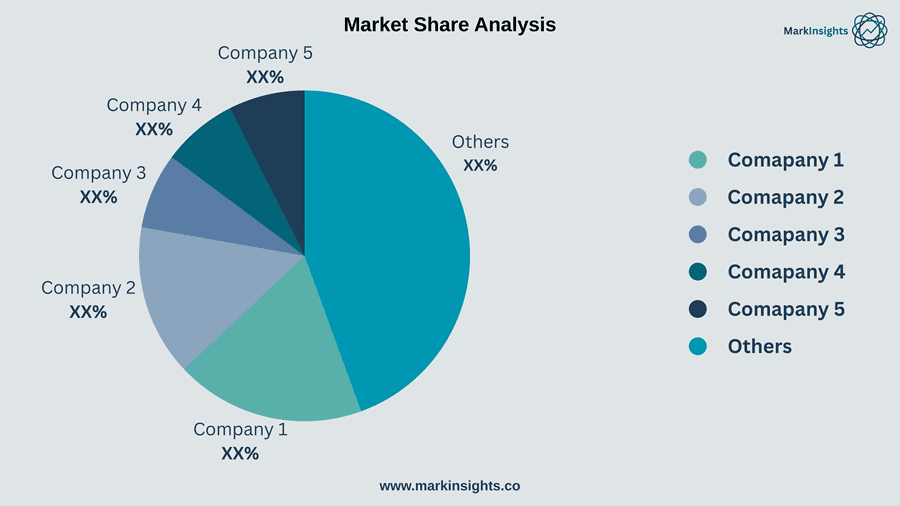
The top five vendors together account for an estimated 45-55% of global 3D Printed Satellites revenue in the structural and propulsion component segment, with the remainder distributed across specialized RF component suppliers, regional printing service bureaus, and academic fabrication partners across North America, Europe, and Asia Pacific. Concentration is highest in the metal structural and propulsion printing segment where Relativity Space, Redwire Space, Airbus Defence and Space, and 3D Systems collectively dominate, while the market is most fragmented in the polymer CubeSat component segment served by smaller regional and academic fabrication providers.
3D Printed Satellites Market Competitive Landscape:
The 3D Printed Satellites competitive landscape is led by Relativity Space, Redwire Space, Airbus Defence and Space, 3D Systems, and Rocket Lab, with significant presence from EOS, Stratasys, Sciaky, Ursa Major Technologies, Optisys, Made In Space, Firefly Aerospace, Lockheed Martin, Northrop Grumman, and Thales Alenia Space. The Redwire Space acquisition of Qinetiq Space in June 2024, the Airbus Defence and Space metal printing capacity expansion in March 2025, the Relativity Space Terran R progress in September 2025, and the 3D Systems propulsion partnership in January 2025 are the principal developments shaping the competitive map.
Key Player Strategies
Leaders are prioritizing vertical integration of additive manufacturing capability into in-house satellite and launch vehicle production, strategic acquisitions to broaden geographic component supply capability, and partnership development with propulsion and RF specialists to expand qualified component portfolios. Relativity Space and Redwire Space compete on end-to-end manufacturing integration, while 3D Systems and EOS focus on equipment and materials leadership serving multiple satellite integrators. This parameter analyses the strategic posture of each leading player across manufacturing integration, geographic reach, and component portfolio breadth dimensions.
Buyer-Tier Concentration
Share concentration differs notably by customer tier across the value chain. Tier-1 government and defense buyers, including national space agencies and defense procurement organizations, concentrate purchasing with Airbus Defence and Space, Lockheed Martin, and Northrop Grumman because only these established primes carry the qualification history and program security clearances required for sensitive satellite hardware contracts. Smaller commercial constellation operators and academic institutions, by contrast, are served through specialized printing service bureaus and component suppliers such as 3D Systems and regional fabrication partners, which blend standard catalog offerings with limited customization, diluting the top-vendor concentration figure at final component sale even though it remains high at the qualified-prime program level.
Company Capability Assessment
Capability leadership is differentiated by component focus and manufacturing scale: Relativity Space leads in fully integrated metal additive manufacturing of large launch and satellite structures at its Long Beach facility; Redwire Space leads in in-space manufacturing and European component supply following its Qinetiq Space acquisition; Airbus Defence and Space leads in qualified structural bracket production for government and commercial satellite bus programs; 3D Systems leads in selective laser melting equipment and materials supply serving multiple satellite integrators; Ursa Major Technologies leads in additively manufactured propulsion component development for satellite and launch vehicle applications. This parameter assesses each leader's depth across manufacturing scale, qualification maturity, and component breadth dimensions.
Market Concentration
The top five vendors account for an estimated 45-55% of global 3D Printed Satellites revenue in the structural and propulsion component segment, reflecting moderate-to-high concentration driven by capital-intensive metal printing qualification requirements and prime contractor purchasing consolidation. This parameter measures the degree of vendor concentration relative to total addressable component revenue.
Frequently Asked Questions
How big is the 3D Printed Satellites Market and what will it be worth by 2032?
The 3D Printed Satellites Market was valued at approximately USD 2.18 billion in 2026 and is projected to reach around USD 4.85 billion by 2032, registering a CAGR of approximately 14.3%.
What is the CAGR of the 3D Printed Satellites Market from 2026 to 2032?
The 3D Printed Satellites Market is projected to register a CAGR of approximately 14.3% during the forecast period from 2026 to 2032.
What are the key drivers and restraints shaping the 3D Printed Satellites Market?
Key Drivers:
• The scale of proposed commercial satellite constellations from operators building broadband and earth observation networks is creating recurring demand for thousands of structurally similar satellite units, favoring additive manufacturing's ability to rapidly iterate designs and produce components on demand without expensive tooling changes.
• Launch cost per kilogram remains a dominant satellite design constraint, and additively manufactured lattice and topology-optimized structures from Relativity Space and Airbus Defence and Space can reduce component mass substantially relative to conventionally machined equivalents.
Key Restraints:
• Stringent flight qualification and material certification requirements for spaceflight hardware create lengthy validation timelines that slow the pace at which new additively manufactured components can be integrated into production satellite platforms, limiting near-term adoption to non-critical structural applications.
• High capital cost of industrial-grade metal powder bed fusion printing systems and specialized aerospace-grade powder feedstock restricts additive manufacturing capacity expansion to well-capitalized satellite primes and specialized manufacturers, constraining supply chain diversification.
What are the major segments and which region leads the 3D Printed Satellites Market?
Structural components (Component Type), Selective laser melting (Printing Technology), Metals (Material), CubeSats and nanosatellites (Satellite Type), Commercial operators (End User) lead their respective segments. North America leads global revenue, anchored by the United States. Asia Pacific is the fastest-growing region, led by China, India, and Japan. Full segment-level analysis, including growth drivers, restraints, and country-level detail for every region covered in this study, is provided in the corresponding chapters of the full report.
Who are the leading companies in the 3D Printed Satellites Market?
The top five players in the 3D Printed Satellites Market — Relativity Space, Redwire Space, Airbus Defence and Space, Rocket Lab, and 3D Systems — collectively hold an estimated 45-55% of global revenue. Key companies covered in this report include Relativity Space, Redwire Space, Airbus Defence and Space, Rocket Lab, 3D Systems, EOS, Stratasys, Sciaky, Ursa Major Technologies, Optisys, Made In Space, Firefly Aerospace, Lockheed Martin, Northrop Grumman, and Thales Alenia Space.
Related Reports
Global Advanced Surface Movement Guidance Control System Market — Forecast to 2032
By System Type (Surveillance Systems, Routing Systems, Guidance Systems, Control Systems), By Component (Radar Sensors, Software, Control Towers Equipment, Multilateration Systems), By Airport Category (Category A Airports, Category B Airports, Category C Airports), By Application (Commercial Airports, Military Airbases, Cargo and Freight Airports), By End User (Airport Authorities, Air Navigation Service Providers, Defense Agencies)
From $ 2,500
View Report →Global Aircraft Ground Handling System Market — Forecast to 2032
By Equipment Type (Ground Power Units, Ground Support Vehicles, Baggage and Cargo Handling Systems, De-Icing Equipment, Passenger Boarding Bridges and Stairs), By Service Type (Ramp Handling, Cargo and Baggage Handling, De-Icing Services, Passenger Handling, Aircraft Marshalling), By Application (Commercial Aviation, Military Aviation, Cargo and Freight), By Power Source (Electric, Diesel/Fuel-Powered, Hybrid), By End User (Airports, Airlines, Third-Party Ground Handling Service Providers)
From $ 2,500
View Report →Global 5G Market Aviation Market — Forecast to 2032
By Component (Hardware, Software, Services), By Connectivity Type (In-Flight Connectivity, Air-to-Ground Connectivity, Satellite-Based Connectivity), By Application (Passenger Connectivity, Aircraft Operations and Maintenance, Air Traffic Management, Cargo and Logistics Tracking), By Platform (Commercial Aviation, Military Aviation, Business and General Aviation, Unmanned Aerial Vehicles)
From $ 2,500
View Report →