
Global Powder Coating Equipment Market - Forecast to 2032
Research scope: By Component (Powder Coating Guns, Powder Coating Booths, Powder Management Centers, Curing Ovens, Control Systems, Others), By Type (Electrostatic Spray Coating Equipment, Fluidized Bed Coating Equipment, Others), By Application (Automotive, General Metal Fabrication, Appliances, Architectural, Furniture and Agriculture, Others), By Operation (Automatic, Manual, Semi-Automatic)
Domain: Semiconductor & Electronics
Report Code: MISEG 11234
Powder Coating Equipment Market Analysis and Insights:
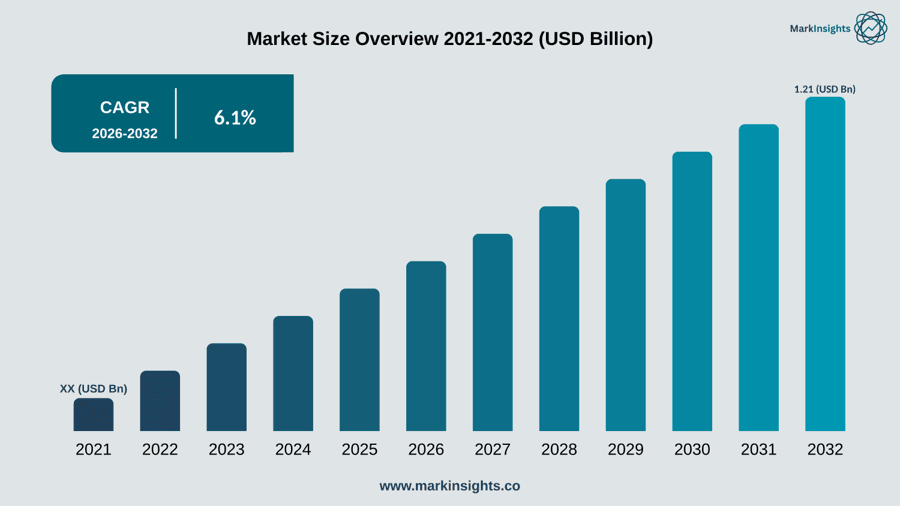
The global Powder Coating Equipment Market was valued at approximately USD 849.12 million in 2026 and is projected to reach around USD 1.21 billion by 2032, registering a CAGR of approximately 6.1% during the 2026-2032 forecast period.
Growth is anchored by the structural shift from solvent-borne liquid paints to VOC-free powder coating systems driven by tightening environmental regulation on volatile organic compound emissions in industrial finishing operations, the accelerating capital investment in automotive body-in-white and component coating lines requiring high-throughput automated powder application systems with rapid color change capability (the US Environmental Protection Agency finalized tightened National Emission Standards for Hazardous Air Pollutants for surface coating operations in May 2024 accelerating equipment upgrade cycles at automotive and general metal fabrication facilities), and the expanding adoption of powder coating in the construction and architectural segment for aluminum extrusion, window frames, and architectural facade systems where durable and weatherable finishes are specified. Tier-1 automotive OEM paint shop operators and major metal fabrication contract finishers are standardizing on Nordson, Gema, and Wagner automated powder coating platforms incorporating dense phase powder delivery and IoT-enabled process monitoring.
The competitive landscape is consolidating around integrated powder coating system providers offering automated gun, booth, powder management, oven, and control platforms. Nordson showcased the Encore HD Manual Powder Coating System and Color Max automatic spray booths at FABTECH Orlando in October 2024 targeting productivity and profit improvements at North American metal finishing operations, Gema Switzerland launched the OptiCenter All-in-One OC10 compact powder management system with OptiSpray All-in-One dense phase pump technology delivering the fastest color change in the powder coating industry at PaintExpo in April 2024, Gema also introduced the OptiGun GA04 automatic pistol series combining high transfer efficiency with precision electrostatic control in March 2024, and Wagner Group introduced the PEA-X1 and PER-X1 modular automatic powder coating gun models featuring wide accessory compatibility for high-mix manufacturing environments in April 2023. North America led 2026 revenue, while Asia Pacific is the fastest-growing region led by China, India, and Vietnam.
Market Definition
Powder Coating Equipment systems are industrial surface finishing machines and integrated production line platforms used to apply, recover, cure, and control thermosetting and thermoplastic dry polymer powder coatings onto metal, plastic, and composite substrates through electrostatic spray, fluidized bed, and corona or tribo charging application methods to produce durable, corrosion-resistant protective surface layers without volatile organic compound emissions. Core powder coating equipment categories include electrostatic spray guns delivering charged powder to grounded substrates in automatic reciprocating or manual handheld configurations, powder management centers integrating feed hoppers, dense phase or Venturi-based conveying systems, recovery cyclones, cartridge filter units, and sieving systems into a unified powder circuit, curing ovens using convection or infrared energy to fuse applied powder coatings, powder coating booths providing enclosed application environments with integrated powder recovery, and IoT-connected control systems integrating process monitoring, gun parameter management, and Industry 4.0 data acquisition. These systems are deployed across automotive OEM paint shops, metal fabrication job coating centers, appliance manufacturing lines, architectural aluminum extrusion finishing operations, and agricultural and construction equipment OEM paint facilities, enabling manufacturers to achieve zero-VOC regulatory compliance, high first-pass transfer efficiency, rapid color change capability, and consistent protective coating quality at industrial production throughput rates.
Research Methodology:
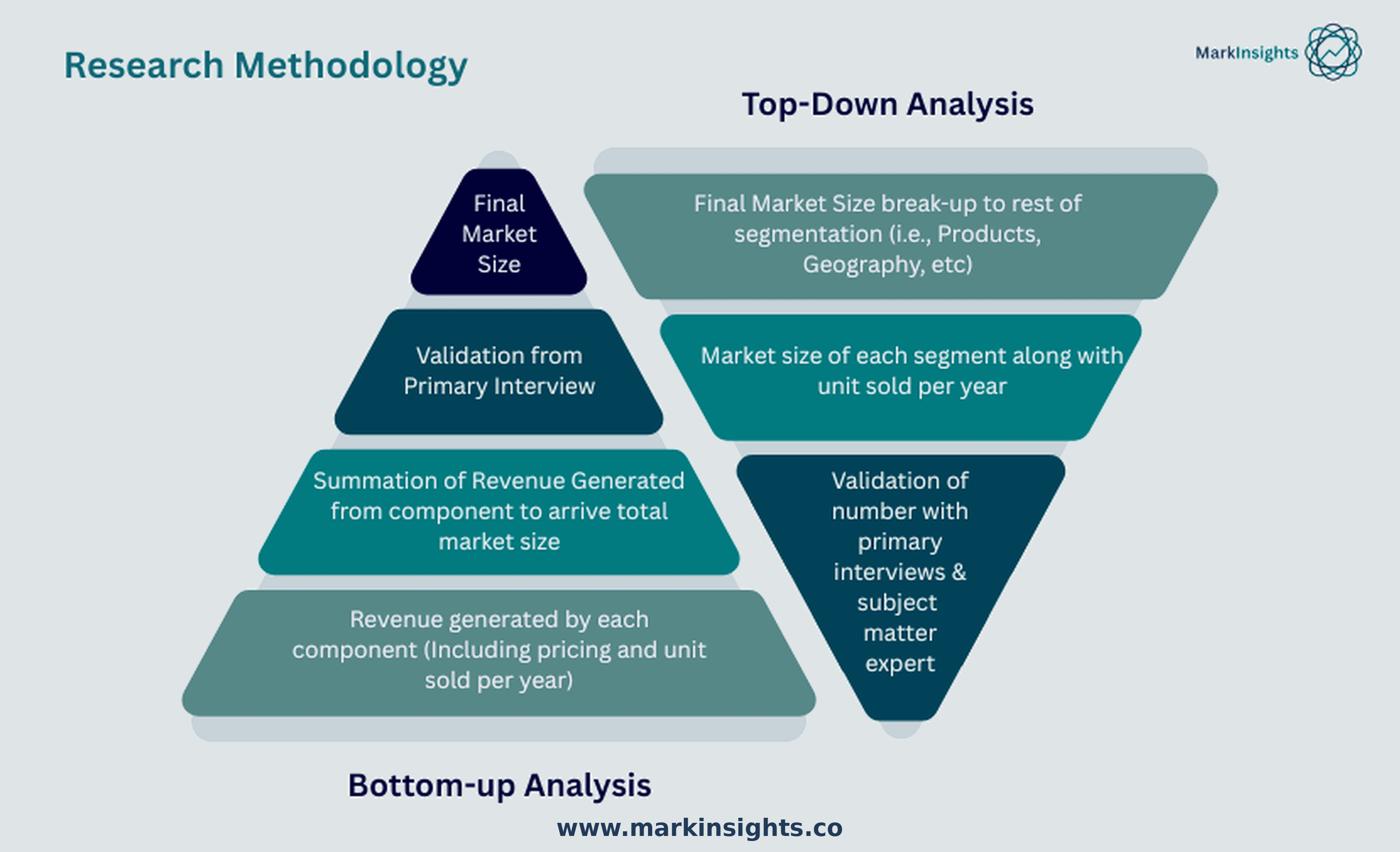
Market sizing for this Surface Radars report follows MarkInsights' standard triangulation methodology, synthesizing bottom-up estimates from radar system supplier shipment volumes, technology segment revenue disclosures, and regional capacity deployment trends with top-down validation against defense industry spending patterns, sensor modernization adoption rates, and end-user technology transition timelines across military and homeland security segments globally. Primary research incorporates 100-120 stakeholder interviews per report across CXO, VP, and Director-level respondents, including Chief Technology Officers, VPs of Engineering, Directors of Product Management, Business Development Directors, and Independent Defense Technology Analysts, with representation across North America, Europe, Asia Pacific, Latin America, and Middle East and Africa. Data last verified: July 2026. Scheduled for next refresh: Q1 2027.
Powder Coating Equipment Market Size, Scope & Segmentation:
Powder Coating Equipment Key Market Segmentation:
Insights On Key Component
The Component segment covers Powder Coating Guns (the most frequently replaced and highest unit-volume component encompassing automatic reciprocating guns including the Nordson Encore, Gema OptiGun GA04, and Wagner PEA-X1 series, and manual handheld guns for batch and touchup applications), Powder Coating Booths (enclosed application chambers with integrated recovery systems ranging from small batch booths for job shops to high-throughput cross-draft and downdraft automotive OEM booths, the largest value component by system cost), Powder Management Centers (integrated powder feed, recovery, and recirculation systems combining hoppers, dense phase or Venturi conveying pumps, cyclones, cartridge filters, and ultrasonic sieves into the Gema OptiCenter OC10 and OC11, Nordson Dense Phase systems, and Wagner powder centers), Curing Ovens (convection batch and continuous conveyor ovens providing the thermal energy to fuse and crosslink applied powder coatings to substrate surfaces), Control Systems (HMI-based process controllers, IoT-connected monitoring platforms including Nordson Wisdom and Gema MagicControl GemaConnect Dashboard, and Industry 4.0 data acquisition systems), and Others including pretreatment washers, conveyor systems, and grounding equipment.
Powder Coating Booths hold the dominant share of the Component segment, anchored by their status as the highest unit-value component in complete powder coating system installations, the requirement for booth replacement or upgrade as a primary investment trigger when manufacturers expand capacity or transition to new color ranges, and the structural demand from automotive OEM and major metal fabrication facility paint shop construction and modernization programs globally.
Insights On Key Type
The Type segment covers Electrostatic Spray Coating Equipment (the dominant type encompassing both automatic and manual corona-charging and tribo-charging gun systems that electrostatically charge powder particles for attraction to grounded substrates at first-pass transfer efficiencies above industry benchmarks, deployed at Nordson, Gema, and Wagner customer facilities across automotive, appliance, and general metal fabrication applications), Fluidized Bed Coating Equipment (powder application by immersion of preheated substrate into a fluidized powder tank for thick, uniform coating of complex geometries including pipe fittings, rebar, and electrical insulation components), and Others including rotary bell atomizers for water-based adaptation, electrostatic fluidized bed combinations, and UV-curable powder application systems emerging for heat-sensitive substrates.
Electrostatic Spray Coating Equipment holds the dominant share of the Type segment, anchored by its applicability across the widest range of substrate geometries, part sizes, and coating thicknesses, the availability of fully automated reciprocating and robotic variants for high-throughput production lines, and the established global service and consumable supply chain for electrostatic guns from Nordson, Gema, and Wagner serving thousands of installed base customers across all major industrial geographies.
Insights On Key Application
The Application segment covers Automotive (the largest-value application encompassing OEM body-in-white primers and topcoats, wheel, brake caliper, and underbody component coating at major automotive assembly plants requiring high-throughput automated powder application with fast color change for multi-model production lines), General Metal Fabrication (job coating service centers, structural steel fabricators, and contract finishers applying powder coatings to diverse metal parts across multiple end-use categories), Appliances (domestic white goods including refrigerators, washing machines, and ovens, and commercial kitchen equipment where corrosion resistance and consistent decorative finish are required at high production volumes), Architectural (aluminum extrusions, window frames, curtain wall panels, and architectural facade cladding systems requiring AAMA 2604 and Qualicoat-certified durable polyester and PVDF powder coating systems at dedicated architectural coating facilities), Furniture and Agriculture (metal office furniture, outdoor furniture, lawn and garden equipment, and agricultural machinery using powder coatings for corrosion protection and aesthetic finish), and Others including bicycles, sports equipment, medical devices, and electronics housings.
Automotive holds the dominant share of the Application segment, anchored by the highest capital investment per installation in OEM paint shop body-in-white and component coating lines, the structural demand for equipment upgrades as automotive OEMs modernize aging paint shops for EV platform production and multi-model flexibility, and the stringent performance, consistency, and traceability requirements that favor purpose-engineered automated powder coating systems from Nordson, Gema, and Wagner over general-purpose alternatives.
Insights On Key Operation
The Operation segment covers Automatic (the dominant operation mode encompassing reciprocating gun systems, robotic applicators, and fully programmed conveyor-based continuous production lines with integrated powder management, recovery, and control systems for high-volume automotive, appliance, and architectural coating operations), Manual (handheld gun systems for small-batch job shops, touchup operations, specialty finishing of complex geometries, and low-volume production runs where capital-efficient batch processing outperforms automated continuous lines), and Semi-Automatic (hybrid configurations combining manual gun operation with automated conveyor transport and centralized powder management for mid-volume fabricators transitioning from fully manual to automated production).
Automatic operation holds the dominant share of the Operation segment, anchored by the structural demand from automotive OEM and major appliance manufacturers for high-throughput continuous powder coating lines, the transfer efficiency and coating consistency advantages of reciprocating automatic gun systems relative to manual application, and the total cost of ownership economics that favor automated systems at production volumes above threshold batch sizes that are standard across tier-1 contract finishers and OEM paint shops.
Insights on Regional Analysis
Global coverage spans North America, Asia Pacific, Europe, South America, and Middle East and Africa, with North America and Asia Pacific receiving primary analytical depth in this report. North America holds the dominant regional share, anchored by the United States, Canada, and Mexico where the market is shaped by the US Environmental Protection Agency (EPA) National Emission Standards for Hazardous Air Pollutants (NESHAP) for surface coating operations accelerating conversion from solvent-borne to powder coating systems, the US Resource Conservation and Recovery Act (RCRA) governing industrial waste from liquid paint finishing operations motivating powder conversion, and the substantial automotive OEM and tier-1 supplier manufacturing base across Michigan, Ohio, Tennessee, Kentucky, and northern Mexico requiring continuous equipment investment. Nordson in Amherst Ohio, Carlisle Fluid Technologies in Charlotte North Carolina, and regional Wagner Group sales and service operations anchor equipment supply and technical service across North American finishing facilities.
Asia Pacific is the fastest-growing region driven by China's rapidly expanding automotive production capacity and general metal fabrication sector requiring modern powder coating equipment to meet environmental emission standards under the Ministry of Ecology and Environment Air Pollution Prevention and Control Action Plan, India's manufacturing sector growth under the Production Linked Incentive schemes expanding appliance and automotive component production requiring powder coating line investment, and the Vietnam, Thailand, and Indonesia electronics and metal furniture manufacturing base scaling up to serve export markets. The region operates under China's GB 16297 Air Pollutants Emission Standard and related VOC emission standards motivating liquid-to-powder conversion at industrial coating facilities, India's Bureau of Indian Standards (BIS) environmental compliance framework, and ISO 8130 powder coating equipment test standards. Gema Switzerland's China operations, Wagner Group Asia Pacific, and local Chinese equipment manufacturers including Hangzhou Colour Powder Coating Equipment serve regional demand.
Powder Coating Equipment Market Company Profiles:
The competitive set spans integrated coating system leaders with global OEM paint shop relationships, specialized powder application equipment manufacturers with deep electrostatics expertise, diversified industrial finishing technology companies with powder coating product lines, and regional Asian equipment producers. Integrated global coating system leaders (Nordson, Gema Switzerland, Wagner Group) dominate the automatic gun, booth, powder management, and integrated system market through global sales, application engineering, and service networks. Specialty fluid technology and coating equipment companies (Carlisle Fluid Technologies under ITW, Graco, SAMES Kremlin) supply powder coating guns and related fluid handling equipment as part of broader finishing technology portfolios. Regional manufacturers (Hangzhou Colour Powder Coating Equipment, Asahi Sunac) compete on cost and regional proximity for commodity equipment applications in Asia Pacific.
The 15 anchor companies profiled in this report are Nordson, Gema Switzerland, Wagner Group, Carlisle Fluid Technologies, Graco, SAMES Kremlin, Anest Iwata, Asahi Sunac, Hangzhou Colour Powder Coating Equipment, Electron, Col-Met Spray Booths, Reliant Finishing Systems, Mitsuba Systems, HangOn, and KCI Powder Coating Equipment. Nordson anchors North American leadership through the Encore manual powder gun series including the Encore HD and Encore XT, Color Max automatic spray booths, HDLV dense phase powder delivery systems, and the Wisdom IIoT smart connected platform. Gema Switzerland leads in European automatic gun and powder management center markets through the OptiGun GA04, OptiCenter OC10 and OC11 with OptiSpray All-in-One dense phase pump, MagicCompact EquiFlow BA04 booths, and GemaConnect Dashboard. Wagner Group supplies automatic powder guns including the PEA-X1 and PER-X1 modular series and IoT-connected powder coating monitoring platforms for European and Asian markets. Carlisle Fluid Technologies under ITW supplies electrostatic spray guns and powder systems for automotive and general industry customers. Other companies in the profiled set anchor regional and emerging product positioning.
Powder Coating Equipment Market Latest Trends and Innovation:
• In October 2024, Nordson showcased the Encore HD Manual Powder Coating System alongside Color Max and automatic spray booths at FABTECH Orlando, targeting productivity and profit improvements for North American metal finishing operations and demonstrating next-generation HDLV dense phase powder delivery and Wisdom IIoT platform connectivity to job shop and contract finishing customers.
• In April 2024, Gema Switzerland launched the OptiCenter All-in-One OC10 compact powder management system at PaintExpo, introducing the first integrated OptiSpray All-in-One dense phase pump combining electrostatics and powder delivery in one device for the fastest color changes, highest application efficiency, and significantly reduced cabinet footprint in automated powder coating lines.
• In March 2024, Gema Switzerland introduced the OptiGun GA04 automatic pistol series featuring improved powder output response, enhanced electrostatic performance, and modular design compatibility with existing OptiCenter and MagicControl system installations, enabling customers to upgrade automatic gun capability without full system replacement.
• In April 2023, Wagner Group introduced the PEA-X1 and PER-X1 modular automatic powder coating gun models featuring wide accessory compatibility and flexible configuration options for high-mix manufacturing environments, allowing finishing line operators to adapt gun configurations to changing production requirements without purchasing separate gun platforms.
Powder Coating Equipment Market Significant Growth Factors:
The global Powder Coating Equipment Market is expanding on the back of three reinforcing drivers. First, tightening VOC emission regulations from the US EPA NESHAP surface coating standards, the EU Industrial Emissions Directive, and China's Air Pollution Action Plan are structurally converting liquid paint lines to powder coating systems at industrial finishing facilities, driving equipment procurement at Nordson, Gema, and Wagner customer accounts globally where regulatory compliance timelines create non-discretionary capital investment triggers. Second, the modernization of automotive OEM and tier-1 supplier paint shops for electric vehicle platform production is creating equipment investment cycles requiring high-throughput automated powder lines with rapid color change and IoT-connected process control at major assembly plants across North America, Europe, and Asia Pacific. Third, the construction and architectural sector demand for Qualicoat and AAMA-certified durable powder coating finishes on aluminum extrusions and facade systems is expanding the addressable market for dedicated architectural powder coating line installations at specialist contract coaters.
Powder Coating Equipment Market Drivers:
Demand is driven by VOC regulatory compliance investment, automotive EV platform paint shop modernization, architectural construction activity, and appliance manufacturing growth. EPA NESHAP and equivalent regional VOC emission standards are creating non-discretionary conversion investments from solvent-borne liquid finishes to zero-VOC powder coating at industrial coating facilities, directly expanding Nordson, Gema, and Wagner equipment procurement budgets. Automotive OEM investment in EV platform paint shops is generating equipment upgrade cycles where higher multi-model production flexibility, faster color change, and Industry 4.0 process data integration are specified by tier-1 OEM paint engineering teams, favoring dense phase powder delivery and IIoT platform providers. The global construction recovery and architectural facade market is expanding the installed base of architectural powder coating operations requiring Qualicoat-certified polyester and PVDF powder coating equipment at dedicated contract finishers and in-house OEM operations. Appliance manufacturing expansion in Asia Pacific driven by rising consumer goods demand is creating new powder coating line installations at white goods facilities across China, India, Vietnam, and Indonesia.
Powder Coating Equipment Market Restraining Factors:
Several factors temper growth across the powder coating equipment value chain. High capital cost of complete automated powder coating line installations including booth, powder management center, conveyor, oven, and control systems creates extended capital approval cycles and limits adoption at smaller job shops and contract finishers where payback periods on automation investment are difficult to justify at current throughput volumes. Color change time and cleaning procedures for high-mix low-volume operations, despite advances in dense phase technology by Gema OptiCenter and Nordson HDLV systems, remain more complex and time-consuming than liquid paint equipment cleaning, constraining adoption in highly color-diverse short-run finishing environments. Substrate temperature limitations of standard thermosetting powder systems restrict adoption on heat-sensitive materials including many plastics, wood substrates, and assembled electronics components, limiting the addressable market relative to UV-curable liquid coating systems in these categories. Capital cycle sensitivity means powder coating equipment investment follows industrial production investment cycles closely, creating demand volatility that complicates revenue planning for equipment vendors during economic downturns when capital budgets are deferred.
Powder Coating Equipment Market Opportunities:
Opportunities cluster in four pockets across the powder coating equipment landscape. First, EV automotive paint shop modernization represents the highest-value near-term opportunity as automotive OEMs invest in new and upgraded paint facilities to support electric vehicle model rollouts requiring flexible automated powder systems from Nordson, Gema, and Wagner with IoT data integration for production traceability. Second, digital and connected powder coating platform adoption represents a software and services revenue opportunity layered on hardware sales, with Nordson Wisdom, Gema GemaConnect Dashboard, and Wagner IoT monitoring platforms creating recurring subscription and support revenue streams from existing installed equipment bases. Third, Asia Pacific equipment market expansion in India, Vietnam, and Indonesia represents a high-growth geographic opportunity as manufacturing reshoring and domestic demand growth create new powder coating line installations requiring both global brand equipment and locally competitive regional suppliers. Fourth, UV-curable powder coating systems for heat-sensitive substrates represent an emerging technology opportunity opening automotive plastics, wood furniture, and MDF applications to powder coating that current thermosetting systems cannot address, with Nordson and specialty UV oven suppliers developing integrated UV powder coating platforms.
Powder Coating Equipment Market Technology Trends:
Technology direction is set by three converging shifts in powder coating equipment. Dense phase powder delivery technology using high-density low-velocity powder conveying principles, as deployed in Gema OptiSpray All-in-One and Nordson HDLV dense phase systems, is supplanting traditional Venturi injector conveying in high-throughput automatic coating lines by delivering faster color changes, more consistent powder cloud control, and lower compressed air consumption than Venturi-based powder delivery at Miele, Frost-trol, and other high-production coating customers. IIoT and Industry 4.0 integration is advancing from standalone controller capability to cloud-connected powder coating line monitoring through Nordson Wisdom integrated with Microsoft Azure, Gema GemaConnect Dashboard, and Wagner IoT coating management platforms, enabling remote diagnostics, predictive maintenance, production data analytics, and OEE optimization at multi-line industrial finishing facilities. Robotic and AI-integrated automatic powder application is advancing beyond fixed reciprocator patterns into vision-guided path planning and real-time coating weight control, with collaborative robots and AI vision systems enabling adaptive coating of variable geometry parts in small-batch and job shop environments that previously required manual gun operation.
Powder Coating Equipment Market Future Trends:
By 2032, the market will be reshaped by IIoT-connected powder coating platforms becoming standard at automotive and major OEM facilities, dense phase technology displacing Venturi delivery as the new installed base default across high-throughput automatic applications, and UV-curable powder coating establishing commercial viability for heat-sensitive substrate categories. Connected powder coating platforms from Nordson, Gema, and Wagner integrating cloud-based production monitoring, predictive maintenance, and remote service capabilities will become a standard specification requirement at automotive OEM paint shops and tier-1 supplier coating facilities, creating recurring software and service revenue streams alongside hardware sales. Dense phase powder conveying systems will progressively displace Venturi injector technology across new automatic coating line installations as color change speed, coating consistency, and operating cost advantages become the decisive specification criteria in automotive, architectural, and appliance equipment procurement. UV-curable powder coating systems will achieve commercial deployment across automotive plastic bumper and trim component coating, MDF furniture, and assembled electronics applications, opening these categories to powder coating technology and expanding the addressable market beyond its current metal substrate base.
Powder Coating Equipment Market Supply Chain Analysis:
The Powder Coating Equipment supply chain runs from electrostatic component manufacturing through gun assembly and system integration, booth and oven fabrication, software and controls development, and installation and commissioning at industrial finishing facilities. Electrostatic gun components including high-voltage cascade assemblies, powder feed tubes, and electrode systems are sourced from specialty electrical component suppliers and assembled at Nordson in Amherst Ohio, Gema Switzerland in St Gallen, and Wagner Group in Markdorf Germany. Booth and oven fabrication is distributed across regional sheet metal fabricators and specialist finishing equipment manufacturers, with Nordson, Gema, and Wagner integrating proprietary gun, powder management, and control systems into locally fabricated structural enclosures at customer installation sites.
Distribution routes through three primary channels: direct OEM sales and application engineering from Nordson, Gema, and Wagner to automotive OEMs and major finishers for complete integrated line installations; authorized distributor networks supplying guns, spare parts, and smaller booth systems to job shops and mid-tier fabricators; and direct parts distribution for replacement gun components and wear parts at the global installed base. Bottlenecks concentrate at high-voltage cascade assembly supply for electrostatic guns, at industrial oven heat exchanger lead times during capital investment peaks, and at skilled application engineering and commissioning workforce availability for complex integrated system projects.
Powder Coating Equipment Market Regulatory Analysis:
The Powder Coating Equipment market operates within a multi-jurisdictional regulatory framework governing volatile organic compound emissions, electrical safety, workplace health, and product quality standards for coated surfaces. The principal regulatory anchors are the US Environmental Protection Agency (EPA) National Emission Standards for Hazardous Air Pollutants (NESHAP) for surface coating operations driving liquid-to-powder conversion investments, the European Union Industrial Emissions Directive (IED 2010/75/EU) governing VOC emissions from surface treatment operations, China's GB 16297 Integrated Emission Standard of Air Pollutants establishing VOC limits for surface coating facilities, and OSHA 29 CFR 1910.94 ventilation requirements for spray finishing operations including powder coating booths. Quality standards are anchored by Qualicoat certification for architectural aluminum powder coating systems, AAMA 2604 specification for organic coatings on architectural aluminum, and ISO 8130 powder coating equipment test methods. Conformity assessment routes include CE marking under the EU Machinery Directive, UL certification for electrical safety in North America, and ATEX compliance for equipment used in potentially explosive powder booth environments.
Powder Coating Equipment Market Share Analysis:
The top five vendors together account for an estimated 55-65% of global Powder Coating Equipment revenue, with the remainder dispersed across regional equipment manufacturers, specialist booth and oven fabricators, and distributor-branded product lines serving local industrial finishing markets. Concentration is highest in automatic gun and integrated powder management center categories where Nordson, Gema, and Wagner hold durable technology and service incumbency at automotive OEM and major appliance manufacturer accounts globally, and most fragmented in manual gun and small batch booth categories where regional distributors and lower-cost Asian equipment producers compete on price.
Powder Coating Equipment Market Competitive Landscape:
The Powder Coating Equipment competitive landscape is led by Nordson, Gema Switzerland, Wagner Group, Carlisle Fluid Technologies, and Graco, with significant presence from SAMES Kremlin, Anest Iwata, Asahi Sunac, Hangzhou Colour Powder Coating Equipment, Electron, Col-Met Spray Booths, Reliant Finishing Systems, Mitsuba Systems, HangOn, and KCI Powder Coating Equipment. The October 2024 Nordson Encore HD launch at FABTECH Orlando, the April 2024 Gema OptiCenter OC10 launch at PaintExpo, the March 2024 Gema OptiGun GA04 introduction, and the April 2023 Wagner PEA-X1 and PER-X1 modular gun launch are the principal developments shaping the competitive map.
Key Player Strategies
Leaders are prioritizing dense phase powder delivery technology advancement to reduce color change time and powder consumption at automotive and high-throughput customers, IIoT and cloud-connected powder coating platform development to create software and service revenue alongside hardware, robotic and AI integration of automatic gun systems for high-mix flexible manufacturing adoption, and geographic expansion in Asia Pacific to capture equipment demand from growing automotive and appliance manufacturing investment in China, India, and Vietnam. This parameter analyses the strategic posture of each leading player across technology, connectivity, and geographic dimensions.
Revenue Share Analysis
This parameter measures the relative revenue contribution of leading players across component categories.
Market Share Analysis
This parameter evaluates the market share distribution across product categories and customer tiers.
Company Capability Assessment
Capability leadership varies by component and technology: Nordson leads in North American automatic gun market share through Encore series incumbency, HDLV dense phase delivery, and Wisdom IIoT platform at automotive and general metal OEM accounts; Gema Switzerland leads in European automatic gun and integrated powder management center technology through OptiGun GA04, OptiCenter OC10 and OC11 with OptiSpray All-in-One, and MagicControl connectivity; Wagner Group leads in modular automatic gun platform breadth through PEA-X1 and PER-X1 series for high-mix manufacturing; Carlisle Fluid Technologies leads in multi-technology finishing systems serving automotive liquid and powder hybrid lines; Graco leads in powder transfer pump and conveying components. This parameter assesses each leader's depth across gun technology, powder management, and connectivity dimensions.
Market Concentration
The top five vendors account for an estimated 55-65% of global revenue, reflecting meaningful consolidation anchored by technology incumbency at automotive OEM accounts and established distributor networks across North America and Europe. This parameter measures the degree of vendor concentration relative to total market revenue.
Related Reports
Global Fiber Optics Collimating Lens Market- Forecast to 2032
By Type (Fixed, Adjustable), By Mode (Single Mode, Multimode), By Application (Communication, Medical and Diagnostics, Metrology, Industrial Automation, Others)
From $ 2,500
View Report →Global SiC On Insulator (SiCOI) Film Market - Forecast to 2032
By Substrate Material (Silicon Substrate, Silicon Carbide Substrate, Sapphire Substrate, Others), By Wafer Size (100 mm, 150 mm, 200 mm and Above), By Technology Route (Smart Cut Technology, Grinding Polishing and Bonding Technology, Others), By Application (Power Electronics, RF and Telecommunications, Automotive, Aerospace and Defense, Industrial, Others)
From $ 2,500
View Report →