
Global Potato Processing Market — Forecast to 2032
Research scope: By Product Type (Frozen Potatoes, Potato Chips and Snacks, Dehydrated Potatoes, Potato Starch, Others), By Application (Snacks Industry, Food Service, Ready-to-Cook and Prepared Meals, Bakery and Dough, Industrial), By Distribution Channel (Food Service, Retail, Industrial), By End User (Retail and Household, Food Service Sector, Food Processing Industry)
Domain: Food & Beverages
Report Code: MIFBG 11830
Potato Processing Market Analysis and Insights:
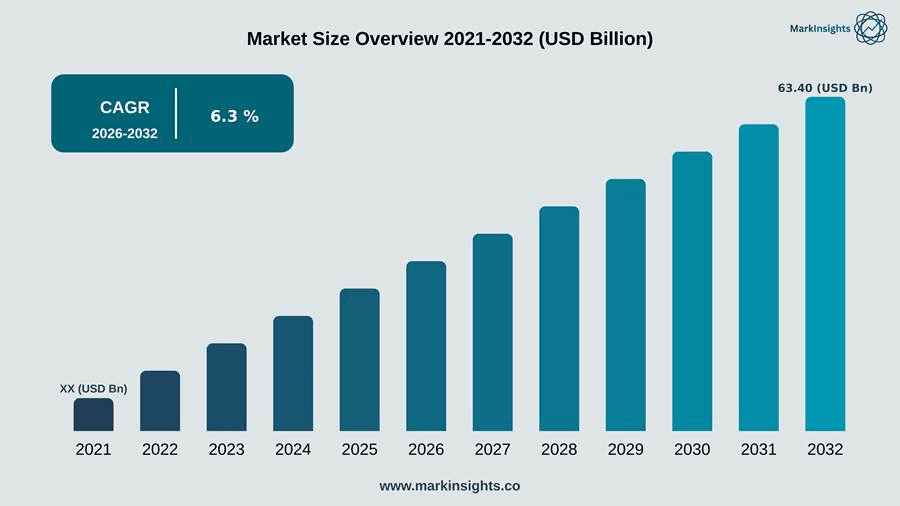
The global Potato Processing Market was valued at approximately USD 44.10 billion in 2026 and is projected to reach around USD 63.40 billion by 2032, registering a CAGR of approximately 6.3% during the 2026-2032 forecast period.
Growth is anchored by sustained quick service restaurant network expansion across Asia Pacific and the Middle East that is lifting frozen French fry offtake, reinforced by long-term supply frameworks between Lamb Weston and major QSR operators renewed through early 2024, alongside rising retail demand for convenient frozen and dehydrated potato formats and continuous investment in automated high-throughput processing lines that lower unit production cost. Tier-1 QSR chains including McDonald's maintain long-term frozen potato supply agreements with J.R. Simplot and Lamb Weston, anchoring a stable industrial demand floor that underwrites processor capital investment planning.
The competitive landscape is consolidating around a handful of frozen potato majors that collectively dominate the industrial supply segment. Post Holdings agreed to acquire Potato Products of Idaho in December 2024 to expand its refrigerated and frozen potato processing footprint, McCain Foods acquired Penobscot McCrum, a frozen potato specialty supplier, in November 2025, Lamb Weston expanded its North American processing capacity beginning in early 2024 to meet rising demand, and Aviko launched an air-fryer-optimized frozen potato range across European retail in September 2024. Europe led 2026 revenue while Asia Pacific is the fastest-growing region led by China, India, and Japan.
Potato Processing Market Definition
Potato processing encompasses the industrial and semi-industrial operations that convert raw potato tubers into value-added consumer and industrial food products through mechanical, thermal, and biochemical treatment applied at commercial scale. Core categories include frozen potato formats such as French fries, wedges, hash browns, and formed shapes that undergo blanching, par-frying, and cryogenic or individually quick frozen processing; dehydrated potato products including flakes, granules, and powder produced via drum drying or spray drying for reconstitution in food service and industrial applications; potato chips and snack pellets manufactured through slicing, frying or baking, and seasoning for retail snack channels; and potato starch and modified starch extracted through wet milling and separation for use in food formulation, pharmaceutical, textile, and biofuel applications. These products move through quick service restaurant supply chains, retail grocery formats, institutional food service, and industrial ingredient supply systems, enabling processors to deliver consistent quality, extended shelf life, and cost-efficient nutrition across both developed and emerging market geographies. Processing investment decisions are shaped by raw material availability, cold-chain infrastructure, and evolving consumer preference for convenience formats.
Potato Processing Market Research Methodology:
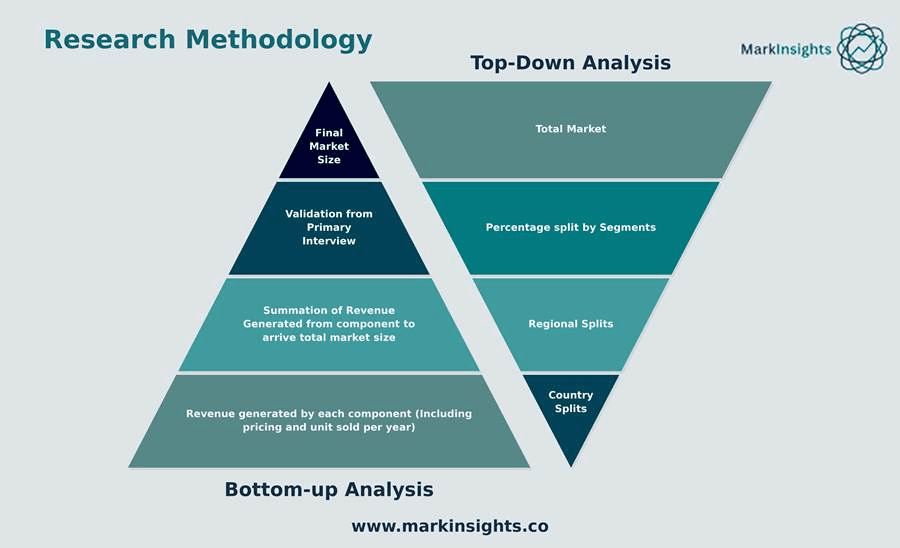
The demand-side assessment was built bottom-up from primary interviews with business buyers active in the potato processing market market, including food-service and manufacturer procurement buyers, distributors, and institutional or industrial purchasers, etc., and cross-referenced against demand-side secondary sources such as public production and consumption data, industry and trade-association surveys, etc. On the supply side, estimates were developed top-down from primary interviews with raw-material and component suppliers and with commercial leadership at manufacturers, etc., supported by secondary sources including publicly disclosed revenue and volume commentary from companies such as McCain Foods, Lamb Weston, and J.R. Simplot (10-K filings, investor presentations, and primary research transcripts), the regulatory frameworks of EU Regulation, and FSSAI, and relevant import-export trade records, etc. Core research typically incorporates 100-130 structured B2B interviews per report, split across food-service and manufacturer procurement buyers, ingredient and processing-equipment suppliers, and tier-1 processing manufacturers, weighted toward the report's central growth regions. For this report, leading inputs were cross-referenced against FSSAI filings and publicly disclosed manufacturer segment data relevant to the Potato Processing Market category.
Potato Processing Market Size, Scope & Segmentation:
| Report Attribute | Details |
| Market size in 2026 | USD 44.10 billion |
| Market Size by 2032 | USD 63.40 billion |
| Global CAGR (2026-2032) | 6.3% |
| Historical Data | 2021-2024 |
| Forecast Period | 2026-2032 |
| Segments Covered | By Product Type • Frozen Potatoes • Potato Chips and Snacks • Dehydrated Potatoes • Potato Starch • Others By Application • Snacks Industry • Food Service • Ready-to-Cook and Prepared Meals • Bakery and Dough • Industrial By Distribution Channel • Food Service • Retail • Industrial By End User • Retail and Household • Food Service Sector • Food Processing Industry |
| Regions and Countries Covered | North America • US • Canada • Mexico Europe • Germany • UK • France • Italy • Spain • Rest of Europe Asia Pacific • China • India • Japan • South Korea • Australia • Rest of Asia Pacific Middle East and Africa • Saudi Arabia • UAE • South Africa • Rest of Middle East and Africa South America • Brazil • Argentina • Rest of South America |
| Market leaders and key company profiles | McCain Foods Lamb Weston J.R. Simplot Cavendish Farms Aviko Farm Frites Agristo HyFun Foods PepsiCo Frito-Lay Utz Brands Idahoan Foods AGRANA Intersnack Group Kettle Foods Post Holdings |
Potato Processing Market Key Market Segmentation:
Insights On Key Product Type
The product type segment encompasses frozen potatoes (the dominant sub-category, including French fries, wedges, hash browns, and formed potato specialties from McCain Foods, Lamb Weston, and J.R. Simplot that supply QSR chains, food service accounts, and retail frozen grocery through IQF processing and cold-chain logistics networks), potato chips and snacks (a large and growing sub-category including kettle chips, baked crisps, and snack pellets from PepsiCo Frito-Lay, Utz Brands, and Intersnack Group targeting retail impulse-purchase channels with continuous flavor and texture innovation), dehydrated potatoes (an emerging high-growth sub-category including flakes, granules, and powder from Idahoan Foods and AGRANA used in food service instant mash, prepared meal manufacturing, and snack pellet extrusion), and potato starch and others (including modified starch for food and industrial applications and specialty small-format value-added convenience products from Aviko and Farm Frites).
Frozen potatoes dominate the product type sub-segment because the global QSR sector's structural dependence on consistent-quality frozen French fries and specialty formats creates a captive high-volume industrial demand base, supported by cold-chain infrastructure investment by McCain Foods and Lamb Weston that enables year-round supply to foodservice accounts globally.
Insights On Key Application
The application segment covers snacks industry (the largest sub-category, encompassing potato chip, crisp, and snack pellet production lines served by PepsiCo Frito-Lay, Utz Brands, and Kettle Foods, driven by strong retail impulse-purchase demand and continuous limited-edition flavoring innovation cycles), food service (the second major sub-category where QSR chains and institutional catering operators procure frozen fries, wedges, and formed potato products from Lamb Weston and J.R. Simplot under long-term supply agreements with traceability and food safety specifications), ready-to-cook and prepared meals (a growing sub-category where dehydrated flakes, frozen diced potatoes, and par-cooked potato formats are incorporated into meal kit, ready-meal, and convenience food manufacturing), bakery and dough (where potato flakes and starch from Idahoan Foods and Aviko serve as functional texture and moisture retention ingredients), and industrial (including starch for pharmaceutical excipient, textile, and biofuel manufacturing applications).
The snacks industry leads the application sub-segment because potato chips and crisps represent the highest-volume impulse snack category globally, sustaining continuous retail shelf space investment by PepsiCo Frito-Lay and Utz Brands and enabling premium pricing through flavor and format differentiation that drives superior revenue per kilogram relative to commodity frozen formats.
Insights On Key Distribution Channel
The distribution channel segment includes food service (the dominant channel, encompassing direct supply relationships between major processors including McCain Foods, Lamb Weston, and J.R. Simplot and QSR chains, casual dining restaurants, and institutional caterers under long-term volume and quality framework agreements), retail (a large and growing channel encompassing supermarket frozen food aisles, specialty grocery, and e-commerce grocery platforms serving household and small-scale food service consumers with both branded and private-label frozen, chilled, and snack potato formats), and industrial (a steady-volume channel serving food manufacturers, starch processors, and non-food industrial users through bulk commodity potato ingredient and starch supply contracts).
Food service leads the distribution channel sub-segment because global QSR chain growth across Asia Pacific and the Middle East is creating sustained incremental demand for frozen potato formats from Lamb Weston and McCain Foods, with multi-year exclusive or preferred-supplier frameworks that provide processors revenue visibility for capacity investment decisions.
Insights On Key End User
The end user segment covers retail and household (encompassing individual consumers purchasing branded frozen potato products, potato chips, and dehydrated potato formats through supermarkets, hypermarkets, and online grocery channels, with Lamb Weston's retail range, McCain's retail line, and PepsiCo Frito-Lay serving this channel), food service sector (including QSR chains, casual dining, hotel and institutional catering operations that represent the single largest volume end-use segment for frozen French fries, formed potato products, and dehydrated mash formats), and food processing industry (encompassing food manufacturers that incorporate potato starch, flakes, and granules from Idahoan Foods and AGRANA as functional ingredients in snacks, ready meals, bakery, and non-food industrial formulations).
The food service sector leads the end user sub-segment because commercial foodservice operators represent the primary volume outlet for high-throughput frozen potato processing output, with QSR chain expansion globally providing the most predictable and contractually committed demand stream for processor production planning and capital allocation.
Insights on Regional Analysis
The global Potato Processing Market spans North America, Europe, Asia Pacific, Middle East and Africa, and South America. Europe leads global Potato Processing revenue, anchored by the Netherlands, Belgium, Germany, and the United Kingdom, where a highly developed potato processing base is supported by established farm-to-factory supply chains, EU Common Agricultural Policy support frameworks, and EU Regulation (EC) No 852/2004 on the hygiene of foodstuffs, which governs food safety and processing hygiene standards across large-scale commercial processing operations. McCain Foods, Aviko, Farm Frites, and Agristo operate major processing facilities across Belgium, the Netherlands, and the United Kingdom, supplying European retail, food service, and export markets. The EU Farm to Fork Strategy's food waste reduction and sustainable packaging provisions are driving processor investment in energy-efficient processing lines and reduced-additive product formulations across the region, reinforcing Europe's position as the largest revenue base for both frozen and dehydrated potato categories.
Asia Pacific is the fastest-growing region for Potato Processing, led by China, India, and Japan. China's rapidly expanding QSR sector, ongoing urbanization, and rising middle-class disposable income are driving substantial volume growth in frozen fry imports and domestic processing capacity investment, with the Ministry of Agriculture and Rural Affairs supporting agricultural modernization including potato value-added processing. India's Ministry of Food Processing Industries, through its food processing infrastructure schemes, supports cold chain and processing investment that is enabling domestic processor capacity expansion for chips, flakes, and frozen potato products. Japan remains one of the region's largest frozen potato importers, with McCain Foods and J.R. Simplot maintaining major distribution relationships across Japanese QSR chain operations serving national and regional restaurant networks, sustaining Asia Pacific's growth trajectory across the forecast period.
Potato Processing Market Company Profiles:
The Potato Processing competitive landscape encompasses three primary archetypes: global frozen potato majors (McCain Foods, Lamb Weston, J.R. Simplot, Cavendish Farms) that operate integrated farm-to-processor supply chains spanning North America, Europe, and export markets and supply QSR and food service majors under long-term framework agreements; European specialist processors and co-operatives (Aviko, Farm Frites, Agristo, HyFun Foods) that serve European retail, food service, and export markets from Netherlands-, Belgium-, and India-based processing facilities with broad frozen and dehydrated product ranges; and snack-focused processors and ingredient specialists (PepsiCo Frito-Lay, Utz Brands, Idahoan Foods, AGRANA, Intersnack Group) that target retail snack channels and industrial ingredient markets with branded chip, crisp, flake, and starch product portfolios.
The 15 anchor companies profiled in this report are McCain Foods, Lamb Weston, J.R. Simplot, Cavendish Farms, Aviko, Farm Frites, Agristo, HyFun Foods, PepsiCo Frito-Lay, Utz Brands, Idahoan Foods, AGRANA, Intersnack Group, Kettle Foods, and Post Holdings. McCain Foods is among the world's largest frozen potato processors, supplying French fries to QSR chains across more than one hundred countries from processing facilities on multiple continents. Lamb Weston operates large-scale frozen potato processing plants across North America and Europe, producing branded retail lines alongside industrial food service formats. J.R. Simplot serves as a long-standing frozen French fry supplier to major QSR chains and produces substantial volumes of frozen potato products annually. Aviko supplies a broad range of frozen potato specialties and dehydrated formats to European retail and food service from Netherlands-based operations. Idahoan Foods produces instant mashed potato flakes and granules for food service and retail markets from Idaho processing facilities. The remaining companies anchor regional and emerging product positioning across snacks, starch, and specialty channels.
Potato Processing Market Latest Trends and Innovation:
• In November 2025, McCain Foods acquired Penobscot McCrum, a Washburn, Maine-headquartered supplier of frozen potato specialty products, for an undisclosed amount, expanding McCain's North American specialty frozen potato capabilities and extending its reach in the northeastern United States food service supply chain.
• In December 2024, Post Holdings agreed to acquire Potato Products of Idaho, including its Rigby production facility, marking a step in expanding Post's refrigerated and frozen potato processing capabilities and establishing a meaningful presence in the western United States potato processing sector.
• In September 2024, Aviko launched a new range of air-fryer-optimized frozen potato specialty products across European retail channels, targeting health-conscious consumers seeking lower-fat preparation formats, representing a strategic response to rapid household air fryer adoption across Germany, the Netherlands, and the United Kingdom.
• In March 2024, Lamb Weston commenced its North American frozen potato processing capacity expansion, investing in automated processing line upgrades across Columbia Basin facilities to improve throughput efficiency and support growing frozen French fry supply agreements with quick service restaurant chain customers.
Potato Processing Market Significant Growth Factors:
The global Potato Processing Market is expanding on the back of four reinforcing drivers. The structural growth of quick service restaurant networks across Asia Pacific, the Middle East, and Latin America is sustaining a continuous incremental demand stream for frozen French fries and potato specialties that requires McCain Foods, Lamb Weston, and J.R. Simplot to invest in new processing capacity across both established and emerging market geographies. Rising consumer demand for convenient ready-to-cook and ready-to-eat potato formats in retail, driven by urbanization, smaller household sizes, and time-constrained lifestyles, is expanding the addressable market for frozen, chilled, and dehydrated potato products beyond traditional QSR channels into mainstream grocery retail. Continuous processing technology advancement including high-efficiency IQF freezing, pulsed electric field pre-treatment, and automated optical sorting systems is enabling Lamb Weston, Aviko, and Farm Frites to reduce energy consumption per unit processed and improve product quality consistency. Growing adoption of air fryer home appliances is stimulating retail demand for air-fryer-optimized frozen potato formats that Aviko and McCain Foods are actively developing to capture incremental household consumption growth.
Potato Processing Market Drivers:
Demand is driven by QSR sector expansion, convenience food consumption trends, urbanization in emerging markets, and retail channel development. Global QSR chain store count growth, particularly McDonald's, Burger King, and regional Asian fast food operators establishing new locations across China, India, Southeast Asia, and the Middle East, creates direct incremental demand for frozen potato formats that anchors processor capital investment decisions for Lamb Weston and J.R. Simplot. Consumer lifestyle shifts toward convenience and reduced home cooking time in both developed and emerging economies are translating growing urban household counts into expanding retail potato snack, frozen, and dehydrated potato purchasing across supermarket, hypermarket, and online grocery channels. Rapid urbanization across India, Southeast Asia, and sub-Saharan Africa is expanding the addressable consumer base for processed potato formats among populations transitioning from traditional fresh potato home preparation to packaged convenience food consumption. E-commerce grocery expansion and meal kit platform growth are enabling direct-to-household delivery of frozen and chilled potato formats by Lamb Weston's retail brands and Idahoan Foods, opening new distribution pathways that supplement traditional brick-and-mortar food retail channels.
Potato Processing Market Restraining Factors:
Several factors temper growth across the Potato Processing value chain. Raw material supply volatility driven by weather-induced potato crop shortfalls creates processing cost pressure and quality consistency challenges for Lamb Weston, McCain Foods, and Farm Frites that reduce operating margins during adverse harvest years. Rising consumer health consciousness and growing awareness of high-fat and high-sodium content in conventional processed potato products including fried chips and French fries is restraining volume growth in mature markets and compelling processors to invest in reformulation programs and alternative cooking method development. High capital intensity of greenfield potato processing plant construction, including refrigeration infrastructure, water treatment, and waste management systems, creates significant barriers to capacity expansion that limit supply response speed during demand surge periods and restrict entry by new competitors into the frozen potato segment. Energy cost inflation and water scarcity concerns in major potato production regions including the western United States, the Netherlands, and Belgium are increasing processing operating costs for Aviko, Farm Frites, and Agristo, reducing profitability in a commodity-influenced market where processor pricing power is constrained by QSR chain purchasing leverage.
Potato Processing Market Opportunities:
Opportunities cluster in four pockets across the Potato Processing landscape. Health-oriented product reformulation including baked, air-fryer-compatible, lower-sodium, and clean-label frozen potato formats represents a structural innovation opportunity for Lamb Weston and Aviko to access premium price segments and attract health-conscious retail shoppers who currently avoid conventional processed potato offerings. Rapid expansion of organized food service including QSR chains and institutional catering in South and Southeast Asia, Africa, and Latin America is creating large addressable demand pools for frozen potato supply that McCain Foods and J.R. Simplot are positioning to address through export growth and regional processing facility investment. Dehydrated potato ingredient growth for food manufacturing applications including ready meal, soup, and snack pellet sectors represents a volume-stable demand segment for Idahoan Foods and AGRANA with higher value-added margins than commodity frozen formats. Potato starch diversification into biodegradable packaging material production and biofuel feedstock applications offers processing operators access to non-food industrial demand streams that are less cyclical and less price-sensitive than food service commodity markets.
Potato Processing Market Technology Trends:
Technology direction is set by four converging shifts in Potato Processing operations and product development. High-efficiency IQF freezing technology advances, deployed by Lamb Weston and Aviko in recent processing facility investments, are enabling faster freezing cycles that better preserve potato cell structure, improve texture consistency after preparation, and reduce energy consumption per ton processed relative to conventional tunnel freezing systems. Pulsed electric field pre-treatment technology, implemented by Farm Frites and McCain Foods in pilot-scale operations, is reducing blanching energy requirements and acrylamide formation during frying by disrupting cell membranes before thermal treatment without affecting product texture or nutritional profile. Automated optical and AI-based quality sorting systems are enabling J.R. Simplot and Cavendish Farms to achieve higher-precision defect detection and grading accuracy across high-throughput processing lines, reducing product waste and improving output consistency for QSR specification compliance. Water recycling and closed-loop effluent treatment systems are being integrated into new processing facility designs by Agristo and HyFun Foods to reduce net water consumption per ton of raw potato processed, responding to regulatory and sustainability requirements in water-stressed production regions.
Potato Processing Market Future Trends:
By 2032, the market will be reshaped by three structural shifts: the commercial scaling of low-acrylamide and air-fryer-optimized frozen formats, the integration of digital supply chain traceability from farm to consumer, and the emergence of potato-derived bioplastic and packaging material manufacturing as a meaningful industrial revenue stream. Low-acrylamide frozen French fry and chip formats from Lamb Weston and McCain Foods, developed through variety selection, pre-treatment optimization, and reduced-temperature frying protocols, are expected to become standard in health-oriented retail and food service segments as regulatory attention on dietary acrylamide exposure increases. Digital traceability platforms integrating farm-level variety, growing region, and agronomic input data with processing batch records will enable J.R. Simplot, Aviko, and Farm Frites to provide consumer-facing product provenance verification, meeting premium retail and food service buyer sustainability documentation requirements. Potato starch-derived bioplastic compounds developed by AGRANA and specialty materials partners represent a growing industrial revenue diversification pathway for large-scale starch processors seeking stable non-food application markets.
Potato Processing Market Supply Chain Analysis:
The Potato Processing supply chain runs from seed potato producers and commercial growers through primary washing and grading operations to processing facilities and multi-temperature distribution networks serving food service, retail, and industrial end markets. Upstream raw material supply is anchored by contracted grower networks in the Columbia Basin and Idaho in the United States, Alberta and Prince Edward Island in Canada, the Netherlands, Belgium, and Germany in Europe, and expanding growing regions in India and China, with McCain Foods, Lamb Weston, and J.R. Simplot operating farm supply programs that specify variety, yield, and quality standards. Processing facilities operated by McCain Foods, Aviko, Farm Frites, and Agristo receive bulk raw potatoes for washing, peeling, slicing or forming, blanching, frying or dehydrating, and IQF freezing through continuous automated processing lines operating under HACCP, ISO 22000, and BRC Global Standards food safety management frameworks.
Distribution to food service accounts flows through refrigerated direct-delivery networks and regional cold-storage distribution centers, while retail distribution uses ambient and frozen category logistics through national grocery distributor networks. Key bottlenecks include weather-induced raw potato supply shortfalls during drought or disease outbreak years that reduce processing throughput, cold-chain logistics capacity constraints in emerging market distribution geographies, and grower contract pricing tension during periods of commodity inflation that compress processor margin between raw material cost and QSR supply contract pricing.
Potato Processing Market Regulatory Analysis:
The global Potato Processing Market operates within a comprehensive food safety and quality regulatory framework governing raw material standards, processing hygiene, labeling, and residue limits across major markets. Principal regulatory anchors include EU Regulation (EC) No 852/2004 on the hygiene of foodstuffs and EU Regulation (EC) No 853/2004 administered by national food safety authorities across EU member states, the US Food and Drug Administration's Food Safety Modernization Act Preventive Controls for Human Food rule governing processing facility hazard analysis requirements, Canada's Safe Food for Canadians Act administered by the Canadian Food Inspection Agency, and India's Food Safety and Standards Authority of India regulations under the Food Safety and Standards Act 2006. Applicable quality standards include the BRC Global Standard for Food Safety, the IFS Food Standard, and FSSC 22000 certification schemes widely required by major grocery retail buyers and QSR supply chain audit programs. Conformity assessment routes include third-party BRC or IFS certification body audit, Foreign Supplier Verification Program compliance documentation for US imports, and FSSAI product registration for Indian domestic market entry.
Potato Processing Market Share Analysis:
The top five vendors together account for an estimated 55-65% of global Potato Processing Market revenue in the frozen food service segment, with the remainder distributed across regional chip and snack processors, dehydrated ingredient suppliers, and domestic starch producers across Asia Pacific and Europe. Concentration is highest in the frozen French fry QSR supply segment, while the market is most fragmented in the potato chips and snack segment served by regional and private-label manufacturers.
Potato Processing Market Competitive Landscape:
The Potato Processing Market competitive landscape is led by McCain Foods, Lamb Weston, J.R. Simplot, Cavendish Farms, and Aviko, with significant presence from Farm Frites, Agristo, HyFun Foods, PepsiCo Frito-Lay, Utz Brands, Idahoan Foods, AGRANA, Intersnack Group, Kettle Foods, and Post Holdings. The McCain Foods acquisition of Penobscot McCrum in November 2025, the Post Holdings agreement to acquire Potato Products of Idaho in December 2024, the Lamb Weston North American capacity expansion beginning in early 2024, and the Aviko air-fryer potato format launch in September 2024 are the principal developments shaping the competitive map.
Key Player Strategies: Leaders are prioritizing contracted grower network expansion to secure raw material supply, processing technology investment in IQF and pulsed electric field systems, retail brand development for premium product segments, and geographic capacity expansion into Asia Pacific growth markets. McCain Foods and Lamb Weston compete on global processing scale and QSR supply chain integration, while Aviko and Farm Frites focus on European retail innovation and specialty format development. This parameter analyses the strategic posture of each leading player across supply chain integration, product innovation, and geographic expansion dimensions.
Buyer-Tier Concentration: Share concentration differs sharply by customer tier rather than by product category alone. Tier-1 QSR chains sourcing at national or continental scale overwhelmingly consolidate volume with Lamb Weston, McCain Foods, and J.R. Simplot because only these three processors carry the cold-chain and specification-compliance infrastructure to service multi-country contracts. Independent restaurants and regional grocery chains, by contrast, are serviced through wholesale distributors that blend output from tier-1 processors with regional suppliers such as Cavendish Farms and Agristo, meaningfully diluting the top-five vendor concentration figure at the point of final sale even though it holds at the processor level.
Company Capability Assessment: Capability leadership is differentiated by product segment and geography: McCain Foods leads in global frozen potato processing scale with manufacturing across multiple continents and supply to QSR chains in over one hundred countries; Lamb Weston leads in North American frozen potato innovation with advanced processing technology investment and a strong retail brand presence; J.R. Simplot leads in long-standing QSR exclusive supply relationships as a dedicated frozen French fry partner; Aviko leads in European specialty frozen potato format development and retail channel coverage; Idahoan Foods leads in dehydrated potato flake and granule production for food service and industrial ingredient markets. This parameter assesses each leader's depth across processing scale, product breadth, and supply chain integration dimensions.
Market Concentration: The top five vendors account for an estimated 55-65% of global Potato Processing Market revenue in the frozen food service segment, reflecting high market concentration driven by capital-intensive large-scale freezing operations and the purchasing power of major QSR chain customers. This parameter measures the degree of vendor concentration relative to total market revenue.
Frequently Asked Questions
How big is the Potato Processing Market and what will it be worth by 2032?
The Potato Processing Market was valued at approximately USD 44.10 billion in 2026 and is projected to reach around USD 63.40 billion by 2032, registering a CAGR of approximately 6.3%.
What is the CAGR of the Potato Processing Market from 2026 to 2032?
The Potato Processing Market is projected to register a CAGR of approximately 6.3% during the forecast period from 2026 to 2032.
What are the key drivers and restraints shaping the Potato Processing Market?
Key Drivers:
• Global QSR chain store count growth, particularly McDonald's, Burger King, and regional Asian fast food operators establishing new locations across China, India, Southeast Asia, and the Middle East, creates direct incremental demand for frozen potato formats that anchors processor capital investment decisions for Lamb Weston and J.R. Simplot.
• Consumer lifestyle shifts toward convenience and reduced home cooking time in both developed and emerging economies are translating growing urban household counts into expanding retail potato snack, frozen, and dehydrated potato purchasing across supermarket, hypermarket, and online grocery channels.
Key Restraints:
• Raw material supply volatility driven by weather-induced potato crop shortfalls creates processing cost pressure and quality consistency challenges for Lamb Weston, McCain Foods, and Farm Frites that reduce operating margins during adverse harvest years.
• Rising consumer health consciousness and growing awareness of high-fat and high-sodium content in conventional processed potato products including fried chips and French fries is restraining volume growth in mature markets and compelling processors to invest in reformulation programs and alternative cooking method development.
What are the major segments and which region leads the Potato Processing Market?
Frozen potatoes (Product Type), The snacks industry (Application), Food service (Distribution Channel), The food service sector (End User) lead their respective segments. Europe leads global revenue, anchored by the Netherlands, Belgium, Germany, and the United Kingdom,. Asia Pacific is the fastest-growing region, led by China, India, and Japan. Full segment-level analysis, including growth drivers, restraints, and country-level detail for every region covered in this study, is provided in the corresponding chapters of the full report.
Who are the leading companies in the Potato Processing Market?
The top five players in the Potato Processing Market — McCain Foods, Lamb Weston, J.R. Simplot, Cavendish Farms, and Aviko — collectively hold an estimated 55-65% of global revenue. Key companies covered in this report include McCain Foods, Lamb Weston, J.R. Simplot, Cavendish Farms, Aviko, Farm Frites, Agristo, HyFun Foods, PepsiCo Frito-Lay, Utz Brands, Idahoan Foods, AGRANA, Intersnack Group, Kettle Foods, and Post Holdings.