
Global 3D Printing Ceramic Market - Forecast to 2032
Research scope: By Formulation (Water-Based, Solvent-Based, Oil-Based), By Type (Functional, Decorative), By Form (Powder, Resin, Filament), By Technology (Digital Printing, Analog Printing), By Application (Rapid Prototyping, Tooling, Part Manufacturing), By End-Use (Healthcare, Aerospace & Defense, Automotive), By Geography (North America, Europe, Asia Pacific, and South America)
Domain: Chemicals & Materials
Report Code: MICHG 10869
3D Printing Ceramic Market Analysis and Insights:
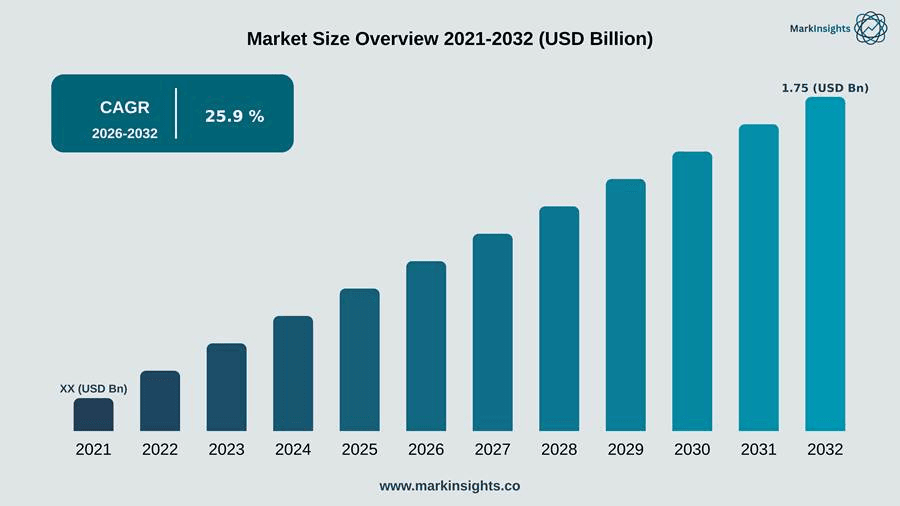
The global 3D Printing Ceramic market was valued at approximately USD 350 million in 2025 and is projected to reach around USD 1.75 billion by 2032, registering a CAGR of approximately 25.9% during the 2026-2032 forecast period.
Growth is driven by expanding adoption of ceramic additive manufacturing for complex, high-temperature-resistant components in aerospace and dental applications, and by continuous improvement in ceramic photopolymer resin and powder feedstock formulations that reduce post-processing defects and shrinkage. 3DCeram, Lithoz, and Tethon 3D have each expanded ceramic resin and powder feedstock portfolios to serve growing rapid prototyping and functional part manufacturing demand across medical, aerospace, and industrial tooling customers.
The competitive landscape is consolidating around a small group of specialist ceramic additive manufacturing equipment and materials suppliers who collectively hold most of the addressable revenue. Lithoz opened a new North American application development center in March 2024 to support expanding aerospace and medical customer qualification programs, 3DCeram launched an upgraded Ceramaker resin printing platform in September 2024, Tethon 3D expanded its ceramic powder feedstock production capacity in June 2025, and Nanoe partnered with a European aerospace component manufacturer in February 2025 to qualify piezoceramic printed parts. Europe leads current revenue on the strength of established ceramic printer manufacturers, while Asia Pacific is the fastest-growing region led by China, Japan, and South Korea.
3D Printing Ceramic Market Definition:
3D printing ceramic refers to the materials, equipment, and processes used to fabricate three-dimensional ceramic components through additive manufacturing techniques, in which successive layers of ceramic powder, resin, or filament feedstock are selectively deposited, bound, or cured according to a digital model and subsequently densified through sintering or firing to achieve final mechanical, thermal, and dielectric properties. Core feedstock categories include ceramic-loaded photopolymer resins processed through stereolithography and digital light processing systems, ceramic powders processed through binder jetting and powder bed fusion systems, and ceramic-filled filaments processed through material extrusion systems, each requiring formulation approaches ranging from water-based to solvent-based and oil-based carrier systems to achieve consistent viscosity, green-body strength, and post-processing shrinkage control. These materials and systems are deployed across rapid prototyping workflows for design validation, tooling applications including molds and cores, and direct part manufacturing of functional and decorative ceramic components. End users span healthcare, where printed ceramics are used for dental restorations, surgical guides, and bone scaffolds, aerospace and defense, where high-temperature-resistant structural and thermal protection components are fabricated, and automotive, where sensor housings, filters, and specialty components benefit from ceramic material properties combined with additive design freedom.
3D Printing Ceramic Market Research Methodology:
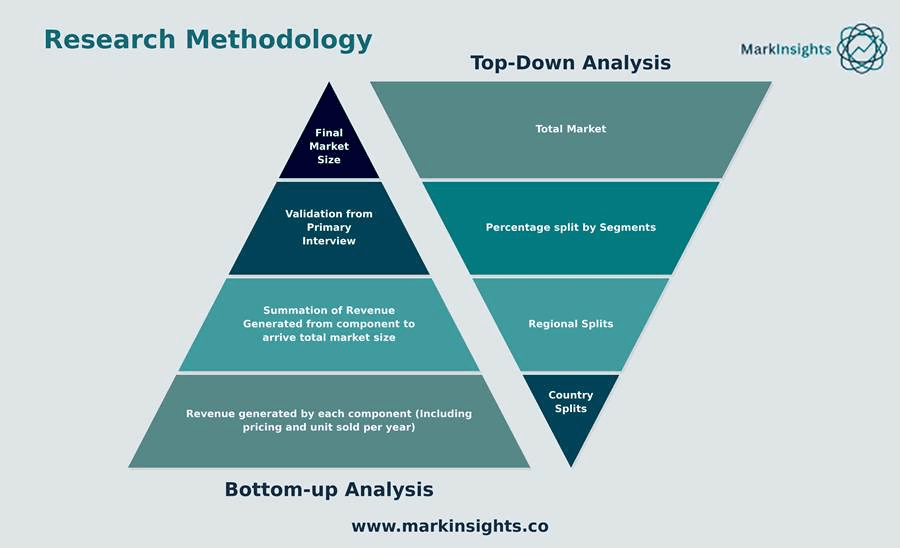
The demand-side assessment was built bottom-up from primary interviews with business buyers active in the 3d printing ceramic market, including agricultural and industrial procurement buyers, distributors and channel partners, and cross-referenced against demand-side secondary sources such as public production and consumption data and industry and trade-association surveys. On the supply side, estimates were developed from primary interviews with component suppliers and with commercial leadership at manufacturers, supported by secondary sources including publicly disclosed revenue and volume commentary from companies such as Lithoz, 3DCeram, and Tethon 3D (annual reports, investor presentations and regulatory filings), the regulatory frameworks of US FDA, REACH, EASA, and FAA, and relevant import-export and trade records. This report combines primary and secondary research. Main research incorporates 120+ structured B2B interviews across the supply chain, split across agricultural and industrial procurement buyers, raw-material and active-ingredient suppliers, and specialty chemical manufacturers, weighted toward the report's leading growth regions. For this report, core inputs were cross-referenced against US FDA records and publicly disclosed manufacturer segment data relevant to the 3D Printing Ceramic category.
3D Printing Ceramic Market Size, Scope & Segmentation:
| Report Attribute | Details |
| Market Size in 2025 | USD 350 million |
| Market Size by 2032 | USD 1.75 billion |
| Global CAGR (2026-2032) | 25.9% |
| Historical Data | 2023-2024 |
| Forecast Period | 2026-2032 |
| Segments Covered | By Formulation • Water-based • Solvent-based • Oil-based By Type • Functional • Decorative By Form • Powder • Resin • Filament By Technology • Digital Printing • Analog Printing By Application • Rapid Prototyping • Tooling • Part Manufacturing By End-Use • Healthcare • Aerospace & Defense • Automotive |
| Regions and Countries Covered | North America • US • Canada • Mexico Europe • Germany • UK • France • Italy • Spain • Rest of Europe Asia Pacific • China • India • Japan • South Korea • Australia • Rest of Asia Pacific Middle East and Africa • Saudi Arabia • UAE • South Africa • Rest of Middle East and Africa South America • Brazil • Argentina • Rest of South America |
| Market Leaders and Key Company Profiles | Lithoz 3DCeram Tethon 3D Admatec Nanoe 3D Systems ExOne XJet |
3D Printing Ceramic Key Market Segmentation:
Insights On Key Formulation
The formulation segment covers water-based ceramic feedstock (the environmentally preferred sub-category using aqueous binder systems favored for medical and food-contact applications where solvent residue is a regulatory concern, adopted by Tethon 3D and Admatec for powder-based systems), solvent-based ceramic feedstock (widely used in resin and slurry systems from 3DCeram and Lithoz for its rapid cure characteristics and compatibility with high-solids ceramic loading required for dense functional parts), and oil-based ceramic feedstock (a smaller specialty sub-category used in certain extrusion and injection-adjacent processes where oil carriers assist particle dispersion and green-body handling strength in filament-based systems from companies including Nanoe).
Solvent-based formulations dominate the formulation sub-segment because they enable the highest ceramic particle loading and fastest cure kinetics required for producing dense, low-porosity functional parts, making them the preferred choice among Lithoz and 3DCeram customers manufacturing aerospace and dental components where mechanical performance after sintering is critical.
Insights On Key Type
The type segment covers functional ceramics (the dominant sub-category comprising structural, thermal, dielectric, and biocompatible components used in aerospace thermal protection systems, dental restorations, and automotive sensor housings manufactured by Lithoz, 3DCeram, and CeramTec) and decorative ceramics (a smaller sub-category encompassing artistic, architectural, and consumer design objects produced through digital and analog ceramic printing for interior design, jewelry, and bespoke tableware applications served by smaller specialty studios and printer suppliers).
Functional ceramics lead the type sub-segment because aerospace, medical, and automotive end users require certified mechanical, thermal, and biocompatibility performance that only functional-grade ceramic formulations and processes from Lithoz and 3DCeram can deliver, sustaining the majority of high-value contract volume relative to decorative applications.
Insights On Key Form
The form segment covers powder (the leading sub-category used in binder jetting and selective laser sintering processes from Tethon 3D and Admatec, favored for high packing density and compatibility with a wide range of technical ceramic compositions), resin (a fast-growing sub-category used in stereolithography and digital light processing systems from 3DCeram and Lithoz that enables fine feature resolution required for dental and intricate aerospace geometries), and filament (a smaller sub-category used in material extrusion systems from Nanoe and other filament-focused suppliers, valued for its accessibility on desktop and mid-range printing platforms).
Resin-based forms lead the form sub-segment because digital light processing and stereolithography systems from Lithoz and 3DCeram deliver the fine resolution and surface finish quality demanded by dental restoration and precision aerospace component customers, supporting premium pricing relative to powder and filament alternatives.
Insights On Key Technology
The technology segment covers digital printing (the dominant sub-category encompassing stereolithography, digital light processing, and binder jetting systems from Lithoz, 3DCeram, and Admatec that use digitally controlled light or print-head deposition for high-resolution, repeatable ceramic part production) and analog printing (a smaller sub-category encompassing robocasting and direct ink writing extrusion-based approaches that use continuous material deposition through nozzle-based systems, employed by specialty research and low-volume production suppliers).
Digital printing leads the technology sub-segment because its layer-by-layer digitally controlled curing and deposition processes deliver the dimensional accuracy and repeatability required for aerospace-qualified and dental-grade ceramic parts, driving broader commercial adoption by Lithoz and 3DCeram customers relative to analog extrusion-based methods.
Insights On Key Application
The application segment covers rapid prototyping (the historically dominant sub-category where ceramic printing is used to validate design geometry and material behavior before committing to conventional tooling, serving R&D departments across aerospace, automotive, and medical device developers), tooling (a growing sub-category where printed ceramic cores, molds, and inserts from Lithoz and 3DCeram replace conventional tooling for investment casting and injection molding applications requiring high-temperature stability), and part manufacturing (the fastest-growing sub-category where printed ceramics form final functional or decorative end-use components, increasingly adopted for dental restorations, aerospace thermal components, and automotive sensor housings).
Part manufacturing is growing fastest within the application sub-segment because qualification of ceramic additive manufacturing processes for direct end-use production by Lithoz and 3DCeram customers in dental and aerospace industries is shifting spending away from prototyping toward recurring, higher-value final part production contracts.
Insights On Key End-Use
The end-use segment covers healthcare (the leading sub-category encompassing dental restorations, surgical guides, and bone scaffold applications where Lithoz and 3DCeram-supplied biocompatible ceramic resins serve dental laboratories and medical device manufacturers), aerospace and defense (a high-value sub-category where printed ceramic thermal protection components, radomes, and lightweight structural parts are qualified by aerospace primes working with 3DCeram and Nanoe for high-temperature and dielectric performance requirements), and automotive (a growing sub-category where printed ceramic sensor housings, filters, and specialty components benefit from design freedom and material property advantages over conventional ceramic manufacturing methods).
Healthcare leads the end-use sub-segment because dental laboratories and medical device manufacturers have achieved the highest commercial maturity in ceramic additive manufacturing adoption, driven by established reimbursement pathways and regulatory clearances that give Lithoz and 3DCeram a large recurring customer base relative to aerospace and automotive applications still in earlier qualification stages.
Insights on Regional Analysis
The global 3D Printing Ceramic market spans North America, Europe, Asia Pacific, Middle East and Africa, and South America. Europe leads global 3D Printing Ceramic revenue, driven by Austria, France, and Germany where established ceramic additive manufacturing equipment suppliers including Lithoz and 3DCeram maintain headquarters, research and development centers, and manufacturing operations serving aerospace, dental, and industrial customers across the region. The European Union's REACH chemical regulation framework and the Medical Device Regulation (MDR) governing dental and surgical ceramic device clearances shape material formulation and product qualification requirements for regional suppliers. Strong dental laboratory digitization trends across Germany and France, combined with aerospace component qualification programs led by Airbus supply chain partners, are sustaining processor investment in expanded resin and powder production capacity. Government-backed advanced manufacturing initiatives across France and Germany, including funding programs supporting additive manufacturing technology development, continue to reinforce the region's position as the primary hub for ceramic printer and materials innovation.
Asia Pacific is the fastest-growing region for 3D Printing Ceramic, led by China, Japan, and South Korea. China's expanding domestic additive manufacturing equipment industry and growing aerospace and medical device manufacturing base are driving significant investment in ceramic printing capacity, supported by national advanced manufacturing policy initiatives promoting technology self-sufficiency. Japan's precision ceramics manufacturing heritage, combined with strong domestic dental and electronics component demand, is enabling rapid adoption of ceramic additive manufacturing by established ceramics producers entering the additive segment. South Korea's semiconductor and electronics manufacturing base is creating growing demand for printed ceramic components used in specialized sensor and insulator applications. Regional governments across China, Japan, and South Korea are funding advanced materials research programs that include ceramic additive manufacturing, accelerating technology transfer from research institutions to commercial equipment and materials suppliers serving domestic aerospace, healthcare, and automotive customers.
3D Printing Ceramic Market Company Profiles:
The 3D Printing Ceramic competitive landscape encompasses three primary archetypes: specialist ceramic additive manufacturing equipment and materials suppliers (Lithoz, 3DCeram, Tethon 3D, Admatec, Nanoe) that develop proprietary printer platforms and matched ceramic feedstock formulations serving aerospace, medical, and industrial customers under direct sales and application engineering support models; diversified additive manufacturing companies with ceramic product lines (3D Systems, ExOne, XJet) that offer ceramic printing capability alongside broader metal and polymer additive manufacturing portfolios; and dental and technical ceramics specialists (CeramTec, Kyocera) that have extended established conventional ceramics manufacturing expertise into additive process qualification for specific application niches.
The 8 key companies profiled in this report are Lithoz, 3DCeram, Tethon 3D, Admatec, Nanoe, 3D Systems, ExOne, and XJet. Lithoz is a global leader in lithography-based ceramic manufacturing, supplying stereolithography and digital light processing systems and matched resin formulations to dental, aerospace, and industrial customers worldwide from its Vienna headquarters. 3DCeram operates the Ceramaker platform serving European and North American aerospace and medical device manufacturers with high-precision resin-based ceramic printing systems. Tethon 3D supplies ceramic powder and resin feedstock formulations to a broad base of research institutions and industrial customers across North America. Admatec develops binder jetting and vat photopolymerization ceramic printing systems for European industrial and medical customers. Nanoe specializes in piezoceramic and functional ceramic printing for aerospace and defense component qualification programs. ExOne and XJet apply binder jetting and NanoParticle Jetting technologies respectively to ceramic part production within broader multi-material additive manufacturing portfolios.
3D Printing Ceramic Market Latest Trends and Innovation:
• In June 2025, Tethon 3D expanded its ceramic powder feedstock manufacturing capacity at its Nebraska facility, adding new production lines for alumina and zirconia formulations to meet rising demand from aerospace and dental laboratory customers across North America seeking domestically sourced technical ceramic printing materials.
• In February 2025, Nanoe announced a qualification partnership with a European aerospace component manufacturer to validate printed piezoceramic sensor components for structural health monitoring applications, marking a significant step toward broader aerospace industry adoption of additively manufactured functional ceramic parts.
• In September 2024, 3DCeram launched an upgraded version of its Ceramaker resin-based ceramic printing platform, incorporating improved optical engine resolution and automated post-processing software designed to reduce part rejection rates for dental and aerospace customers requiring tight dimensional tolerances.
• In March 2024, Lithoz opened a new application development center in North America to support customer qualification programs for medical and aerospace ceramic components, expanding its technical support footprint beyond its existing European operations to serve growing regional demand for lithography-based ceramic manufacturing.
3D Printing Ceramic Market Significant Growth Factors:
The global 3D Printing Ceramic market is expanding on the back of four reinforcing drivers. Rising demand for complex, lightweight, high-temperature-resistant components in aerospace and defense applications is driving qualification of printed ceramic thermal protection and structural parts by manufacturers including 3DCeram and Nanoe, replacing conventional machined ceramics that cannot achieve equivalent geometric complexity. Growing digitization of dental laboratory workflows is expanding adoption of ceramic resin printing systems from Lithoz for restorations, crowns, and surgical guides, supported by established reimbursement pathways and regulatory clearance frameworks in developed dental markets. Continuous improvement in ceramic feedstock formulation, including higher solids loading resins and finer particle-size powders from Tethon 3D and Admatec, is reducing post-sintering shrinkage variability and improving mechanical property consistency, expanding the range of qualifiable functional applications. Increasing automotive interest in printed ceramic sensor housings and filtration components, driven by electrification and emissions requirements, is creating an additional demand pathway that supplements the historically dominant aerospace and medical end markets.
3D Printing Ceramic Market Drivers:
Demand is driven by aerospace qualification programs, dental laboratory digitization, and expanding industrial tooling applications. Aerospace primes and their tier-one suppliers are increasingly qualifying printed ceramic components for thermal protection systems, radomes, and lightweight structural brackets, creating recurring procurement relationships with 3DCeram and Nanoe that support long-term capacity investment planning. Dental laboratories across North America, Europe, and increasingly Asia Pacific are replacing conventional milling and casting workflows with digital ceramic resin printing from Lithoz, driven by faster turnaround times and improved fit accuracy for restorations. Industrial tooling applications, including investment casting cores and injection mold inserts, are adopting printed ceramic components from 3DCeram and Admatec to reduce lead times relative to conventional tooling fabrication methods. Growing research institution and university investment in ceramic additive manufacturing process development is expanding the pipeline of qualified applications and feedstock formulations available to commercial adopters across healthcare, aerospace, and automotive end markets.
3D Printing Ceramic Market Restraining Factors:
Several factors temper growth across the 3D Printing Ceramic value chain. High equipment acquisition costs for lithography-based and binder jetting ceramic printing systems from Lithoz and 3DCeram create significant capital barriers that limit adoption among small and mid-size manufacturers, restricting market penetration to well-capitalized aerospace, medical device, and dental laboratory customers. Post-processing complexity, including debinding and sintering steps required to achieve final ceramic part density and mechanical properties, adds production time and requires specialized thermal processing equipment and expertise that many prospective adopters lack in-house. Limited standardization of ceramic feedstock formulations and printer-specific material compatibility requirements from suppliers including Tethon 3D and Admatec creates vendor lock-in concerns and complicates qualification of alternative material sources for critical applications. Part size limitations inherent to current vat photopolymerization and binder jetting build volumes constrain applicability for larger structural aerospace and industrial components, requiring assembly of multiple printed sections that can compromise mechanical integrity relative to single-piece conventionally manufactured parts.
3D Printing Ceramic Market Opportunities:
Opportunities cluster in three pockets across the 3D Printing Ceramic landscape. Aerospace and defense component qualification represents a significant expansion opportunity for 3DCeram and Nanoe as thermal protection system and radome manufacturers increasingly validate printed ceramic parts for production programs beyond current prototyping and low-rate initial production applications. Dental restoration workflow digitization in emerging markets across Asia Pacific and Latin America offers Lithoz and regional distributors a substantial addressable customer base as dental laboratories transition from conventional milling toward faster, more cost-efficient digital printing workflows. Automotive electrification is creating opportunities for printed ceramic sensor housings, battery component insulators, and filtration parts that leverage design freedom advantages over conventional ceramic manufacturing, positioning Admatec and Tethon 3D to develop application-specific formulations for growing automotive electronics content.
3D Printing Ceramic Market Technology Trends:
Technology direction is set by three converging shifts in 3D Printing Ceramic equipment and materials development. Higher-resolution digital light processing and stereolithography optical engines, deployed by Lithoz and 3DCeram in recent platform generations, are enabling finer feature resolution and improved surface finish that expand qualifiable applications in dental restoration and precision aerospace components. Advanced binder jetting systems with improved powder handling and multi-material capability, developed by ExOne and Admatec, are reducing production cycle times and enabling more complex geometries for tooling and functional part manufacturing applications. Artificial intelligence-assisted print process monitoring and defect prediction software is being integrated into ceramic printing platforms by leading equipment suppliers to reduce part rejection rates and improve first-pass yield, addressing a persistent cost barrier that has limited broader commercial adoption of ceramic additive manufacturing across aerospace and medical device customers.
3D Printing Ceramic Market Future Trends:
By 2032, the market will be reshaped by broader aerospace production-scale qualification of printed ceramic components, expanded automated post-processing integration that reduces total production cycle time, and growing standardization of ceramic feedstock material specifications across equipment platforms. Aerospace primes are expected to move printed ceramic thermal protection and structural components from prototype and low-rate production into higher-volume qualified manufacturing programs as 3DCeram and Nanoe demonstrate consistent mechanical property repeatability at scale. Integrated debinding and sintering automation systems, developed in partnership between equipment suppliers and thermal processing specialists, are expected to reduce the post-processing bottleneck that currently limits ceramic additive manufacturing throughput relative to conventional manufacturing methods. Industry-wide material specification standardization efforts, potentially led by organizations including ASTM International, are expected to reduce vendor lock-in concerns and support broader qualification of ceramic feedstocks from Tethon 3D and Admatec across multiple printer platforms.
3D Printing Ceramic Market Supply Chain Analysis:
The 3D Printing Ceramic supply chain runs from raw ceramic powder and precursor chemical suppliers through feedstock formulation, printer manufacturing, and application engineering support to end-use manufacturers across aerospace, healthcare, and automotive industries. Upstream raw material supply is dominated by alumina, zirconia, and silicon nitride powder producers who supply Lithoz, 3DCeram, and Tethon 3D with base ceramic materials that are then formulated into proprietary resin, powder, or filament feedstocks matched to specific printer platforms. Printer manufacturers integrate optical, mechanical, and software systems domestically and through specialized component suppliers, with final assembly and quality testing conducted at manufacturer facilities in Austria, France, and the United States before shipment to customers.
Distribution to end customers occurs primarily through direct sales and application engineering support models given the technical complexity of ceramic printing process qualification, supplemented by regional distributor networks in Asia Pacific and Latin America markets. Key bottlenecks include limited availability of specialized ceramic-grade powder suppliers capable of meeting particle size distribution requirements, capacity constraints at post-processing sintering facilities during periods of demand surge, and lengthy qualification cycles required by aerospace and medical device customers before printed ceramic components can enter production supply chains.
3D Printing Ceramic Market Regulatory Analysis:
The global 3D Printing Ceramic market operates within a multi-domain regulatory framework spanning medical device, aerospace, and chemical safety requirements depending on end-use application. Dental and medical ceramic components fall under the US FDA medical device clearance pathway and the European Union Medical Device Regulation (MDR), both of which require biocompatibility testing and process validation for printed ceramic restorations and surgical guides. Aerospace applications are governed by qualification requirements from the Federal Aviation Administration (FAA) and the European Union Aviation Safety Agency (EASA), which mandate material and process certification before printed ceramic components can be used in flight-critical or safety-relevant applications. Ceramic feedstock chemical formulations sold within the European Union must comply with REACH registration requirements governing chemical substance safety documentation. Additive manufacturing process standards published by ASTM International and the International Organization for Standardization (ISO) provide voluntary conformity benchmarks increasingly referenced by aerospace and medical device customers during supplier qualification audits.
3D Printing Ceramic Market Share Analysis:
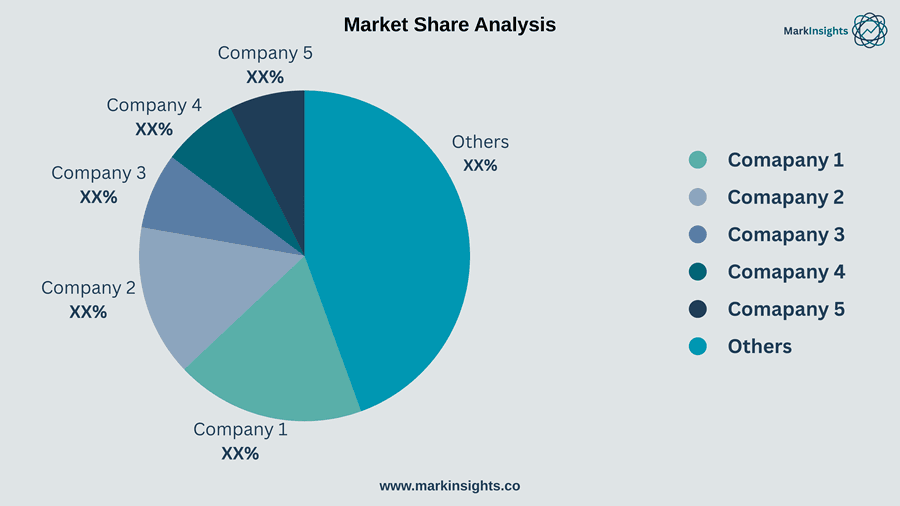
The top five vendors together account for an estimated 45-55% of global 3D Printing Ceramic revenue, with the remainder distributed across regional feedstock formulators, diversified additive manufacturing companies with ceramic product lines, and specialty dental ceramics suppliers across Asia Pacific and Europe. Concentration is highest in the aerospace-grade resin printing segment where Lithoz and 3DCeram collectively dominate qualified customer relationships, while the market is most fragmented in the decorative and low-volume prototyping segment served by smaller regional printer suppliers and materials distributors.
3D Printing Ceramic Market Competitive Landscape:
The 3D Printing Ceramic competitive landscape is led by Lithoz and 3DCeram, with significant presence from Tethon 3D, Admatec, Nanoe, 3D Systems, ExOne, and XJet. The Lithoz North American application development center opening in March 2024, the 3DCeram Ceramaker platform upgrade in September 2024, the Tethon 3D powder capacity expansion in June 2025, and the Nanoe aerospace qualification partnership in February 2025 are the principal developments shaping the competitive map.
Key Player Strategies
Leaders are prioritizing application engineering support expansion, feedstock formulation innovation, and aerospace and medical customer qualification programs to build recurring revenue relationships. Lithoz and 3DCeram compete on printer resolution and matched resin performance, while Tethon 3D and Admatec focus on feedstock formulation breadth serving multiple printer platforms. This parameter analyses the strategic posture of each leading player across technology development, customer qualification, and geographic expansion dimensions.
Buyer-Tier Concentration
Share concentration differs sharply by customer tier rather than by application category alone. Tier-1 aerospace primes and large dental laboratory networks overwhelmingly consolidate procurement with Lithoz and 3DCeram because only these suppliers carry the process validation documentation and application engineering support required for qualified production programs. Smaller dental laboratories, research institutions, and industrial prototyping shops are serviced through regional equipment distributors and materials resellers who blend output from multiple smaller feedstock suppliers including Tethon 3D and Admatec, diluting the top-vendor concentration figure at the point of final customer purchase even though it holds at the equipment platform level.
Company Capability Assessment
Capability leadership is differentiated by application segment and geography: Lithoz leads in lithography-based ceramic printing resolution and dental laboratory customer base across Europe and North America; 3DCeram leads in aerospace and medical device component qualification through its Ceramaker platform; Tethon 3D leads in ceramic powder and resin feedstock breadth serving research and industrial customers; Nanoe leads in functional piezoceramic component development for aerospace and defense applications; Admatec leads in binder jetting ceramic process development for European industrial customers. This parameter covers each leader's depth across printer technology, feedstock formulation, and application qualification dimensions.
Market Concentration
The top five vendors account for an estimated 45-55% of global 3D Printing Ceramic revenue, reflecting moderate-to-high market concentration driven by high technical barriers to entry and the extended qualification cycles required by aerospace and medical device customers. This parameter measures the degree of vendor concentration relative to total addressable market revenue.
Frequently Asked Questions
1. How big is the 3D Printing Ceramic Market and what will it be worth by 2032?
The 3D Printing Ceramic Market was valued at approximately USD 350 million in 2025 and is projected to reach around USD 1.75 billion by 2032, registering a CAGR of approximately 25.9%.
2. What is the CAGR of the 3D Printing Ceramic Market from 2025 to 2032?
The 3D Printing Ceramic Market is projected to register a CAGR of approximately 25.9% during the forecast period from 2025 to 2032.
3. What are the key drivers and restraints shaping the 3D Printing Ceramic Market?
Key Drivers:
• Aerospace primes and their tier-one suppliers are increasingly qualifying printed ceramic components for thermal protection systems, radomes, and lightweight structural brackets, creating recurring procurement relationships with 3DCeram and Nanoe that support long-term capacity investment planning.
• Dental laboratories across North America, Europe, and increasingly Asia Pacific are replacing conventional milling and casting workflows with digital ceramic resin printing from Lithoz, driven by faster turnaround times and improved fit accuracy for restorations.
Key Restraints:
• High equipment acquisition costs for lithography-based and binder jetting ceramic printing systems from Lithoz and 3DCeram create significant capital barriers that limit adoption among small and mid-size manufacturers, restricting market penetration to well-capitalized aerospace, medical device, and dental laboratory customers.
• Post-processing complexity, including debinding and sintering steps required to achieve final ceramic part density and mechanical properties, adds production time and requires specialized thermal processing equipment and expertise that many prospective adopters lack in-house.
4. What are the major segments and which region leads the 3D Printing Ceramic Market?
Solvent-based formulations (Formulation), Functional ceramics (Type), Resin-based forms (Form), Digital printing (Technology), Part manufacturing is growing fastest within the application sub-segment because qualification of ceramic additive manufacturing processes for direct end-use production by Lithoz and 3DCeram customers in dental and aerospace industries is shifting spending away from prototyping toward recurring (Application), Healthcare (End-Use) lead their respective segments. Europe leads global revenue. Asia Pacific is the fastest-growing region, led by China, Japan, and South Korea. Full segment-level analysis, including growth drivers, restraints, and country-level detail for every region covered in this study, is provided in the corresponding chapters of the full report.
5. Who are the leading companies in the 3D Printing Ceramic Market?
The top five players in the 3D Printing Ceramic Market — Lithoz, 3DCeram, Tethon 3D, Admatec, and Nanoe — collectively hold an estimated 45-55% of global revenue. Key companies covered in this report include Lithoz, 3DCeram, Tethon 3D, Admatec, Nanoe, 3D Systems, ExOne, XJet, Steinbach AG, CERAM Applications, Emerging Objects, Ceramics 3D, Prodways Ceramics, 3D Ceram Sinto, Kwambio, Zecheng New Materials, Formlabs Ceramic Resin Division, and Kera-Print.
Related Reports
Global Additive Masterbatch Market - Forecast to 2032
By Type (Flame Retardant Masterbatch, Antioxidant Masterbatch, UV Stabilizer Masterbatch, Antistatic Masterbatch, Slip and Anti-block Masterbatch, Others), By Carrier Resin (Polyethylene, Polypropylene, Polystyrene, Polyvinyl Chloride, Others), By Application (Packaging, Agriculture, Consumer Goods, Building and Construction, Automotive, Others), By End-User (Film and Sheet Manufacturers, Injection Molders, Blow Molders, Fiber Producers, Others)
From $ 2,500
View Report →Global Vehicle Armor Materials Market - Forecast to 2032
By Material Type (Metals and Alloys, Ceramics, Composites, Aramid Fiber, Fiberglass, Others), By Vehicle Type (Military Ground Vehicles, Commercial Armored Vehicles, Law Enforcement Vehicles, VIP Protection Vehicles, Others), By Application (Defense, Law Enforcement and Paramilitary, Civilian and VIP Security, Others)
From $ 2,500
View Report →